
 info@thoroughbredbhc.com
Intensive outpatient treatment costs vary widely, but understanding the real numbers can help you plan.
A Missouri hospital’s 2026 transparency file shows IOP per‑diem rates of $189 for self‑pay and $225–$285 for most commercial insurance plans, with Medicare patients typically paying 20% coinsurance after their deductible.
This article breaks down what drives IOP costs, what your insurance will cover, and how to minimize your out‑of‑pocket expenses.
What is an Intensive Outpatient Program?
Intensive Outpatient Programs deliver structured behavioral health treatment for people who need more than weekly therapy but don’t require 24‑hour care. Most IOPs run about 3 hours per day, 3 days per week, for 4 to 12 weeks.
You’ll receive psychiatric assessments, medication management, group therapy using approaches like CBT or DBT, individual counseling, family sessions, and care coordination, all while living at home and maintaining work or school.
IOPs treat moderate to severe mental health and substance use disorders. SAMHSA guidance describes core services including individual and group therapy, family psychoeducation, and case management, with outcomes for appropriate patients comparable to residential care at lower cost.
Settings include hospital outpatient departments, community mental health centers, and licensed freestanding programs, delivered in person, virtually, or in a hybrid format.
How Much Does an IOP Program Cost Without Insurance?
Hospital‑based IOPs often offer substantial self‑pay discounts. CenterPointe Hospital of Columbia’s 2025 machine‑readable file shows a gross chargemaster price of $596 per day but a discounted cash price of $189 per day. For a typical 8‑week program at 3 days per week (24 total days), that’s about $4,536 out of pocket.
Many private, non‑hospital IOPs still list retail self‑pay rates between $250 and $500 per day. However, hospital transparency data reveal that comparable hospital‑based programs often run lower, frequently $150 to $200 per day for self‑pay patients.
This price dispersion by site and ownership type means shopping around can save thousands. Always ask about financial assistance programs, sliding‑scale fees, and prompt‑pay discounts before committing.
How Much Does IOP Cost With Insurance?
Your insurance coverage for IOP depends on your plan type, network status, and benefit design. Here’s what to expect across major payer categories.
Commercial Insurance IOP Costs
Most commercial plans cover IOP as an outpatient mental health or substance use benefit. Hospital transparency files show negotiated per‑diem rates commonly cluster between $225 and $285. Your out‑of‑pocket cost depends on your plan’s design:
- Coinsurance model: If your plan has 20% coinsurance on a $260 allowed amount, you’ll pay about $52 per day, or roughly $1,248 for a 24‑day program.
- Copay model: Many plans charge a flat copay of $40 to $75 per IOP session‑day, totaling $960 to $1,800 for 24 days.
These amounts assume you’ve met your deductible and are using an in‑network provider. Prior authorization is typically required, and parity regulations under the Mental Health Parity and Addiction Equity Act limit how restrictive insurers can be with behavioral health benefits compared to medical services.
Medicare IOP Costs
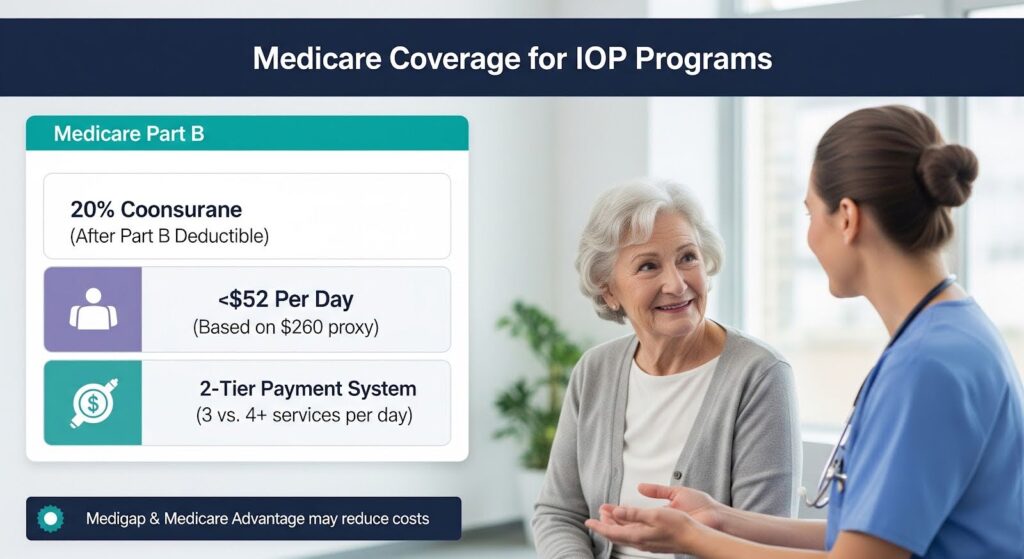
Medicare established IOP coverage effective January 1, 2024, paying hospital outpatient departments and community mental health centers on a per‑diem basis under the Outpatient Prospective Payment System. Medicare uses two payment tiers based on the number of services delivered per day (3 services versus 4 or more).
Beneficiaries typically owe 20% Part B coinsurance on the allowed per‑diem amount after meeting the annual deductible.
Using a $260 per‑diem as a proxy, that’s about $52 per day, or roughly $1,248 for a 24‑day program plus any remaining deductible. Medigap or Medicare Advantage plans may reduce your coinsurance, so check your supplemental coverage.
Medicaid IOP Costs
Medicaid managed care plans typically cover IOP with prior authorization and minimal or zero patient cost‑sharing.
MaineCare’s published rates show per‑diem amounts ranging from $188.84 for DBT‑IOP to $316.53 for developmental disability/behavioral health IOP, with most tracks around $231 to $248 per day. Patient out‑of‑pocket is usually limited, though provider networks and utilization controls vary by state.
What Drives the Cost of Intensive Outpatient Programs?
Several factors determine your total IOP cost beyond the base per‑diem rate.
Program Intensity and Duration
IOPs must deliver at least 9 hours per week for adults under ASAM Level 2.1 criteria. Some payers define one billing unit as a 3‑hour block, allowing two units per 6‑hour day, while others require a single per‑diem daily unit.
The number of days you attend, whether 12 days over 4 weeks or 36 days over 12 weeks, scales your total cost linearly.
Billing Codes and Revenue Categories
Hospitals and treatment centers use different billing codes depending on the type of IOP:
- H0015: Alcohol and drug services IOP, billed per diem, widely used for substance use disorder programs
- S9480: Intensive outpatient psychiatric services per diem, common for mental health IOP with commercial payers
- H2036: Substance dependence treatment program per diem, required by some payers for granular categorization
Medicare and Medicaid typically don’t accept S‑codes, channeling providers to H0015 or H2036. Commercial payers often accept S9480 paired with revenue code 0905 for psychiatric IOP. Mismatched code use produces denials and lost revenue, affecting what you ultimately pay.
Telehealth Modality and Payment Rules
Telehealth has expanded IOP access, but reimbursement rules vary. Blue Cross NC pays audio‑video telehealth at parity with in‑person but reimburses audio‑only services at 75% of the allowed amount, a 25% reduction that can lower a 12‑day episode by hundreds of dollars.
In contrast, Horizon BCBSNJ pays audio‑only behavioral health telehealth at the in‑person rate under New Jersey’s parity law.
This single policy variable can shift total allowed amounts significantly. If your plan reduces audio‑only payments, you may face lower out‑of‑pocket costs but also risk access barriers if you lack reliable internet or video equipment.
Network Status and Plan Design
In‑network providers have negotiated rates and lower member cost‑sharing. Out‑of‑network IOPs may charge higher rates, and your plan may cover only a percentage (often 60–70%) after a higher deductible.
Parity regulations require plans offering out‑of‑network medical benefits to also offer out‑of‑network mental health and substance use benefits, but your coinsurance and balance billing exposure can still be substantial.
Program Specialization
Specialized IOP tracks often carry different per‑diem rates. MaineCare’s rate structure shows DBT‑IOP at $188.84 per day, general mental health IOP at $231.11, and eating disorder IOP at $247.81. Commercial contracts may similarly assign distinct rates by track or modifier, reflecting higher staffing ratios or specialized clinical expertise.
Hidden Costs Beyond the IOP Per‑Diem
The per‑diem rate often bundles group and individual therapy, but several services may be billed separately:
- Medication management and psychiatric evaluation: Frequently billed outside the IOP per‑diem, subject to your plan’s behavioral health professional copays or coinsurance
- Labs and diagnostics: Rarely a large component but can appear as separate charges under lab benefits
- Intake or administrative fees: Some private programs charge intake fees or late‑cancellation fees not captured in per‑diem quotes
Ask explicitly: “What exactly is included in the per‑diem? What services are billed separately?” Bundling rules vary, and payers often disallow separate billing of psychotherapy CPT codes on the same day as an IOP per‑diem to prevent duplicate charges.
How to Minimize Your IOP Costs?
Verify Coverage and Authorization Before You Start
Call your insurance company to confirm IOP coverage, in‑network providers, prior authorization requirements, and your specific cost‑sharing (copay, coinsurance, deductible). Ask whether telehealth is covered and if audio‑only sessions are reimbursed at parity. Document the representative’s name, date, and reference number.
Use Hospital Price Transparency Files
Federal rules require hospitals to publish machine‑readable files showing negotiated rates by payer. Search for “machine‑readable file” or “price transparency” on the hospital’s website, then filter by IOP revenue codes (0905 for psychiatric IOP, 0906 for chemical dependency IOP). Compare your plan’s negotiated rate to the self‑pay cash price and other payers’ rates.
Ask About Financial Assistance
If you’re uninsured or underinsured, request a financial assistance application. Many hospitals offer charity care or sliding‑scale discounts based on income. Prompt‑pay discounts for paying the full self‑pay amount upfront can also reduce your bill.
Consider Telehealth Options
If your plan reimburses telehealth at parity and you have reliable internet, virtual IOP can eliminate transportation costs and scheduling conflicts. However, verify whether your plan applies a payment reduction for audio‑only sessions before relying on phone‑only participation.
Track Your Days and Documentation
Keep a personal log of IOP days attended and services received. If your insurer denies coverage citing lack of medical necessity, compare the denial rationale to how they handle similar outpatient medical services. Parity regulations require comparable processes and evidentiary standards, and you may have grounds for appeal if behavioral health is treated more restrictively.
What to Expect in 2026 and Beyond?
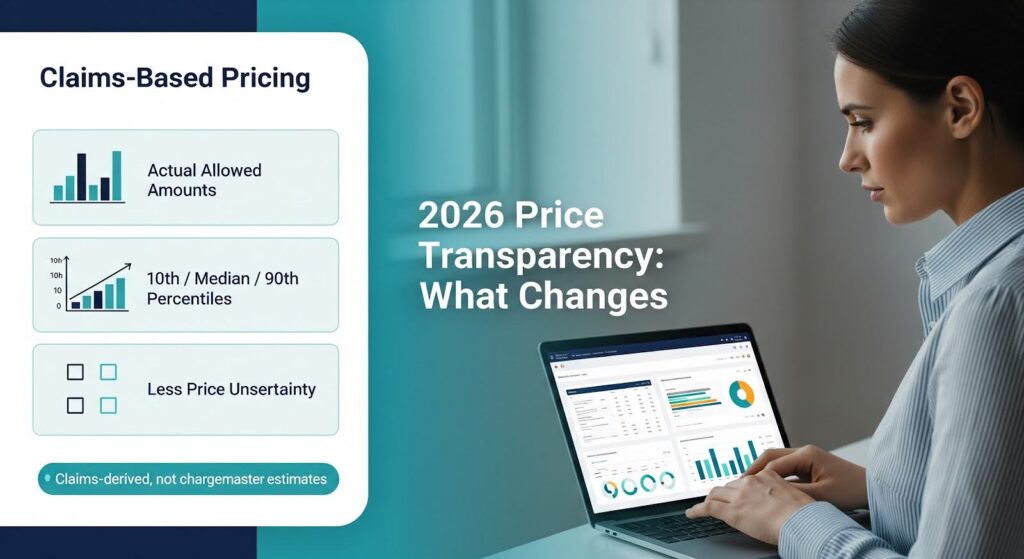
The CY 2026 hospital price transparency final rule requires hospitals to publish actual allowed amounts and distribution percentiles (10th, median, 90th) computed from claims data.
This will further normalize IOP pricing and reduce uncertainty for patients and purchasers. Expect tighter clustering around market medians and increased pressure on outlier prices.
Federal parity enforcement is also shifting toward data‑driven oversight, requiring plans to analyze the real‑world impact of utilization management on mental health and substance use benefits.
Better alignment of prior authorization processes and denial rates with medical services should improve access and reduce administrative delays that inflate costs.
Real‑World IOP Cost Scenarios
Scenario A: Commercial HMO member, in‑network, coinsurance model
Allowed $260/day; 20% coinsurance; 8 weeks × 3 days/week (24 days). Out‑of‑pocket per day: $52. Total: $1,248 (deductible already met). Risk: denial if authorization lapses; out‑of‑network claims not covered.
Scenario B: Medicare beneficiary, hospital outpatient IOP
OPPS per‑diem $260 (proxy); 20% coinsurance after Part B deductible. Out‑of‑pocket per day: $52. 24‑day total: $1,248 plus any remaining deductible. Medigap or Medicare Advantage may reduce coinsurance.
Scenario C: Medicaid managed care
Prior authorization obtained; member cost‑sharing $0 (plan design). Out‑of‑pocket ≈ $0 for per‑diem; separate services usually covered with minimal cost‑sharing.
Scenario D: Uninsured self‑pay, hospital
Hospital cash price $189/day; 24 days = $4,536. Request financial assistance or charity care; prepay discounts may reduce cost further.
Scenario E: Commercial PPO, audio‑only telehealth in North Carolina
Allowed $260/day for audio‑video; 75% for audio‑only = $195/day. 20% coinsurance on audio‑only: $39/day. 24‑day total: $936 versus $1,248 for audio‑video—$312 difference due to modality.
The Bottom Line on IOP Program Costs
The real 2025 market‑clearing price for hospital‑based IOP per‑diem commonly falls between $240 and $280 in commercial allowed amounts, with self‑pay bundles often $150 to $200 per day.
In‑network patient out‑of‑pocket typically runs $40 to $85 per day depending on plan design. Medicare beneficiaries face roughly $50 to $70 per day coinsurance post‑deductible, and Medicaid managed care patients frequently pay minimal amounts.
This aligns poorly with many consumer‑facing articles quoting $250 to $500 per day self‑pay in 2025. Transparency files indicate substantial pockets of lower hospital‑based pricing in practice.
The 2026 transparency rule requiring standardized allowed‑amount distributions will further validate these observed clusters and pressure outlier prices toward median market levels.
Total IOP cost is an engineered outcome of billing architecture, payer rules, and regulatory constraints, all superimposed on clinical program intensity.
Providers that align codes, modifiers, and documentation precisely, and patients who verify coverage, compare prices, and monitor authorization, will best manage both revenue integrity and affordability.
If you or a loved one needs compassionate, evidence‑based care, explore our IOP programs in Atlanta, GA to find the right level of support for lasting recovery.


 Give Us A Call


