
 info@thoroughbredbhc.com
Stopping alcohol after heavy use can trigger dangerous withdrawal symptoms within hours.
Most people complete medically supervised acute detox in about 3 to 5 days, though severe cases may extend to a week.
This article explains the alcohol withdrawal timeline, what symptoms to expect at each stage, how much detox costs, and why professional support can save your life.
How Long Does Alcohol Detox Take?
The acute phase of alcohol detox typically lasts 3 to 5 days for most people under medical supervision, with symptoms peaking around 24 to 72 hours after the last drink. Severe withdrawal, including delirium tremens, can extend the timeline to about a week.
However, detox is not a single event. Recovery unfolds in overlapping phases: acute stabilization over several days, early abstinence spanning weeks, and protracted withdrawal symptoms that can persist for months.
The Three Phases of Alcohol Withdrawal
Acute withdrawal begins within 6 to 24 hours of your last drink. Tremor, anxiety, nausea, and sweating appear first, escalating over the next day or two. Seizures and delirium tremens often emerge around 48 to 96 hours and require immediate medical attention.
Symptom-triggered protocols using benzodiazepines or phenobarbital can safely compress this phase to roughly three days in many cases.
Early abstinence covers the first few weeks after acute symptoms resolve. Negative mood, cravings, sleep disruption, and cognitive fog remain common.
These symptoms are not leftovers; they reflect ongoing neurobiological rebalancing and predict relapse risk.
Protracted alcohol withdrawal can last 1 to 6 months or longer. Insomnia frequently persists up to six months, while anhedonia, irritability, and craving fluctuate.
Targeted treatments like cognitive behavioral therapy for insomnia and craving-focused medications can accelerate symptom relief, achieving in weeks what might otherwise take months.
Alcohol Withdrawal Symptoms Timeline
Withdrawal symptoms follow a predictable arc, though individual experiences vary based on drinking history, health status, and prior withdrawal episodes.
Early Symptoms (6 to 24 Hours)
Within hours of your last drink, you may notice trembling hands, sweating, rapid heartbeat, nausea, vomiting, headache, and intense anxiety. Insomnia is nearly universal.
These early signs reflect your nervous system’s hyperexcitability as alcohol’s sedative effects wear off.
Peak Symptoms (24 to 72 Hours)
Symptoms intensify during this window. Visual, auditory, or tactile hallucinations can occur. Agitation and confusion worsen. Seizures may happen, even in people with no seizure history.
Delirium tremens, the most dangerous complication, brings severe disorientation, fluctuating consciousness, fever, and autonomic instability. Without treatment, DTs can be fatal.
Resolution (3 to 7 Days)
For uncomplicated cases under medical care, acute symptoms begin to ease by day three and largely resolve within five days.
Severe withdrawal may require up to a week of intensive monitoring and medication adjustments.
Post-Acute Symptoms (Weeks to Months)
After acute detox, many people face lingering challenges. Sleep disturbance, mood swings, cravings, and difficulty concentrating are common. Insomnia often extends to approximately six months.
These protracted symptoms are significant relapse triggers and deserve active treatment.
Alcohol Detox Symptoms by Severity
The Clinical Institute Withdrawal Assessment for Alcohol, Revised (CIWA-Ar) is a validated tool that scores ten symptom domains to guide treatment.
Scores below 8 indicate mild withdrawal; 8 to 15 suggest moderate symptoms; and 15 or higher signal severe withdrawal or impending delirium tremens.
- Mild withdrawal: Tremor, mild anxiety, nausea, sweating, headache. Outpatient monitoring may be appropriate with close follow-up.
- Moderate withdrawal: Worsening tremor, agitation, hallucinations, elevated heart rate and blood pressure. Medication and frequent reassessment are essential.
- Severe withdrawal: Profound confusion, severe agitation, seizures, delirium tremens. Hospitalization and intensive care are often required.
How Much Does Alcohol Detox Cost?
Detox costs vary widely by setting, location, insurance coverage, and length of stay. Understanding the payment structures can help you plan and avoid surprise bills.
Inpatient Hospital Detox
In Georgia, Medicaid reimburses inpatient detox admissions through diagnosis-related group (DRG) bundled payments rather than itemized per-day charges. This means the hospital receives a fixed amount based on the severity and complexity of your case, not a simple daily rate.
For uninsured or self-pay patients, hospital detox can range from several thousand to over ten thousand dollars for a typical stay, depending on complications and intensive care needs.
Residential Sub-Acute Detox
Non-hospital residential programs typically bill using HCPCS codes like H0010 for sub-acute detox in a 24-hour residential setting.
Per-day rates vary by facility and payer, with some negotiated rates in the $35 to $60 range per unit in certain markets, though actual costs depend on local contracts and services provided.
A typical 3 to 5 day residential detox stay might cost $1,500 to $5,000 or more out of pocket without insurance.
Outpatient and Telemedicine Detox
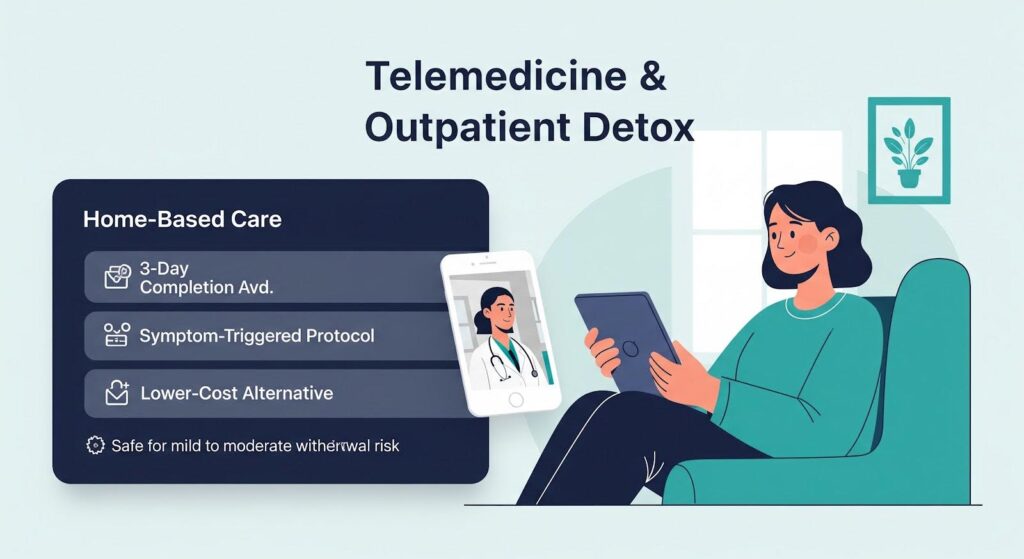
Ambulatory detox programs offer lower-cost alternatives for people with mild to moderate withdrawal risk.
Telemedicine-delivered symptom-triggered detox has shown feasibility and safety in selected patients, with most completing treatment at home over three days without escalation to higher care.
Costs are generally lower than inpatient settings, though close monitoring and medication access are still required.
Insurance and Transparency
Most major insurers, including Aetna, Blue Cross Blue Shield, Cigna, Humana, and UnitedHealthcare, cover medically necessary detox.
Under the federal No Surprises Act, providers must give uninsured or self-pay patients a Good Faith Estimate outlining expected charges before treatment.
Ask for this estimate upfront and clarify what services are included, potential escalations, and aftercare costs.
Alcohol Withdrawal Death Rate and Risks
Untreated severe alcohol withdrawal carries a significant mortality risk.
Delirium tremens has historically been associated with death rates of 5 to 15 percent without treatment, though modern medical care has reduced this substantially.
Seizures, aspiration pneumonia, cardiac arrhythmias, and electrolyte imbalances are the primary causes of death.
Risks in Correctional Settings
Jails and prisons face heightened withdrawal risks due to systemic screening failures, delayed emergency response, and inadequate medical protocols.
A 2003 case in New York documented an inmate death from untreated delirium tremens after inappropriate medication and absent monitoring.
More recently, litigation in DeKalb County, Georgia, alleged that an Army veteran died after being left unresponsive for over three hours without CPR or naloxone, despite inmate pleas for help.
These cases underscore the need for standardized screening, rapid medical escalation, and stigma-free care in custody environments.
Home Detox Death Rate
Attempting alcohol detox at home without medical supervision is dangerous. The unpredictability of withdrawal severity, risk of seizures, and potential for delirium tremens make unsupervised detox life-threatening.
Even mild initial symptoms can escalate rapidly. Professional monitoring, medication management, and emergency protocols are essential safeguards.
Treatment Approaches: Benzodiazepines vs Phenobarbital
Benzodiazepines have long been the standard medication for alcohol withdrawal, working by enhancing the brain’s calming GABA receptors.
Symptom-triggered dosing using CIWA-Ar scores reduces total medication use and shortens hospital stays compared to fixed schedules.
Phenobarbital, a long-acting barbiturate, has emerged as a safe and effective alternative. A 2023 systematic review of ICU-managed withdrawal found phenobarbital protocols associated with shorter hospital stays, averaging 2.6 days less than benzodiazepine-based care.
In emergency departments, phenobarbital showed equivalence to benzodiazepines on safety and admission rates. Hospital-wide phenobarbital order sets have been successfully implemented with improved symptom control and reduced time to discharge.
Both medications require careful monitoring to avoid oversedation and respiratory depression. The choice depends on severity, prior treatment response, and institutional protocols.
Post-Acute Care: Treating Insomnia and Cravings
Completing acute detox is only the first step. Addressing protracted withdrawal symptoms significantly improves long-term outcomes.
Cognitive Behavioral Therapy for Insomnia
A 2025 meta-analysis of eight randomized trials found that CBT-I produced large, durable reductions in insomnia severity among people with alcohol use disorder, with benefits maintained at six months. Improving sleep quality also correlated with reduced cravings in early recovery. Find out more about our CBT Therapy in Atlanta, GA.
Craving-Targeted Medications
Pharmacologic treatment for protracted withdrawal can accelerate symptom reduction, achieving in roughly three weeks results otherwise seen at six months.
The clearest benefit is for craving relief, though individual responses vary. Medications should be chosen based on your health profile and treatment goals.
Cognitive Recovery
Neuropsychological function often lags in early abstinence. A 2024 systematic review found that focused attention and executive functions typically improve over months, with many domains normalizing by 6 to 12 months. Structured supports, realistic expectations, and patience are key during this recovery window.
What to Expect During Medical Detox?
Medical detox begins with a comprehensive assessment of your drinking history, withdrawal risk, medical conditions, and mental health. Vital signs, lab work, and symptom scales guide initial treatment decisions.
Monitoring: Nurses assess your symptoms every few hours using standardized tools. Medication doses adjust based on your scores and clinical response.
Medications: Benzodiazepines or phenobarbital control withdrawal symptoms. Thiamine prevents Wernicke encephalopathy, a serious brain complication. Magnesium, anti-nausea drugs, and other supports are added as needed.
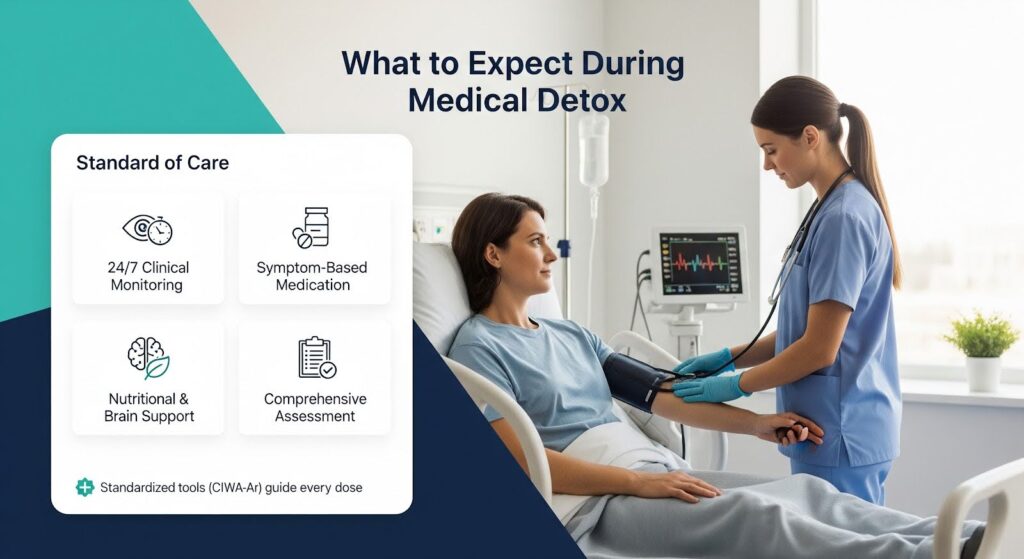
Escalation: If symptoms worsen despite treatment, you may transfer to intensive care for closer observation and higher medication doses.
Aftercare planning: Before discharge, your team should connect you with ongoing treatment, including therapy, support groups, and medications for alcohol use disorder.
Why Professional Detox Matters?
Alcohol withdrawal is unpredictable. Symptoms that start mild can escalate to seizures or delirium tremens within hours. Medical detox provides:
- Safety: Continuous monitoring catches complications early.
- Comfort: Medications reduce suffering and help you complete detox.
- Support: Counselors and peers offer encouragement and practical guidance.
- Continuity: Structured transitions to ongoing treatment reduce relapse risk.
Attempting detox alone or in unsupervised settings puts your life at risk and makes relapse more likely.
Finding the Right Detox Program
When choosing a detox program, consider these factors:
- Medical staffing: 24/7 nursing and physician availability.
- Evidence-based protocols: Use of validated tools like CIWA-Ar and symptom-triggered medication.
- Dual diagnosis capability: Treatment for co-occurring mental health conditions like anxiety, depression, or PTSD.
- Aftercare integration: Clear pathways to residential, partial hospitalization, intensive outpatient, or standard outpatient programs.
- Insurance and cost transparency: Verification of coverage and upfront estimates.
Ask about the facility’s approach to protracted withdrawal, including insomnia treatment and craving management, to ensure comprehensive support beyond the acute phase.
If you or someone you care about is struggling with alcohol dependence, professional detox is the safest first step toward recovery.
Reach out to our detox program in Atlanta, GA, today to discuss your options and start your journey to freedom.


 Give Us A Call


