
 info@thoroughbredbhc.com
When a lawyer notices a colleague showing signs of addiction, the decision to intervene is rarely simple. Mandatory reporting rules create a tension between professional duty and the fear that reaching out might trigger disciplinary consequences.
Research shows that California’s Rule 8.3 drafters explicitly warned that without protections for treatment programs, lawyers may hesitate to seek assistance, resulting in additional harm to clients and the public.
This article examines how reporting obligations, confidentiality constraints, and retaliation fears shape whether attorneys step forward when a colleague struggles with substance use.
Understanding the Reporting Threshold
The American Bar Association Model Rule 8.3 does not require lawyers to report every ethics violation.
The rule applies only when an attorney knows another lawyer committed a violation that raises a substantial question about honesty, trustworthiness, or fitness. This narrow trigger means that suspected substance abuse alone does not automatically create a reporting duty.
The term “substantial” refers to the seriousness of the possible offense, not the amount of evidence available. A lawyer may observe warning signs like missed deadlines, erratic behavior, or impaired courtroom performance without yet possessing actual knowledge of a reportable violation.
During this pre-misconduct phase, intervention options include peer outreach, firm management involvement, ethics consultation, or referral to a Lawyer Assistance Program.
When Impairment Becomes Reportable?
North Carolina ethics authorities clarify that a lawyer must report a rules violation even if the unethical conduct stems from mental impairment or substance abuse.
Incompetent representation that violates competence rules may raise a substantial question about fitness and trigger the reporting requirement. However, the same authorities encourage lawyers to assist potentially impaired colleagues in finding treatment, recognizing that discipline addresses conduct while assistance programs address underlying illness.
The distinction matters because it frames intervention choices. Suspected impairment without known serious misconduct calls for assistance, supervision, monitoring, and referral. Known serious ethics violations caused by impairment may require reporting, subject to confidentiality limits.
How California’s Rule Design Reveals Chilling Concerns?
California adopted Rule 8.3 only in August 2023, making it the last U.S. jurisdiction to impose attorney peer reporting duties. The rulemaking materials provide the strongest direct evidence that mandatory reporting can discourage intervention when not carefully designed.
California’s proposal page states that reporting is not required if information was gained while participating in any substance use or mental health program.
The drafters explained that without this exception, lawyers may hesitate to seek assistance, which may result in additional harm to professional careers and to the welfare of clients and the public. This is not abstract speculation. It represents an institutional judgment that reporting duties can deter treatment and candid disclosure.
California went further than the ABA by protecting information learned in any substance use or mental health program, not merely approved lawyer assistance programs. The State Bar recognized that lawyers may seek help outside formal sanctioned structures, and protecting only one category of program would be insufficient to encourage early intervention.
Protecting Consultation Channels
California also added protections for information gained while serving on state or local bar association ethics hotlines or similar services. This safeguard addresses a specific chilling point: lawyers might avoid seeking ethics guidance if the consultation itself could trigger reporting obligations.
The California Lawyers Association warned during the comment period that the rule could make lawyers less likely to assist one another or engage in candid discussions because knowing more could create reporting liability.
The comment put the dynamic bluntly: “the less you know, the less potential liability you would face under rule 8.3.” This strategic ignorance problem represents a predictable incentive distortion when reporting rules are broad or ambiguous.
Confidentiality as the Primary Constraint
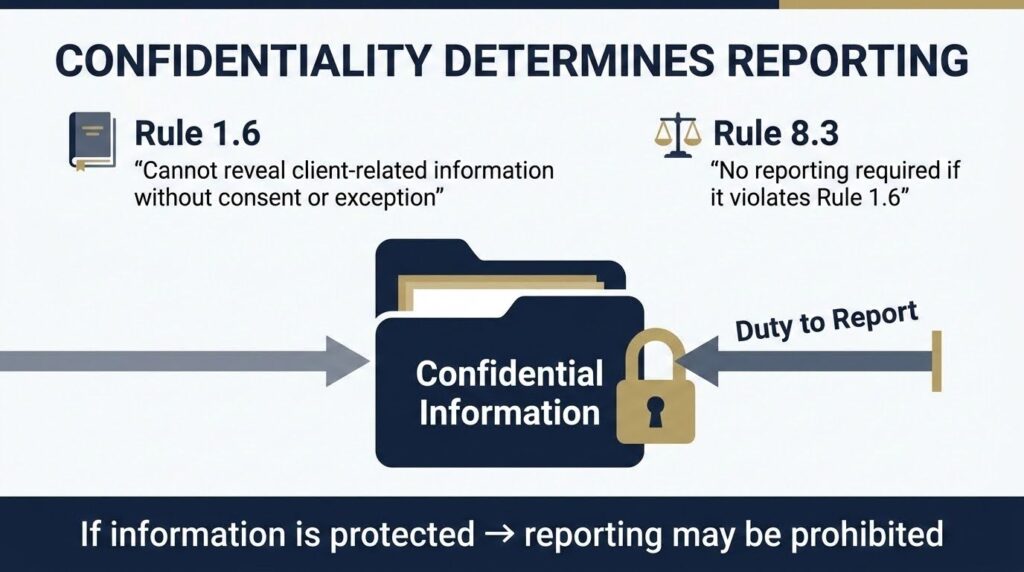
Confidentiality often determines whether a lawyer can report, regardless of whether they want to.
ABA Model Rule 1.6 establishes that a lawyer shall not reveal information relating to the representation of a client unless the client gives informed consent or a specific exception applies. This broad default duty covers more than attorney-client privilege.
Rule 8.3 explicitly states that reporting is not required where it would violate Rule 1.6. The ABA comment instructs lawyers to encourage client consent if disclosure would not substantially prejudice the client’s interests, but absent consent, the lawyer may be forbidden to report.
When Confidentiality Blocks Reporting?
A lawyer may learn of another attorney’s addiction-related misconduct in many protected contexts:
- While representing a client whose matter was harmed by the impaired lawyer
- During intra-firm communications involving client matters
- In mediation or settlement discussions
- Through ethics consultation
- Via assistance programs
In all these settings, the relevant information may be protected by confidentiality rules or analogous state duties. The reporting analysis therefore begins with a legal barrier. If the information is protected, there may be no reporting duty at all.
This structure is not accidental. It reflects the profession’s view that confidentiality is not a secondary concern but a constitutive one. The practical consequence is that confidentiality can produce two contrary effects at once.
It protects space for candid consultations and interventions, including advice-seeking and treatment referral. It can also prevent formal reporting, even where the reporting lawyer has serious concerns.
Assistance Programs as the Critical Counterweight
The ABA comment explains that the assistance program exception encourages lawyers and judges to seek treatment.
Without it, they may hesitate to seek help, causing more harm to their careers, clients, and the public. This is the clearest doctrinal statement that mandatory reporting can deter help-seeking if not carefully limited.
Multiple jurisdictions have built robust confidential support systems precisely because impairment is common, stigmatized, and better addressed early than after disciplinary harm occurs.
State Program Models
New York’s Lawyer Assistance Program offers free confidential support, referrals, peer support, voluntary or court-mandated monitoring, and a 24/7 hotline. Law firm commentary notes that bona fide LAP communications are protected coextensively with attorney-client privilege under state law, specifically to encourage treatment and assistance.
Oklahoma’s Rule 8.3 exempts knowledge obtained while assisting another lawyer through Lawyers Helping Lawyers, Judges Helping Judges, or management assistance programs. Such information receives the same confidence as attorney-client privileged information.
North Carolina authorities state that even absent actual knowledge of a rule violation, lawyers may and professionalism encourages them to report concerns to an approved lawyer assistance program. Making a confidential report to LAP is appropriate alongside any required disciplinary report, and the two systems are not mutually exclusive.
Retaliation Fears and Professional Culture
Mandatory peer reporting is culturally uncomfortable in the legal profession. Commentators often call Rule 8.3 the “rat rule,” reflecting longstanding ambivalence about reporting colleagues. That cultural discomfort matters in addiction cases because collegial concern and stigma often coexist.
The California Lawyers Association also warned that the rule could escalate disputes between opposing counsel and could be invoked in borderline cases as a shield for retaliatory, discriminatory, or harassing complaints. These observations identify predictable incentive effects and help explain why drafters added consultation and assistance exceptions.
Strategic Non-Knowledge
The most troubling behavioral distortion is strategic avoidance. If lawyers fear that learning more will create reporting liability, they may keep distance, avoid facts, or channel concerns into silence rather than treatment-oriented action. This is not merely theoretical. It represents a rational response to ambiguous or punitive reporting regimes.
Some jurisdictions provide legal protection for reporters. New York recognizes that a report under its analogous rule enjoys absolute privilege against defamation or malicious prosecution claims, and that retaliatory discharge of an attorney who reported misconduct may be actionable. However, this does not eliminate practical fear of workplace, reputational, relational, or litigation-related consequences.
Supervisory Duties Before Reporting
Supervisory lawyers face affirmative obligations when they notice signs of impairment, even before mandatory reporting is triggered. ABA Model Rule 5.1 requires partners and lawyers with managerial authority to make reasonable efforts to ensure that lawyers in the firm comply with ethics rules.
When partners or supervisors know of a lawyer’s mental impairment, they must take steps designed to give reasonable assurance that the impairment will not lead to breaches of professional rules.
The paramount obligation is protection of client interests. Suggested interventions include confronting the lawyer, requiring acceptance of assistance, restricting matters, preventing direct client contact, reviewing files and work product, reassigning responsibilities, and if necessary preventing the lawyer from rendering legal services at all.
The Dual-Track Response
The most functional regimes preserve a dual-track response: discipline for serious conduct and confidential assistance for impairment. North Carolina, California, the ABA, New York support structures, and Oklahoma all reflect this model in different forms.
North Carolina explains that discipline addresses conduct while LAP addresses underlying illness. The two systems serve different, complementary functions. A report to LAP does not satisfy the reporting requirement when the Rule 8.3 trigger is met, but it remains an appropriate and encouraged parallel action.
Practical Scenarios
Opposing Counsel Appears Impaired
A lawyer observes opposing counsel slurring words and missing obvious points in court. If the lawyer has actual knowledge of serious impairment affecting representation, reporting may be triggered under ABA-style rules. If knowledge is incomplete, the lawyer may choose court oversight, a confidential LAP referral, or both.
This is the kind of situation where mandatory reporting may not deter observation itself but may deter informal outreach if the lawyer fears that learning more will force formal reporting.
Partner Suspects Associate’s Addiction
When a partner suspects an associate’s addiction is causing missed deadlines, the initial response should be supervision, file review, workload reassignment, and referral to LAP. If incompetence or neglect has already risen to a substantial question about fitness, reporting may become necessary. Confidentiality issues will shape what can be disclosed externally.
A well-designed reporting rule should not discourage this kind of internal intervention. But an ambiguous or punitive rule could make colleagues avoid documenting concerns or delay engaging, especially if they fear later accusations that they knew and failed to report.
Client Confidences Reveal Misconduct
Suppose a client tells current counsel that former counsel was intoxicated during negotiations and mishandled funds. If the information is protected by confidentiality rules, reporting may be barred absent consent. The lawyer should encourage client consent if disclosure would not substantially prejudice the client. If consent is refused in good faith, some jurisdictions indicate the lawyer is not disciplined for failing to report.
This scenario shows that confidentiality can reduce formal reporting even where public protection concerns are serious. But it does not necessarily reduce intervention. The lawyer may still advise the client, seek consent, protect the current matter, and possibly guide the client toward complaint processes.
Why Early Intervention Matters?
Behavioral health problems are widespread enough to make early intervention a systemic issue, not an edge case. Research indicates that over 20 percent of lawyers qualify as problem drinkers, and at least 28 percent struggle with some level of depression, anxiety, or stress.
If behavioral health issues are common, then a reporting system that makes lawyers avoid early intervention would be socially costly. A purely punitive or overbroad reporting model would risk reducing peer consultation, increasing stigma, delaying treatment, allowing preventable client harm to worsen before conduct becomes clearly reportable, and shifting the profession from prevention to reaction.
That concern is reflected in California’s and the ABA’s assistance program comments, which explicitly state that without protected channels lawyers may hesitate to seek assistance, leading to more harm to clients and the public.

The Best Policy Approach
The evidence supports a narrow reporting duty paired with broad confidential intervention channels. A sound regime should keep mandatory reporting for serious, well-defined misconduct tied to honesty, trustworthiness, or fitness. It should preserve broad confidentiality protections and instruct lawyers to seek client consent where appropriate rather than forcing disclosure.
The regime should protect all credible treatment and peer support channels, not just formal approved LAPs. It should protect ethics consultations and hotlines so lawyers can ask what to do without triggering liability for the consultation itself. It should encourage firm-level supervision and client protection duties when impairment is suspected but not yet clearly reportable.
And it should separate assistance from discipline conceptually, recognizing that LAPs and discipline serve different, complementary functions.
Why Does This Matter?
Mandatory reporting rules do discourage some lawyers from intervening early in addiction-related situations, but the profession’s own most authoritative materials show that this is a design problem, not an inevitable one.
Narrow rules with broad confidentiality and assistance program protections can preserve accountability for serious misconduct while still encouraging early, confidential, recovery-oriented intervention. Broad or ambiguous reporting rules, by contrast, are likely to produce delay, strategic ignorance, and underuse of support systems.
Confidentiality concerns are legally central and often controlling. They can prevent formal reporting, but they also make early intervention possible by preserving safe spaces for advice and treatment.
Whistleblowing fears mainly affect willingness to move from concern to formal action and sometimes willingness to investigate or engage deeply with a colleague’s problem. The evidence for this is credible and institutionally recognized, even if not numerically measured in empirical studies.
If you or someone you know is struggling with substance use or mental health challenges, reaching out for confidential support is a sign of strength, not weakness.
Contact Thoroughbred Wellness to speak with our compassionate team that understands the unique pressures professionals face and offers personalized treatment designed to protect your career and your future.


 Give Us A Call


