
 info@thoroughbredbhc.com
Cravings can hit hard during recovery, and knowing what to do in that moment often decides what happens next. Coping skills for addiction rooted in CBT give you a concrete plan: a single craving wave rises, peaks, and falls on its own if it is not acted on, and urge surfing helps you ride it out instead of using. This guide breaks down CBT techniques for cravings and shows you when it is time to get more support.
Coping Skills for Addiction: How CBT Stops Cravings
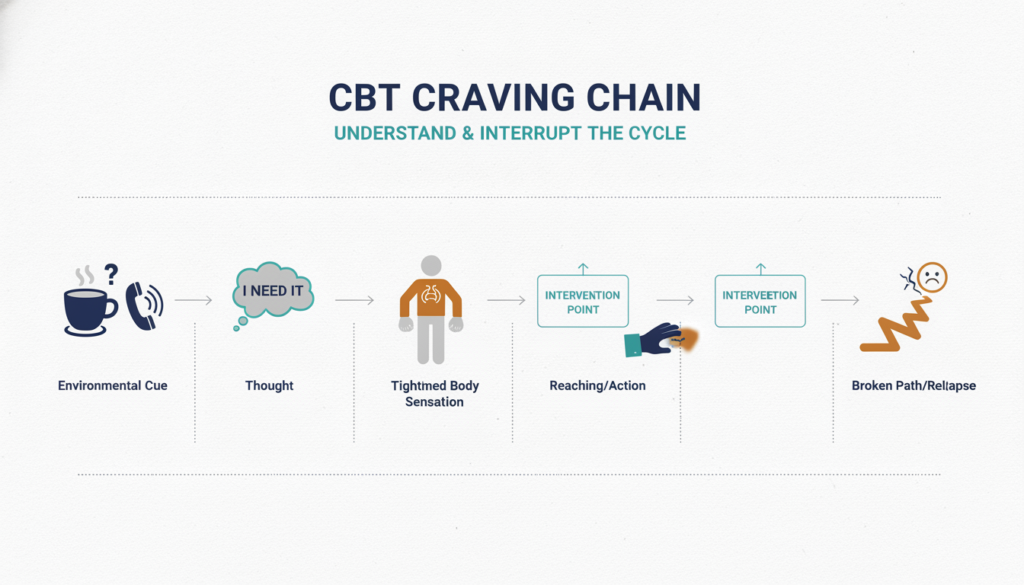
Addiction rarely fails as one dramatic moment of weak will. It usually plays out as a chain. A trigger sparks a thought, the thought stirs an emotion, the emotion turns into an urge, and the urge pushes toward use. CBT for addiction works by breaking this chain at more than one point instead of betting everything on a single moment of resistance.
CBT for substance abuse teaches you to spot the trigger, question the thought, and manage the urge before it becomes a decision. This structured approach is well supported in clinical reviews of CBT, which describe functional analysis, coping skills training, and relapse prevention as the core building blocks of treatment. A large prospective study that followed more than 50,000 people found that cue reactivity and craving reliably raised the odds of later use, sometimes more than doubling the risk, according to a major craving meta-analysis. That is exactly why treating craving as a signal to act on, rather than a verdict to accept, matters so much.
What Addiction Triggers and Relapse Triggers Look Like
Addiction triggers are not always obvious. Some are external, like a certain bar, a route home, a paycheck, or a person tied to past use. Others are internal, like loneliness, boredom, pain, shame, or plain exhaustion. Both types can set off the same chain reaction.
Relapse triggers work the same way, but they often carry extra weight because they show up during a vulnerable window right after treatment or detox. A text from an old using contact, a stressful argument, or even a smell can reactivate a learned pattern the brain built over years. The craving meta-analysis mentioned above found that cue induced craving was the strongest single predictor of later use, and that same day risk was especially high. This means the moment right after a trigger appears is often the most important window for using a coping skill, not the day after.
CBT for Substance Abuse: The Core Techniques
CBT techniques for addiction generally fall into a few groups, and each one targets a different link in the chain.
- Stimulus control removes or avoids triggers where possible, such as clearing substances from the home or changing a route.
- Functional analysis maps out what happens before, during, and after use, so the plan matches the real pattern instead of generic advice.
- Cognitive restructuring challenges thoughts like “one drink will not matter” and replaces them with more accurate ones.
- Urge surfing and delay skills help a person tolerate an urge long enough for it to change.
- Behavioral substitution swaps the substance for a different action that meets the same need, like calling a friend instead of isolating.
These pieces work together. A trigger you cannot avoid might still be managed with a delay tactic and a thought challenge. A craving that will not settle might need a substitute activity that actually matches the reason someone wants to use in that moment, whether that is relief from anxiety, escape from pain, or a need for connection.
How to Deal With Cravings in the Moment
Knowing how to deal with cravings starts with naming what is happening instead of reacting to it. A useful sequence looks like this:
- Name the trigger. What happened right before the urge showed up?
- Rate the craving from 0 to 10. This is not a diagnosis, just a signal.
- Create distance. Leave the location, put away cash or a phone, or ask someone to sit with you.
- Set a short delay before making any decision, and pick the length in advance rather than in the moment.
- Recheck the craving after the delay and decide the next step.
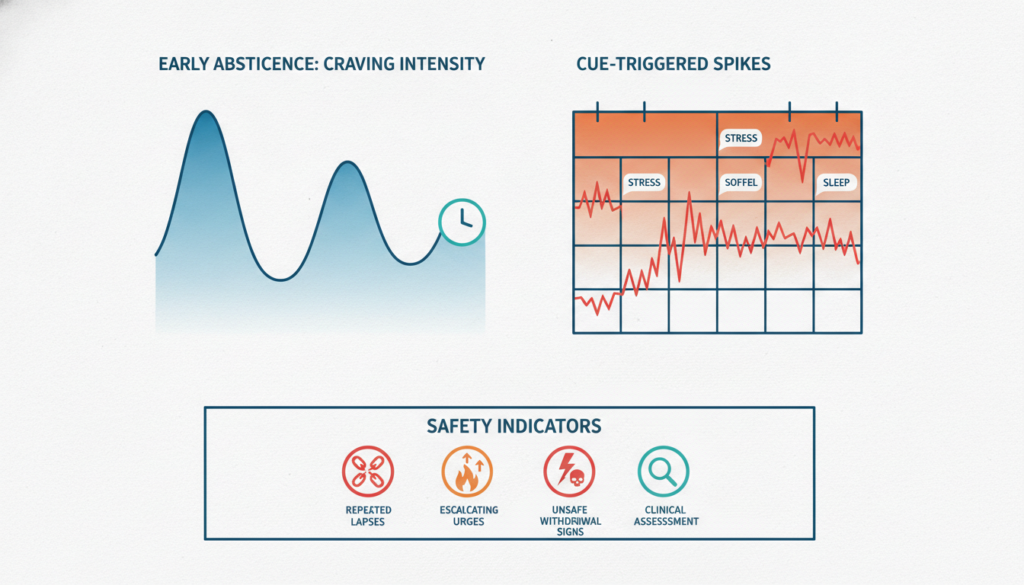
Craving research on smoking abstinence found that background withdrawal symptoms can ease over time while cue triggered craving stays just as strong, or even grows, according to a craving incubation study. In plain terms, feeling better day to day does not mean the risk from a specific trigger has gone away. That is part of why a repeatable, structured response matters more than relying on motivation alone.
Mindfulness for Addiction and the Craving Wave
Mindfulness for addiction is not about pretending a craving feels good. It means noticing the urge as a passing body state rather than an order that must be followed. This skill, often called urge surfing, treats craving like a wave that rises, peaks, and falls if it is not fed by use.
A practical version of urge surfing looks like this:
- Name the experience out loud, such as saying “this is a craving.”
- Locate it in the body, whether that is a tight chest, restless hands, or a hollow stomach.
- Breathe slowly and notice whether the sensation shifts, grows, or fades.
- Avoid arguing with the urge or trying to force it away.
- Choose one small action that fits your values once the wave softens.
A 2014 review in Substance Use and Misuse describes urge surfing as staying in contact with a craving instead of defaulting to use, which is what lets an urge run its course without being fed. How long that takes varies by person, substance, and trigger, and repeated triggers can create back to back waves. Still, knowing that most urges do change on their own can make the wait feel less impossible.
More Coping Strategies for Substance Abuse
Coping strategies for substance abuse work best when they match the actual reason someone wants to use, not just the surface behavior. A person who drinks to quiet anxiety will not be helped much by generic advice to “stay busy.” They need a plan that lowers anxiety directly, such as breathing exercises, a support call, or leaving an overstimulating setting.
Some functionally matched substitutes include:
- For stress after work, a short walk, a shower, or a call to a support person.
- For loneliness, a planned call, a recovery meeting, or time with sober friends.
- For insomnia, a consistent sleep routine and, when needed, medical review rather than self medicating.
- For pain, a conversation with a clinician about safe options, since untreated pain often drives relapse on its own.
Lifestyle balance matters too. Regular meals, steady sleep, movement, and at least one enjoyable sober activity all reduce the background pressure that makes any single trigger harder to manage. Skills that only restrict, without adding anything rewarding back into daily life, tend to feel unsustainable.
Coping Skills for Addiction When You Need More Help
Coping skills for addiction are genuinely useful, but they are not built to handle every situation. Some patterns call for more support than a personal plan can offer. These include repeated lapses despite a solid plan, cravings that keep escalating instead of settling, use that continues despite serious harm, or any sign of dangerous withdrawal such as confusion, seizures, or severe shaking.
Placement guidance from the ASAM treatment criteria points out that decisions about level of care should weigh withdrawal risk, medical and psychiatric conditions, and how safe and supportive the home environment actually is, not craving intensity alone. Medication can also play a central role for some substance use disorders. For opioid and alcohol use disorder specifically, FDA approved medications such as buprenorphine, methadone, naltrexone, and acamprosate are described in Cleveland Clinic’s overview of substance use disorder treatment, and CBT alone is not meant to replace these options when they are appropriate.
Overdose risk deserves its own attention. If opioid use is part of the picture, keeping naloxone on hand and knowing the warning signs, including slow breathing, blue or gray lips, and an inability to wake up, can save a life. The CDC’s naloxone fact sheet is a clear, practical resource for anyone supporting someone at risk. No coping skill on this list is meant to substitute for emergency care, medical detox, or medication treatment when those are what the situation actually calls for.
Why These Skills Matter
CBT does not aim to erase every craving forever. That is not realistic, especially early in recovery when triggers are everywhere. The real goal is to widen the gap between feeling an urge and acting on it, using tools that fit the actual trigger instead of generic willpower. A craving rated 8 out of 10 that passes without use is still a meaningful win, even though it felt awful in the moment.
Used consistently, stimulus control, thought challenging, urge surfing, and matched substitution give a person more than one way to interrupt the chain before it reaches use. And when cravings keep winning despite real effort, that is not a personal failure. It is information that the plan needs more support behind it, whether that means therapy, medication, or a higher level of care.
If cravings keep pulling you back toward use despite your best efforts, you do not have to sort it out alone. Reach out to Thoroughbred Wellness and Recovery to talk through dual diagnosis treatment options that pair CBT with real clinical support.


 Give Us A Call


