
 info@thoroughbredbhc.com
Gabapentin can be addictive, and calling it “non-addictive” is no longer scientifically defensible. A 2026 systematic review update found that gabapentinoid misuse remains a significant concern, especially when combined with opioids or benzodiazepines, and the UK’s MHRA strengthened warnings on addiction, dependence, withdrawal, and tolerance for both gabapentin and pregabalin. This article explains what the evidence actually says, who faces the highest risk, and what safe use looks like.
Is Gabapentin Addictive? What the Evidence Says
Gabapentin is not addictive in the same way as opioids or stimulants for most people taking therapeutic doses under medical supervision. But that does not mean it is safe to dismiss. The more accurate picture is this: gabapentin is a dependence-forming medicine with real misuse, withdrawal, and overdose-amplification risks, particularly in people who also use opioids, benzodiazepines, or alcohol.
NICE guidance groups gabapentinoids among medicines associated with dependence or withdrawal symptoms, alongside opioids, benzodiazepines, Z-drugs, and antidepressants. That classification matters because it shapes how prescribers should approach starting, reviewing, and stopping these drugs.
So is gabapentin an addictive drug? The honest answer is conditional. Most low-risk patients prescribed gabapentin appropriately do not develop addiction. But physical dependence, withdrawal, misuse, and addiction-like behavior do occur, and the risk rises sharply in certain groups.
Why Gabapentin Was Once Considered Low Risk
Gabapentin and pregabalin were initially seen as safer alternatives to opioids and benzodiazepines. They do not cause the same degree of respiratory depression when used alone in healthy people, and early therapeutic trials did not flag intense reinforcement. That view has shifted considerably.
Prescribing expanded massively. A UCL summary of a 2026 PLOS Medicine study noted that gabapentinoid use across 65 countries increased more than fourfold from 2008 to 2018, and gabapentinoids are now among the most commonly prescribed medications in the United States. With that expansion came rising recognition of psychoactive effects, misuse patterns, withdrawal syndromes, and overdose deaths.
How Addictive Is Gabapentin Compared to Pregabalin?
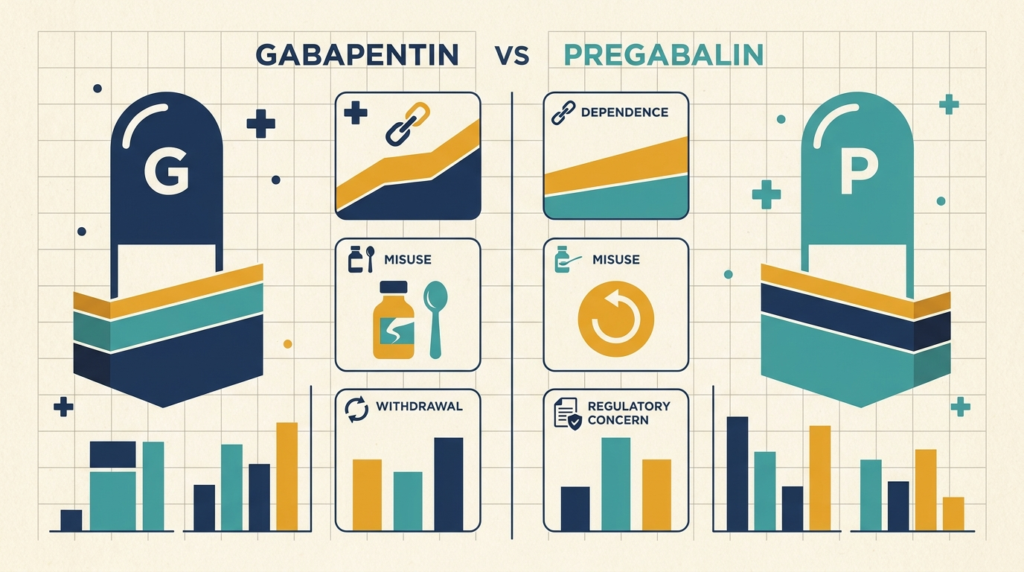
Pregabalin has higher recognized abuse liability than gabapentin. Pregabalin is a Schedule V controlled substance in the United States, while gabapentin is not federally scheduled, though a growing number of states regulate it. A 2026 observational study on gabapentin and pregabalin noted that pregabalin’s abuse liability is consistent with its Schedule V status, whereas gabapentin is federally unscheduled but associated with misuse in certain populations.
Pregabalin may produce more reinforcing effects because of more rapid absorption and greater potency. Both drugs require caution, but pregabalin carries a stronger and more consistently documented misuse signal.
Is Gabapentin Physically Addictive? Dependence and Withdrawal
Physical dependence is well established for both gabapentin and pregabalin. This is separate from addiction. A patient can become physically dependent without compulsive use, craving, or loss of control. But dependence still causes real harm if the drug is stopped suddenly.
What Withdrawal Feels Like
Withdrawal symptoms usually appear within 48 hours after stopping. Bpacnz deprescribing guidance lists anxiety, insomnia, nausea, sweating, dizziness, headache, tremor, low mood, and malaise as common symptoms. In more severe cases, especially after high-dose or long-term use, symptoms can include confusion, hallucinations, psychotic symptoms, suicidal ideation, and seizures.
A 2021 case series found that pregabalin withdrawal can occur even in patients without psychiatric disorders who took regular therapeutic doses for about two months. That finding matters because it counters the assumption that withdrawal only happens to people who misuse the drug.
A 2023 case report described a man with no psychiatric or substance-use history who developed delirium after abruptly stopping pregabalin. He had been taking more than 2 g per day and exhausted his prescription early. The report noted that pregabalin discontinuation may cause diaphoresis, tachycardia, tremors, paranoia, seizures, and delirium, and that gabapentin discontinuation delirium has also been reported.
Why Is Gabapentin Considered Addictive by Regulators?
The regulatory picture has shifted. In 2026, the MHRA concluded that existing product information did not sufficiently communicate the risks of addiction, dependence, withdrawal, and tolerance for gabapentinoids. The agency strengthened labeling and patient resources, explicitly advising clinicians to discuss a tapering strategy before starting treatment. Tapering from a high dose may take weeks or months.
A 2025 legal analysis found that from January 2016 through December 2024, 25 U.S. jurisdictions enacted policies related to gabapentin scheduling or required prescription reporting. Of these, 8 classified gabapentin as Schedule V at some point, and 17 required prescription drug monitoring program reporting without a Schedule V classification. That regulatory trend reflects a field-wide reassessment of gabapentin’s risk profile.
Who Faces the Highest Risk
Risk is not evenly distributed. The evidence points to a predictable profile of people most likely to experience misuse, dependence, or serious harm.
- People with opioid use disorder, where gabapentinoids may be sought to potentiate opioid effects or ease withdrawal symptoms
- People using benzodiazepines, alcohol, or other central nervous system depressants
- Those with psychiatric comorbidity such as anxiety, depression, or PTSD
- Patients on high doses or long treatment durations
- Older adults, who face greater sedation, fall risk, and respiratory vulnerability
- People with chronic kidney disease, because gabapentin is renally eliminated and toxicity is frequently missed
- Those with a history of any substance use disorder
A study of 140 patients using gabapentinoids for neuropathic pain found abuse in 17.9% of patients. Risk factors included smoking, alcohol use, anxiety, depression, living alone, dose, and duration of use. This shows that misuse is not confined to illicit drug markets. It can emerge among patients treated for legitimate pain conditions.
A bibliometric review on pregabalin misuse noted that while gabapentinoid misuse in the general population is estimated at about 1%, pregabalin misuse among people with opioid use disorder has been reported in a range from 3% to 68% across different studies and settings. Opioid use disorder is one of the strongest risk markers for gabapentinoid misuse.
Is Gabapentin Addictive for Sleep or Anxiety?
Gabapentin is sometimes used off-label for insomnia or anxiety. This is an area of particular concern. People may find that gabapentin reduces anxiety or improves sleep, which can drive dose escalation over time. The same psychoactive effects that make it feel helpful, including sedation, relaxation, and emotional blunting, are also the effects that drive misuse.
Gabapentinoids are not licensed for non-neuropathic pain, and NICE advises against their use for low back pain, sciatica, and chronic primary pain. Using them long-term for sleep or anxiety without a clear indication, regular review, or an exit strategy increases population-level harm without a strong evidence base for benefit.
At What Dose Is Gabapentin Addictive?
There is no single threshold dose at which gabapentin becomes addictive. Risk increases with higher doses and longer duration, but the 2021 case series showed that withdrawal can occur even at doses as low as 150 mg per day after about two months of use. The more useful question is not about a specific dose but about the combination of dose, duration, individual risk factors, and co-prescribed medications.
The FDA warned in 2019 that serious breathing difficulties may occur in patients using gabapentin or pregabalin who have respiratory risk factors, including opioid use, other CNS depressants, chronic obstructive pulmonary disease, and older age. A review of FDA adverse event reports from 2012 to 2017 identified 49 cases of respiratory depression, including 12 deaths, with respiratory risk factors present in 92% of cases.
Overdose Risk: The Combination Problem
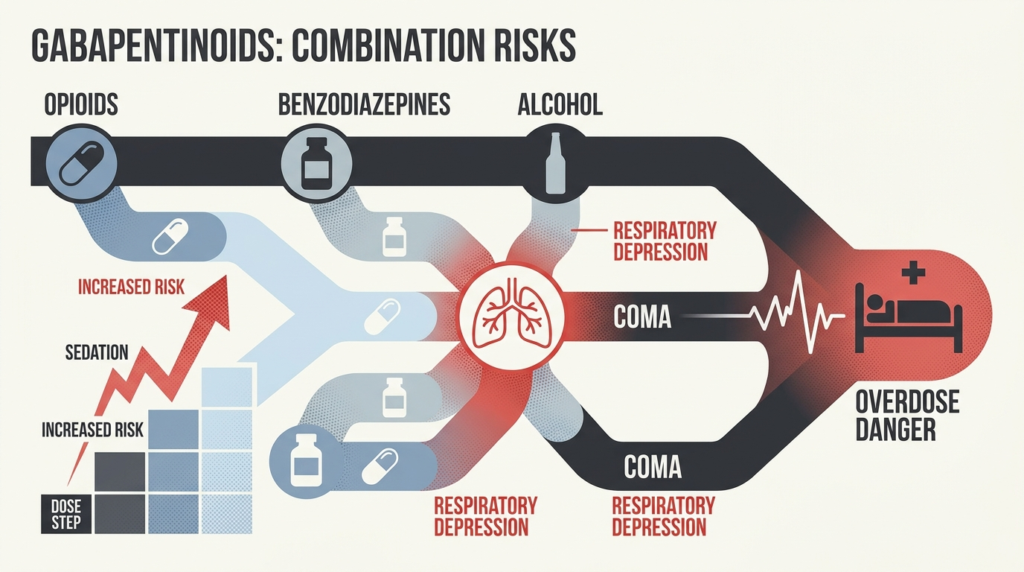
Gabapentinoids alone are less likely than opioids or benzodiazepines to cause fatal respiratory depression in healthy individuals. The danger rises sharply with combinations.
A 2026 PLOS Medicine study analyzed up to 10 years of data on 16,827 people prescribed a gabapentinoid and hospitalized at least once for drug poisoning. The Pharmaceutical Journal reported that drug poisoning risk was elevated in the first 28 days of gabapentinoid treatment. When gabapentinoids were combined with opioids, poisoning risk was about 30% higher among gabapentinoid users, and doubled in the first four weeks compared to neither drug. When combined with benzodiazepines, risk was about twofold higher overall and fourfold higher in the first four weeks.
A 2022 systematic review and meta-analysis found that opioid-gabapentinoid combination therapy was associated with increased CNS depression and mortality, though the authors noted that observational mortality signals can be affected by illness severity and prescribing context.
Warning Signs of Misuse
Knowing what to watch for can prevent serious harm. The clearest warning signs are behavioral and prescription-pattern changes.
- Taking more than prescribed or escalating the dose without approval
- Requesting early refills or reporting lost prescriptions repeatedly
- Seeking the medication from multiple prescribers or pharmacies
- Using gabapentin or pregabalin for euphoria, sedation, or emotional numbing rather than the prescribed reason
- Combining with opioids, alcohol, or benzodiazepines without medical guidance
- Reluctance to attend review appointments or engage with dose reduction discussions
Ireland’s Health Service Executive reported an increase in deaths where pregabalin was implicated, from 14 deaths in 2013 to 84 deaths in 2020. While these figures do not prove pregabalin alone caused each death, they represent a strong safety signal in the context of known CNS depressant interactions and misuse patterns.
Safe Use and Tapering
Safe use starts before the first prescription. The MHRA recommends discussing a strategy for reducing or ending treatment before starting gabapentinoids. Setting measurable goals, reviewing early, and planning an exit strategy from the beginning reduces the risk of long-term dependence.
Key principles for safe use include:
- Prescribe only for appropriate indications, primarily neuropathic pain or epilepsy
- Review within 8 weeks for pain; if no meaningful benefit is documented, taper and stop
- Avoid or minimize co-prescribing with opioids, benzodiazepines, alcohol, and other CNS depressants
- Adjust doses for kidney function, especially in older adults and those with chronic kidney disease
- Never stop abruptly; taper gradually and flexibly, often 5 to 10% of the current dose every two to six weeks for long-term users
- Pause or step back to the previous dose if withdrawal symptoms become intolerable
- Monitor for anxiety, insomnia, tremor, mood changes, confusion, and suicidal thoughts during tapering
If you or someone you know is struggling with gabapentin or pregabalin dependence, reaching out for professional support is the right next step. Thoroughbred Wellness and Recovery offers prescription drug treatment with medical detox, dual diagnosis care, and individualized tapering support to help you stop safely and build a path forward.


 Give Us A Call


