
 info@thoroughbredbhc.com
Recognizing the signs of meth use can be the difference between early help and a life-threatening crisis.
Methamphetamine-involved overdose deaths rose from 2,266 in 2011 to 34,855 in 2023, according to CDC surveillance data, making recognition more urgent than ever.
This article walks through the most common physical, behavioral, and psychiatric signs of meth abuse so you can act with confidence.
Signs of Meth Use: What to Look For First?
The most reliable early signs of meth use are not dramatic physical changes like rotting teeth or skin sores. They are behavioral: prolonged wakefulness, appetite loss, restlessness, and growing suspiciousness.
These signs often appear long before visible physical deterioration sets in, which means waiting for extreme changes can cost critical time.
No single sign proves meth use. What matters is a pattern across time and domains. The sections below break that pattern into five clear clusters so you can recognize it early.
Physical Signs Someone is on Meth
When someone is actively using meth, the body shows the strain of stimulant overload almost immediately. Methamphetamine floods the nervous system, pushing the heart, blood vessels, and brain into overdrive.
Common acute physical signs include:
- Rapid or irregular heartbeat
- Elevated blood pressure
- Sweating and overheating
- Tremor or shakiness
- Dry mouth
- Dilated pupils
- Jaw clenching or teeth grinding
- Reduced appetite
- Prolonged wakefulness or inability to sleep
In severe cases, stimulant toxicity can progress to seizures, muscle breakdown, stroke, heart attack, or death. These are not rare edge cases. They reflect the drug’s direct effect on the cardiovascular and central nervous systems.
Why Insomnia Is One of the Strongest Clues?
Prolonged wakefulness stands out among physical signs because it links so many other symptoms together.
A person who has been awake for 24, 48, or even 72 hours will show intensified paranoia, irritability, and impulsivity. Sleep deprivation amplifies nearly every other sign on this list.
If someone you know is staying awake for unusually long stretches, appearing wired rather than tired, and then crashing hard for extended periods, that cycle alone is a meaningful red flag.
Long-Term Physical Signs of a Meth User
Chronic use adds a second layer of visible physical damage. Over time, signs of a meth user often include:
- Significant, unexplained weight loss
- Severe tooth decay or tooth loss, sometimes called “meth mouth”
- Skin sores and excoriations from picking or scratching
- Persistent dry mouth
- Poor hygiene and general physical neglect
- Cardiovascular complications including chest pain and exertional intolerance
“Meth mouth” results from a combination of dry mouth, teeth grinding, poor nutrition, and neglected dental care. It reflects sustained use rather than occasional exposure.
Skin sores often have a psychiatric component: many users pick at their skin in response to tactile hallucinations or the false belief that insects are crawling under the skin, a condition known as delusional parasitosis, which neurologic research identifies as a recognized manifestation of meth-related psychosis.
Behavioral Signs of Meth Abuse
Behavioral changes are often the first thing family members and friends notice. They tend to appear before severe physical deterioration and can be more diagnostically useful than appearance alone.
Common behavioral signs of meth abuse include:
- Unusually high energy or sustained activity
- Restlessness and inability to sit still
- Rapid, pressured speech
- Repetitive or compulsive behaviors like sorting, searching, or picking
- Irritability and short temper
- Impulsive or reckless decisions
- Aggressive outbursts
- Risky sexual behavior
- Chaotic daily routines and missed obligations
- Social withdrawal or sudden conflict with family and friends
The Binge-and-Crash Cycle
One of the most telling behavioral patterns is the cycle of intense activity followed by a crash. During a binge, a person may stay awake for days, eat almost nothing, and appear driven or frantic.
After the binge ends, they may sleep for an unusually long time, appear deeply depressed, and show little interest in food or activity.
When this cycle repeats weekly or more often, it is a strong indicator of stimulant use. Clinical literature on stimulant emergencies describes this pattern as a core feature of methamphetamine use disorder rather than an occasional side effect.
Impulsivity and Cognitive Decline
Chronic meth use damages the brain’s ability to plan, organize, and delay gratification.
Research shows that people with methamphetamine dependence are more likely to choose smaller immediate rewards over larger delayed ones, a sign of impaired executive function. In daily life, this looks like:
- Forgetting commitments or recent events
- Difficulty following through on plans
- Poor financial decisions
- Inability to maintain work, school, or caregiving roles
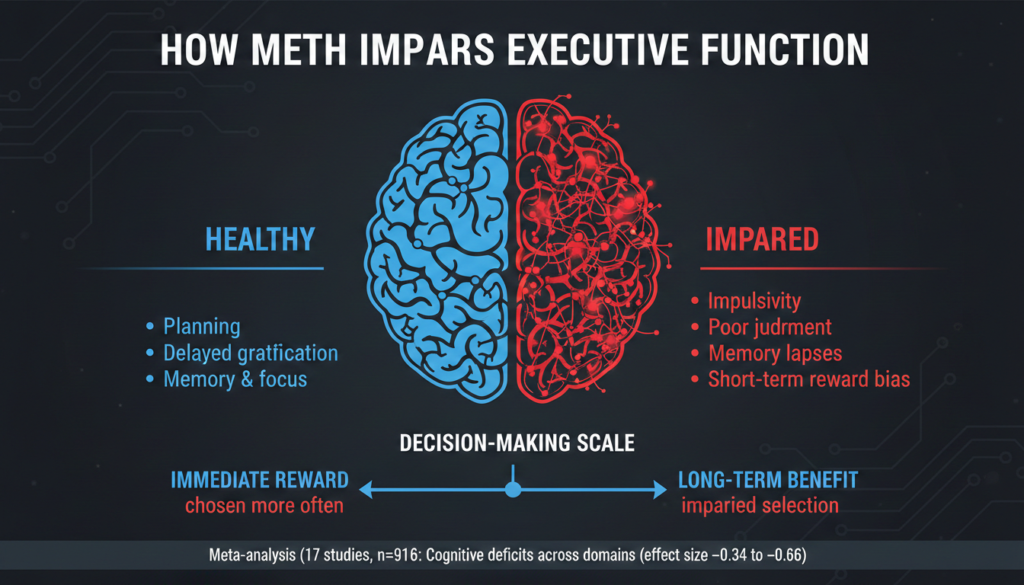
A meta-analysis of 17 studies covering 916 participants found negative effects across nearly all cognitive domains in people with chronic meth use, with effect sizes ranging from -0.34 to -0.66.
These are not subtle changes. They affect real-world functioning in ways that are often more disabling than the visible physical signs.
Signs Someone is Doing Meth: Psychiatric Red Flags
Psychiatric symptoms are among the most clinically significant signs of meth abuse, yet they are often the most misunderstood. Many people expect meth use to look like physical deterioration. In reality, psychiatric presentations often come first and can be more severe.
Research on methamphetamine toxicity reports that psychiatric complaints account for about 50% of emergency department visits related to meth use in the United States, including agitated delirium and psychosis.
Paranoia and Psychosis
Paranoia is the most common psychiatric sign in acute meth intoxication. A retrospective emergency department series of 287 meth intoxication presentations found that 71% had features of acute psychosis, and paranoid delusions were present in 65% of those cases. Most episodes resolved within about 15 hours, but not all did.
Signs of meth-induced psychosis include:
- Believing others are watching, following, or plotting against them
- Hearing voices or seeing things that are not there
- Tactile sensations like insects crawling under the skin
- Fixed false beliefs that cannot be reasoned away
- Intense fear or hypervigilance
- Disorganized thinking or speech
About 27% of people reporting heavy meth use have experienced at least one psychotic episode, and over 30% of drug-induced psychotic episodes are expected to transition to a primary psychotic disorder over time. In some cases, psychosis persists for months after stopping use.
The 2025 forensic psychiatry review found that 10% to 28% of people with meth-associated psychosis continued to experience symptoms for more than six months after stopping.
Anxiety, Depression, and Mood Instability
Beyond psychosis, meth use commonly produces:
- Intense anxiety or panic attacks
- Severe irritability and mood swings
- Deep depression and anhedonia, the inability to feel pleasure
- Suicidal thoughts, especially during withdrawal
Depression and anhedonia are especially prominent during the crash phase. Repeated dopamine depletion can leave a person unable to experience ordinary pleasure without the drug, which drives continued use and makes recovery harder.
How to Tell if Someone Is Using Meth: A Pattern-Based Approach
The most valid way to tell if someone is using meth is not to look for one dramatic sign. It is to recognize a recurring cluster of changes from that person’s normal baseline.
| Domain | Early Signs | Later or Severe Signs |
|---|---|---|
| Sleep | Reduced need for sleep, staying up unusually late | Days without sleep, binge-crash cycles |
| Appetite and weight | Skipping meals, eating less | Rapid weight loss, gaunt appearance |
| Behavior | Restlessness, rapid speech, irritability | Aggression, reckless decisions, chaotic routines |
| Psychiatric | Anxiety, suspiciousness | Paranoia, hallucinations, psychosis |
| Physical | Sweating, fast pulse, dry mouth | Skin sores, dental decay, cardiovascular symptoms |
| Cognition | Forgetfulness, poor focus | Executive dysfunction, memory impairment |
Compare to Baseline
The most useful question is: what changed? A person who was previously calm and organized but is now restless, suspicious, and unable to sleep is showing a meaningful departure.
Behavioral change from baseline often matters more than the absolute severity of any one sign.
Look for Route-Specific Clues
Meth can be smoked, snorted, injected, or swallowed. Each route leaves different clues:
- Smoking: glass pipes, burn marks, chemical smells, frequent lighters
- Snorting: nasal irritation, frequent sniffing, nosebleeds
- Injecting: needles or syringes, track marks, skin infections or abscesses
Route evidence combined with symptom patterns substantially increases confidence that meth use is occurring.
Assume Possible Fentanyl Exposure
This is one of the most important updates to meth recognition in recent years. Drug-checking research has found fentanyl present in methamphetamine samples collected by community-based services, and some estimates place fentanyl prevalence in unregulated stimulant supplies at 5.9% to 15% depending on the setting.
This means someone who appears to be using only meth may also be exposed to opioids without knowing it. If a person who seems stimulated suddenly becomes hard to wake, breathes slowly, or has blue lips, that is a possible opioid overdose emergency even if meth use is suspected.
CDC guidance recommends keeping naloxone available and using fentanyl test strips with methamphetamine and other drugs. SAMHSA supports access to fentanyl and xylazine test strips through certain funded programs.
When Signs of Meth Use Become a Medical Emergency?
Some signs require immediate emergency response, not watchful waiting.
Call emergency services right away if someone shows:
- Chest pain or palpitations
- Seizure
- Stroke-like symptoms such as sudden weakness, slurred speech, or facial drooping
- Collapse or loss of consciousness
- Severe overheating with confusion
- Slowed or stopped breathing
- Psychosis with danger to self or others
Washington State Department of Health guidance lists severe agitation, rapid or abnormal heart rhythm, high blood pressure, hyperthermia, stroke, and heart attack among stimulant overdose emergencies.
The National Harm Reduction Coalition uses the term “overamping” for dangerous stimulant over-intoxication and includes chest pain, extreme anxiety, hallucinations, tremors, and irregular breathing among its warning signs.
Even if the person is believed to be using only meth, give naloxone and call for help if breathing slows or they cannot be woken. Fentanyl contamination makes this the safest assumption.
What Meth Abuse is Often Mistaken For?
Several conditions share signs with meth use, which is why pattern recognition across time matters more than any single observation.
- Cocaine use produces similar stimulant signs, but meth effects typically last much longer. Prolonged insomnia lasting days is more suggestive of meth.
- Bipolar mania can look like stimulant intoxication, with reduced sleep, fast speech, and elevated energy. Key differences may include a prior mood history and the absence of route clues or physical deterioration.
- Primary psychotic disorders like schizophrenia can resemble meth-induced psychosis. Timing relative to drug use, toxicology results, and collateral history help distinguish them, but clinical evaluation is often necessary.
- ADHD medication misuse can cause appetite loss, insomnia, and talkativeness, but severe paranoia, prolonged sleeplessness, and major physical decline are more concerning for meth.
- Medical conditions like hyperthyroidism, anxiety disorders, or sleep deprivation can produce restlessness, sweating, and tachycardia.
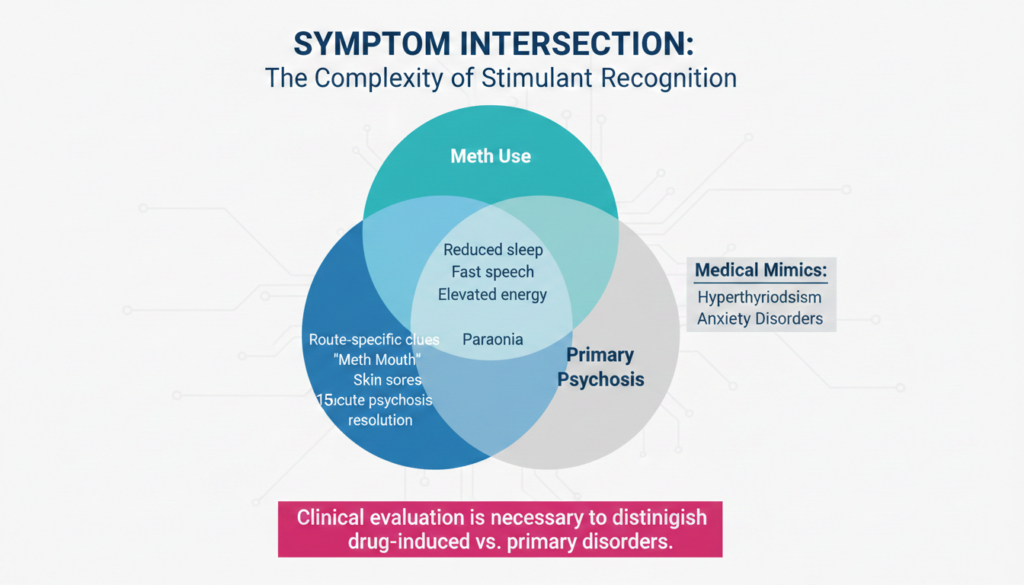
The ASAM/AAAP clinical practice guideline on stimulant use disorder emphasizes structured identification and diagnosis rather than reliance on stereotypes, which supports a careful, pattern-based approach over quick visual judgments.
Why Early Recognition Matters?
There are currently no FDA-approved medications specifically for methamphetamine use disorder. Treatment is primarily behavioral, with contingency management and cognitive-behavioral therapy showing the strongest evidence.
Because there is no meth equivalent of methadone or buprenorphine, waiting for use to become obvious is especially costly.
Earlier recognition supports:
- Entry into behavioral treatment before severe deterioration
- Psychiatric stabilization before psychosis becomes entrenched
- Prevention of cardiovascular and neurologic injury
- Overdose prevention through naloxone access and fentanyl awareness
- Engagement with recovery support before social and cognitive decline deepens
SAMHSA’s National Helpline at 1-800-662-HELP (4357) is available 24 hours a day, seven days a week, and can connect people with local treatment options at no cost.
The Bottom Line on Signs of Meth Abuse
The most reliable signs of meth abuse are not the dramatic physical stereotypes that dominate public perception.
They are a recurring pattern of stimulant activation, sleep disruption, appetite suppression, behavioral volatility, and escalating paranoia or psychosis. Severe dental damage and skin sores are real, but they tend to appear later and are less useful for early recognition.
The most actionable early warning cluster is: prolonged wakefulness plus appetite suppression plus agitation or suspiciousness.
When that triad repeats, especially alongside route clues or progressive physical and social decline, concern is well founded and professional evaluation is warranted.
If you are worried about someone you care about, you do not have to figure this out alone. Reach out to the team at Thoroughbred Wellness and Recovery to explore stimulant addiction treatment options and take the first step toward real support.


 Give Us A Call


