
 info@thoroughbredbhc.com
Why does getting sober feel impossible when old trauma keeps resurfacing the moment the drinking or using stops? Trauma therapy for addiction treats the memories and nervous system patterns behind the cravings, and integrated trauma focused care has consistently been shown to reduce PTSD symptoms more than addiction only treatment alone. This article explains how trauma and addiction connect and what treatment can actually help you heal both at once.
What Is Trauma Therapy for Addiction?
Trauma therapy for addiction is a set of treatments that target the traumatic memories, beliefs, and body based stress responses that often sit underneath substance use. Instead of treating addiction as a standalone problem, this approach treats the wound that may have started it in the first place.
Major treatment guidance backs this idea directly. Having a substance use disorder should not block someone from getting PTSD care, and many people can work on trauma and recovery from drugs or alcohol at the same time rather than one after the other, according to VA treatment guidance from the Department of Veterans Affairs.
That matters because trauma and addiction rarely show up alone. When one goes untreated, it tends to feed the other, and treating only the substance use often leaves the real driver in place.
How Trauma and Addiction Feed Each Other
Trauma and addiction often travel together, and the numbers back this up. Among adults with PTSD, roughly 45 percent also struggle with alcohol or drug problems. Veterans with PTSD are about twice as likely to have alcohol problems and three times as likely to have drug problems compared with veterans who do not have PTSD.
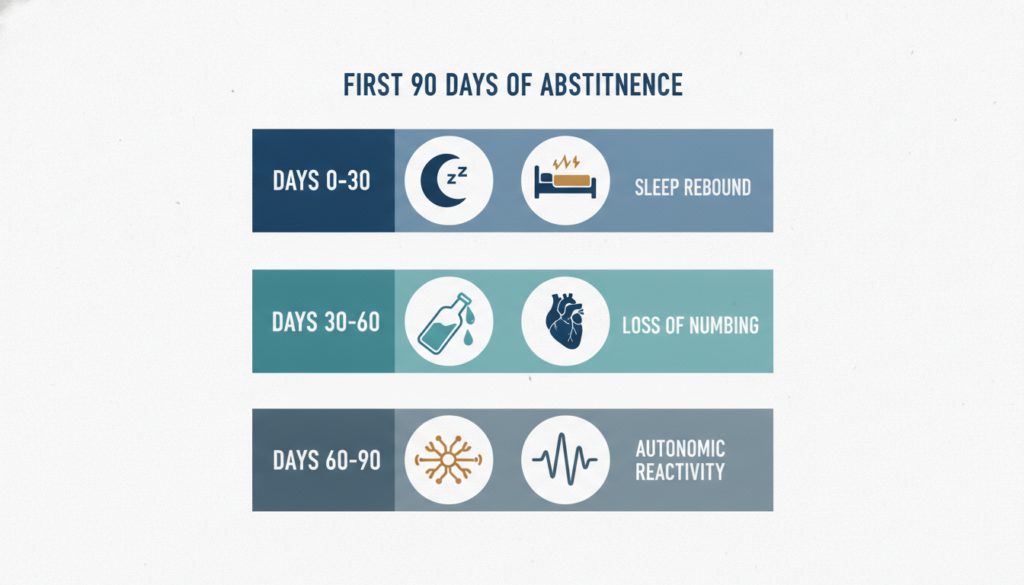
PTSD and addiction often reinforce each other in ways that are easy to miss. Substance use frequently starts as a shortcut. It can quiet a racing heart, dull a flood of memories, or make sleep feel possible again. The relief feels real in the moment, even though it does not fix anything underneath.
Over time, the brain learns that using is the fastest way out of pain. That learned pattern is a big part of why willpower alone rarely solves the problem. When the substance goes away, the original pain is still there, and now withdrawal is added on top of it.
Does Trauma Lead to Addiction?
How does trauma cause addiction in the first place? For many people, trauma comes first, and substance use starts as a coping tool rather than a search for a high.
Someone who feels constantly on edge, who cannot sleep without nightmares, or who carries deep shame about something that happened to them may reach for a drink or a pill simply to feel normal for a few hours. That is not weakness. It is a nervous system looking for relief anywhere it can find it.
This does not mean every person with a substance use problem has unresolved trauma, but it does mean the question deserves to be asked honestly rather than assumed away.
PTSD and Substance Abuse: A Common Pairing
PTSD is more than constant worry. According to the World Health Organization, it can include unwanted memories, nightmares, and flashbacks that make a person feel like the trauma is happening again, along with avoidance of reminders, negative shifts in mood and belief, and a body stuck on high alert.
Each of these symptoms can quietly point someone toward substances. Nightmares make sleep feel dangerous, so a drink or a pill promises rest. Intrusive memories feel unbearable, so numbing starts to look appealing. Hypervigilance keeps the body tense, so anything that turns down the volume seems like relief, even for a short while.
This is one reason PTSD and substance abuse show up together so often in treatment settings. The substance is doing a job, even a harmful one, and that job needs to be replaced with something safer before it can be removed.
The Self Medication Hypothesis Explained
The self medication hypothesis is a simple idea with real research behind it. It suggests that people often use alcohol or drugs to manage feelings and symptoms they cannot otherwise control, rather than purely for pleasure.
Sleep is one clear example. Poor sleep and vivid, disturbing dreams are common in PTSD, and this kind of sleep disruption can weaken daytime coping and increase the pull toward anything that promises rest, according to PTSD sleep research. A drink at bedtime might feel like the only way to fall asleep, even though it tends to make sleep worse over time.
The same pattern shows up with anxiety, anger, guilt, and grief. The substance is rarely the real target. It is standing in for a coping skill the person never had the chance to build, often because no one ever taught them a safer one.
Childhood Trauma and Addiction Risk
Childhood trauma and addiction are closely linked, and this connection often starts long before a person’s first drink or first pill. Growing up around abuse, neglect, violence, or ongoing instability can shape how a person’s stress system develops, leaving them more sensitive to threat and less equipped to manage big emotions later in life.
Programs that take this seriously build care around trauma informed principles. National guidance frames trauma informed practice around safety, trust, choice, and collaboration, according to a widely used trauma informed framework, rather than treating a trauma history as a single checkbox on an intake form.
This matters because a childhood trauma history does not mean someone has to describe every painful detail before they can get help. It means the people treating them should ask carefully, listen without judgment, and shape the plan around what actually happened, not around a generic script.
Trauma Informed Addiction Treatment Approaches
Trauma informed addiction treatment is not one specific therapy. It is a way of running a program so care does not accidentally repeat old harm. A few ideas tend to show up again and again in programs that do this well:
- Safety, so clients feel physically and emotionally secure
- Trust and transparency, so people know what to expect and why
- Peer support, so recovery does not happen in isolation
- Collaboration, so treatment feels like a partnership rather than a lecture
- Choice, so clients keep some control over their own care
- Awareness of culture, history, and identity, so care fits the person in front of the clinician
Research summarized in a trauma treatment review supports pairing this kind of trauma informed environment with active trauma focused treatment, rather than choosing one over the other. A safe setting and real trauma work are meant to happen together, not in sequence.
Trauma Therapy for Addiction: What Actually Works
Once safety and trust are in place, several trauma focused therapies have real evidence behind them for people facing both PTSD and addiction at the same time.
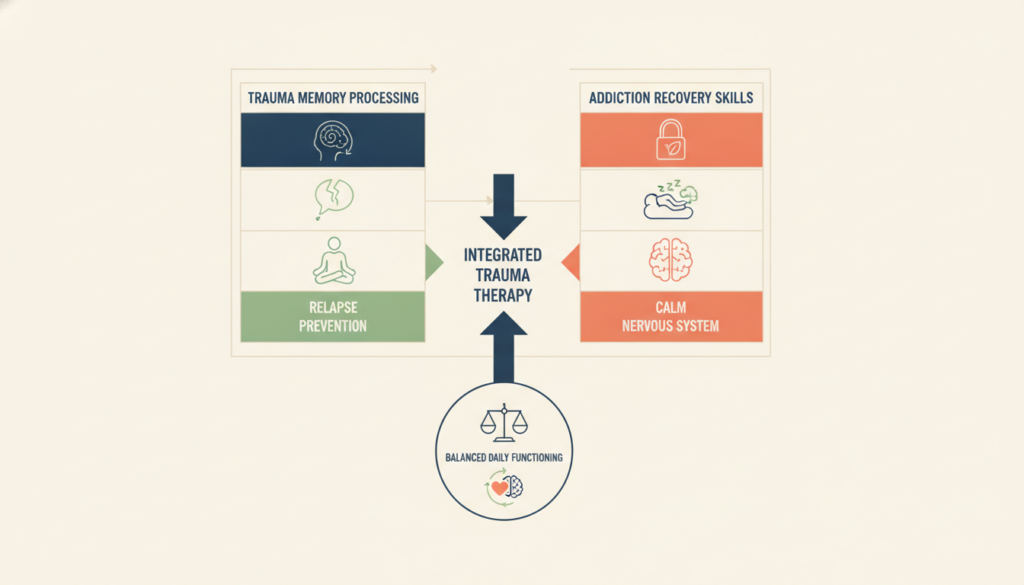
Prolonged exposure and cognitive processing therapy help people work through trauma memories and the beliefs attached to them. EMDR uses guided attention to help the brain reprocess disturbing memories. A treatment called COPE combines exposure based trauma work with relapse prevention skills built specifically for people managing PTSD and substance use together.
A randomized trial testing this kind of combined care found that exposure based treatment reduced PTSD symptoms even among participants who had not reached full abstinence. A separate pilot study of women with alcohol dependence reported no adverse events and real drops in PTSD symptoms, depression, and drinking severity after combined trauma treatment.
A broader review pooling 28 randomized trials and more than 3,000 participants found that active treatments for PTSD and substance use together generally led to improvement, with trauma focused approaches outperforming plain treatment as usual, based on meta analysis findings. Waiting for complete sobriety before starting this kind of therapy is not supported by this evidence. For many people, that wait only delays the help that would make sobriety easier to hold onto in the first place.
Why Healing the Root Cause Matters
Addiction treatment that skips trauma is treating the symptom while leaving the cause untouched. A large analysis of dozens of studies found that integrated trauma focused care produced bigger drops in PTSD symptoms than addiction only treatment or generic support therapy, with the widest gap showing up against plain control treatment, based on Project Harmony findings.
That gap matters in daily life. Fewer nightmares can mean fewer nights spent drinking just to fall asleep. Fewer flashbacks can mean fewer moments where using feels like the only way out. Healing the root cause does not erase what happened, but it can loosen the grip that memory has held over someone’s choices for years.
Recovery built this way tends to hold up better over time, because it stops asking someone to stay sober while carrying an untreated wound in silence. Addressing trauma and addiction together gives both problems a real chance to heal.
If trauma has been quietly running the show behind your drinking or drug use, you do not have to untangle it alone. Take the first step with Thoroughbred Wellness and Recovery and explore trauma therapy services. Start healing what is actually driving the addiction.


 Give Us A Call


