
 info@thoroughbredbhc.com
Choosing between a Partial Hospitalization Program and an Intensive Outpatient Program (PHP vs IOP), can feel overwhelming when you or someone you care about needs addiction or mental health treatment.
The first thing to know is that both levels provide structured outpatient care while allowing you to return home each night, but they differ significantly in daily time commitment, clinical intensity, and the amount of independence expected between sessions.
According to the American Society of Addiction Medicine, PHP typically requires 20 or more hours of treatment weekly with near-daily clinical contact, while IOP generally involves 9 to 19 hours per week with greater flexibility for work, school, or family responsibilities.
This article will walk you through the practical differences, help you understand which level might fit your situation, and explain how these programs work together as part of a continuum of care.
What is a Partial Hospitalization Program?
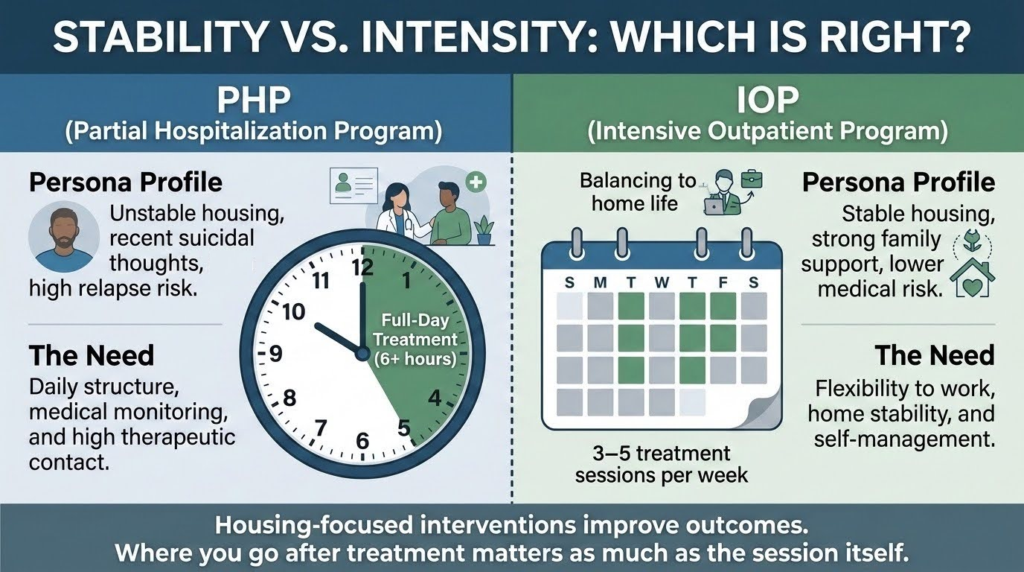
A Partial Hospitalization Program is the most intensive form of outpatient treatment available without requiring an overnight stay. PHP delivers a full day of structured programming, usually five to seven days per week, often running about six hours each day.
The ASAM Criteria designates PHP as Level 2.5, now also called High Intensity Outpatient in the Fourth Edition framework, and it is designed for people who need substantial daily support but not 24-hour inpatient supervision.
Most PHP schedules run from morning through late afternoon, resembling a full-time commitment. You attend group therapy, individual counseling, medication management sessions, psychiatric evaluations, and skills-building activities throughout the day.
The clinical team typically includes psychiatrists, nurses, therapists, and case managers who monitor your progress closely and can respond quickly if symptoms worsen or medication needs adjustment.
PHP is often used as a step-down level after inpatient hospitalization or residential treatment. It can also serve as an alternative to hospitalization when someone is struggling significantly but can still return home safely each evening.
According to Virginia’s licensing standards, PHP must provide at least 20 hours of skilled treatment services weekly and maintain access to psychiatric consultation within eight hours by phone or 48 hours in person.
What is an Intensive Outpatient Program?
An Intensive Outpatient Program provides structured treatment at a lower intensity than PHP, typically requiring about nine to 19 hours of programming per week. IOP corresponds to ASAM Level 2.1 and is designed for individuals who need more than weekly outpatient therapy but can function safely and maintain stability between treatment sessions.
IOP schedules are more flexible than PHP, often meeting three to five days per week for about three hours per session. Many programs offer evening or weekend slots, making it easier to continue working, attending school, or managing family responsibilities while in treatment.
You participate in group therapy, individual counseling, relapse prevention work, and medication management, but with more time outside the program to practice recovery skills in real-world settings.
IOP can serve as a primary treatment option for people with moderate symptoms and stable home environments, or as a step-down level after PHP or residential care. The American Academy of Child and Adolescent Psychiatry notes that IOP is appropriate when someone can manage longer periods outside structured care without significant decompensation.
PHP vs IOP: Key Differences in Structure and Schedule
The most visible difference between PHP and IOP is the time commitment. PHP typically requires 20 to 30 hours of treatment weekly, often structured as five to six hours per day across five to seven days.
This schedule leaves little room for employment or school during active treatment. IOP, by contrast, usually involves nine to 15 hours weekly, commonly three hours per day for three to five days, allowing you to maintain work, education, or caregiving roles.
PHP provides a more immersive therapeutic environment with daily clinical contact, which means faster detection of problems and quicker intervention when symptoms shift. IOP offers more independence and expects you to apply coping skills between sessions, then process what worked or didn’t during your next group or individual session.
The staffing and clinical capability also differ. PHP programs must provide or arrange psychiatric services, medical services, laboratory work, toxicology screening, and emergency services, according to ASAM implementation guidance. IOP includes these services but with less frequent monitoring and more reliance on scheduled appointments rather than daily oversight.
| Feature | PHP | IOP |
|---|---|---|
| Weekly hours | 20+ hours | 9–19 hours |
| Daily schedule | 5–7 days, ~6 hours/day | 3–5 days, ~3 hours/day |
| Clinical monitoring | Daily or near-daily | Scheduled, less frequent |
| Work/school compatibility | Limited | Often feasible |
| Best for | Higher acuity, unstable symptoms | Moderate symptoms, greater stability |
How ASAM Dimensions Guide the PHP vs IOP Decision?
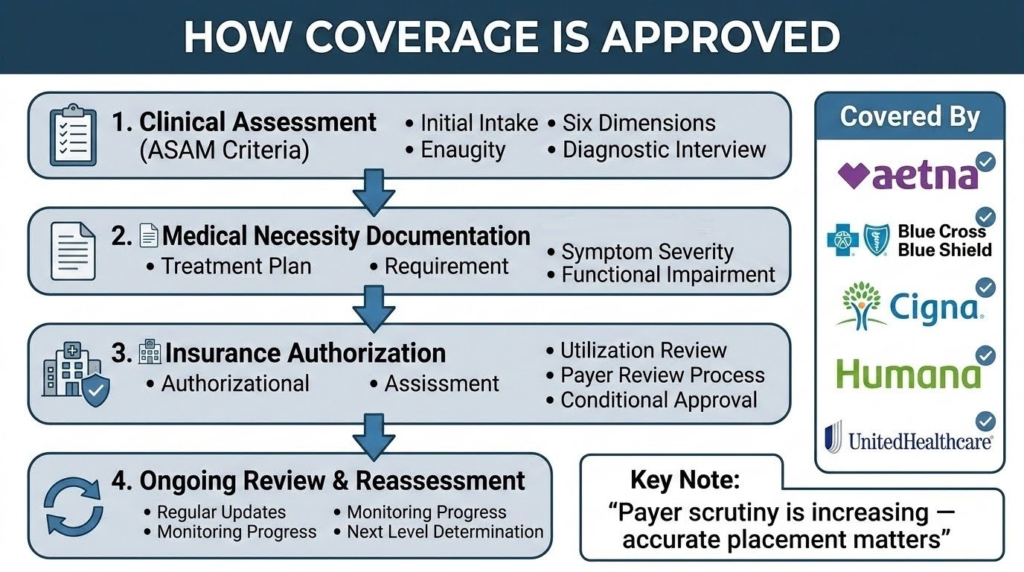
The ASAM Criteria bases level-of-care decisions on a comprehensive assessment across six dimensions rather than diagnosis alone.
These dimensions include acute intoxication and withdrawal potential, biomedical conditions, emotional and behavioral complications, readiness to change, relapse risk, and recovery environment. This multidimensional approach means that two people with the same diagnosis might need different levels of care depending on their unique circumstances.
For example, someone with moderate alcohol use disorder who has stable housing, strong family support, and no co-occurring psychiatric symptoms might do well in IOP. Another person with the same diagnosis but recent suicidal thoughts, unstable housing, and medication changes underway would likely need PHP’s daily structure and closer monitoring.
The recovery environment dimension is especially important. A 2025 peer-reviewed review found that housing-focused interventions, including recovery housing, were associated with reduced opioid use and improved abstinence outcomes. This research reinforces that where you go after each treatment session matters as much as what happens during the session.
If your home environment is chaotic, triggering, or unsupportive, PHP’s daily therapeutic contact may be necessary to maintain gains. If your home is stable and supportive, IOP’s greater independence becomes more viable.
Who Should Choose PHP?
PHP is generally the better choice when you need near-daily structure and monitoring but not 24-hour inpatient care.
Common situations that point toward PHP include recent discharge from psychiatric hospitalization or residential treatment with ongoing instability, frequent or recent suicidal thoughts requiring close monitoring, unstable medical or psychiatric conditions needing daily oversight, complex medication regimens in flux, high relapse risk or prior failure at lower levels of care, and co-occurring disorders with interactive severity.
PHP is also appropriate when symptoms significantly interfere with daily functioning. If you struggle to maintain basic self-care, work, or family responsibilities without intensive support, the full-day structure of PHP can provide the containment needed to stabilize.
According to treatment implementation sources, PHP is often indicated when the main clinical question is not whether you need treatment, but whether you can remain safe and functional during the hours between sessions.
One important nuance is that PHP still assumes you can return home safely at night. If your home environment is unsafe enough, PHP may need to be paired with recovery housing or supportive living arrangements to be effective.
Who Should Choose IOP?
IOP is typically the better choice when you have moderate symptom severity, can remain stable between sessions, and need treatment that fits around work, school, or family obligations.
IOP works well for people stepping down from PHP or residential treatment after stabilization, those with stable medication regimens or only minor adjustments needed, individuals with supportive and relatively safe home environments, and those who can apply coping skills between sessions without significant decompensation.
IOP can also serve as a primary treatment option, not just a step-down level. If you have moderate addiction or mental health symptoms, adequate support at home, and the ability to manage daily responsibilities with structured weekly support, starting directly in IOP may be appropriate.
According to clinical comparison sources, IOP is ideal for people who are stable enough to live at home and still need intensive support to prevent relapse and build recovery skills.
The flexibility of IOP schedules is a major advantage. Many programs offer evening sessions from 3:30 to 6:30 pm or similar time blocks, allowing you to work during the day and attend treatment afterward. This continuity can preserve income, insurance coverage, professional identity, and social connections that support long-term recovery.
Transitioning Between PHP and IOP
Movement between PHP and IOP is expected and should be driven by clinical progress rather than fixed timelines. The ASAM Fourth Edition emphasizes regular reassessment and the use of transition criteria to determine whether you are ready for a less intensive level, need a more intensive level, or should continue where you are.
The most common progression is inpatient or residential treatment, then PHP, then IOP, then standard outpatient care. However, this sequence is not mandatory. Some people start directly in IOP, others move from IOP up to PHP if symptoms worsen, and some bypass PHP entirely depending on their needs.
Step-down from PHP to IOP typically occurs when symptoms stabilize, crisis risk decreases, you can manage longer periods outside structured care, coping skills improve, medication adherence strengthens, and home support becomes more reliable.
Step-up from IOP to PHP is indicated when symptoms worsen, daily functioning declines, you cannot remain safe between sessions, relapse risk increases, home instability emerges, or psychiatric or medical concerns intensify.
According to treatment provider guidance, these transitions should follow clinical criteria rather than arbitrary calendars. Regular reassessment allows your treatment team to adjust intensity as your needs change, ensuring you receive the right level of support at each stage of recovery.
PHP vs IOP for Addiction Treatment
Both PHP and IOP are effective levels of care for substance use disorders, including alcohol, opioids, stimulants, and prescription drug addiction. The choice between them depends on severity, stability, and support rather than the specific substance involved.
PHP is often preferred for addiction treatment when withdrawal risk is present or recently managed, cravings are intense and frequent, relapse has occurred at lower levels of care, co-occurring psychiatric symptoms complicate treatment, or the home environment includes active substance use or other triggers.
The daily structure of PHP reduces unstructured time when cravings and triggers are most dangerous, and the frequent clinical contact allows rapid medication adjustments and crisis intervention.
IOP is often sufficient for addiction treatment when withdrawal is not a current concern, cravings are manageable with coping skills, you have a stable and supportive living situation, you need to maintain employment or family responsibilities, and you can practice recovery skills in real-world settings between sessions.
IOP’s focus on applying skills outside treatment and processing successes and setbacks during sessions can strengthen long-term self-management.
Both levels typically include evidence-based therapies such as Cognitive Behavioral Therapy, Dialectical Behavior Therapy, motivational interviewing, relapse prevention, and medication-assisted treatment when appropriate. The difference is not in the type of therapy but in the frequency, intensity, and immediacy of clinical support.
PHP vs IOP for Mental Health Treatment
PHP and IOP are also used extensively for mental health conditions including depression, anxiety disorders, bipolar disorder, PTSD, OCD, and other psychiatric concerns. The same intensity and support principles apply: PHP is better for higher acuity and instability, while IOP is better for moderate symptoms with adequate stability.
For mental health treatment, PHP is often indicated after psychiatric hospitalization, when suicidal thoughts or self-harm behaviors require close monitoring, during medication changes or trials, when symptoms significantly impair daily functioning, or when co-occurring substance use complicates psychiatric treatment. The American Academy of Child and Adolescent Psychiatry notes that PHP is appropriate when symptoms are worsening and may lead to hospitalization if unaddressed.
IOP is often appropriate for mental health treatment when symptoms are moderate and relatively stable, you can remain safe outside treatment hours, medication is working and requires only minor adjustments, you have adequate support at home, and you need structured therapy while maintaining work, school, or family roles. IOP’s flexibility makes it easier to continue normal routines, which can support recovery identity and community connection.
It is important to note that diagnosis alone does not determine the right level. Two people with major depression might need different levels of care depending on suicidality, functioning, medication stability, and home support. The decision should be based on a comprehensive assessment of all relevant factors.
Cost and Insurance Considerations
PHP generally costs more than IOP because it involves more weekly hours, more intensive staffing, greater psychiatric involvement, and broader clinical capability. However, both levels are typically covered by insurance when medically necessary.
Most major insurers including Aetna, Blue Cross Blue Shield, Cigna, Humana, and UnitedHealthcare cover PHP and IOP for addiction and mental health treatment.
Insurance authorization for PHP versus IOP is based on medical necessity, which is determined through structured assessment and documentation aligned with criteria such as ASAM. Payer scrutiny of level-of-care decisions is increasing, which means accurate placement and regular reassessment are important not only clinically but also for reimbursement.
If cost is a concern, it is worth noting that appropriate level-of-care placement can actually reduce overall costs by preventing relapse, crisis episodes, emergency department visits, and hospitalization.
Choosing IOP when PHP is needed may seem less expensive initially, but it can lead to treatment failure and higher costs downstream. Conversely, remaining in PHP longer than necessary increases burden and cost without added benefit.
Making the Right Choice for Your Situation
The best way to determine whether PHP or IOP is right for you is through a comprehensive assessment by a qualified treatment provider.
This assessment should evaluate your substance use or mental health symptoms, withdrawal risk, medical and psychiatric conditions, relapse potential, readiness to change, and recovery environment including housing stability and support systems.
Ask yourself these questions as you consider your options: Can I remain safe at home between treatment sessions? Do I need daily clinical monitoring or can I manage with scheduled appointments? Are my symptoms stable or do they fluctuate unpredictably? Do I have a supportive home environment or is it chaotic and triggering? Can I maintain work, school, or caregiving responsibilities during treatment? Have I tried a lower level of care and struggled to maintain progress?
If most of your answers point toward instability, high risk, or weak support, PHP is likely the better starting point. If your answers suggest moderate symptoms, adequate stability, and strong support, IOP may be sufficient and more sustainable.
Remember that the goal is not to choose the most intensive program available, but to choose the least intensive level that is still safe and effective for your unique situation.
Finding PHP and IOP Programs That Fit Your Needs
When evaluating PHP and IOP programs, look for providers that use evidence-based assessment frameworks such as ASAM, offer a continuum of care so you can transition smoothly between levels, provide both individual and group therapy, include medication management and psychiatric support, address co-occurring mental health and substance use disorders, and offer flexible scheduling options especially for IOP.
It is also important to consider practical factors such as location, transportation, insurance acceptance, and whether the program culture feels like a good fit. Some programs offer holistic therapies such as mindfulness, art therapy, or experiential activities alongside traditional clinical treatment, which can enhance engagement and outcomes.
The right program will conduct a thorough assessment before admission, explain clearly why they are recommending a particular level of care, involve you in treatment planning decisions, and commit to regular reassessment and adjustment as your needs change. Treatment should feel collaborative, not prescriptive, and should respect your strengths, preferences, and life circumstances.
Why the Difference Between PHP and IOP Matters?
Understanding the difference between PHP and IOP matters because choosing the right level of care affects your safety, your ability to engage in treatment, your capacity to maintain important life roles, and your likelihood of long-term recovery success.
Under-treatment can leave you vulnerable to relapse, crisis, or worsening symptoms. Over-treatment can disrupt employment, education, family functioning, and financial stability in ways that undermine recovery.
The PHP versus IOP decision is not about which program is “better” in the abstract. It is about which level of care matches your current needs, risks, and strengths. Both are valuable and effective when used appropriately, and both are part of a continuum designed to provide the right intensity of support at each stage of your recovery journey.
By understanding how PHP and IOP differ in structure, intensity, monitoring, and expectations, you can make a more informed decision and advocate for the level of care that truly fits your situation. Recovery is not one-size-fits-all, and the treatment system is designed to offer options that meet people where they are.
If you or someone you care about is navigating the decision between a PHP Program in Atlanta, and an IOP Program in Atlanta, reach out to a qualified treatment provider for a comprehensive assessment. The right level of care can make all the difference in building a foundation for lasting recovery and a healthier, more fulfilling life.
Contact Thoroughbred Wellness & Recovery to explore your options today!


 Give Us A Call


