
 info@thoroughbredbhc.com
Wet brain is a serious brain disorder caused by severe thiamine deficiency, and yes, it can be fatal if left untreated. According to medical research, untreated Wernicke encephalopathy carries a mortality rate of 10% to 20%, and about 80% of survivors who do not receive adequate treatment go on to develop permanent memory damage. This article explains what wet brain is, how to recognize its symptoms, and what treatment can realistically do at each stage.
What Is Wet Brain Syndrome?
Wernicke-Korsakoff syndrome, the medical name for wet brain, is not one disease but two connected stages of the same brain injury. The first stage is Wernicke encephalopathy, an acute neurological emergency. The second is Korsakoff syndrome, a chronic memory disorder that often follows when the first stage goes untreated or undertreated.
Both stages share the same root cause: a severe shortage of thiamine, also known as vitamin B1. Thiamine is essential for brain energy metabolism. When the brain runs low on it, vulnerable regions begin to fail. The mammillary bodies, thalamus, and cerebellum are especially at risk, and damage to these areas explains the memory loss, balance problems, and eye movement abnormalities that define wet brain syndrome.
Wet brain from alcohol is the most recognized form because chronic heavy drinking reduces thiamine intake, blocks intestinal absorption, depletes liver stores, and often comes with poor nutrition. But wet brain from drinking is not the only way this condition develops. According to StatPearls, wet brain syndrome also occurs after bariatric surgery, during pregnancy-related hyperemesis, in people with cancer, kidney dialysis, eating disorders, critical illness, and any other condition that cuts off the body’s thiamine supply.
How Fast Can Thiamine Stores Run Out?
Faster than most people expect. StatPearls notes that thiamine reserves can be depleted within about two weeks of limited intake. Once stores drop low enough, carbohydrate loading, including intravenous glucose given in a hospital, can trigger or worsen an acute episode by burning through whatever thiamine remains.
Wet Brain Symptoms: What to Watch For
One of the most dangerous features of wet brain is how easy it is to miss. The classic teaching triad of confusion, eye movement problems, and unsteady gait appears in only about 10% to 16.5% of patients, according to a 2025 Frontiers in Neurology review. Most people present with only one or two features, or with symptoms that look like something else entirely.
Symptoms of Wernicke Encephalopathy (Acute Stage)
- Confusion, disorientation, or delirium
- Memory and attention problems
- Drowsiness or apathy
- Nystagmus (rapid, involuntary eye movements) or double vision
- Unsteady gait and poor balance
- Hypothermia or low blood pressure
- Coma in severe cases
Australian alcohol treatment guidelines state that any person with heavy alcohol use who shows even one of these features should be treated as though wet brain is already established, even if they appear intoxicated.
Symptoms of Korsakoff Syndrome (Chronic Stage)
The chronic stage of wet brain syndrome looks very different from the acute stage. A person may hold a normal conversation while being completely unable to remember it five minutes later. This gap between apparent social function and actual memory capacity is one of the most disorienting aspects of Korsakoff syndrome for families and caregivers.
Core symptoms include severe anterograde amnesia (inability to form new memories), retrograde amnesia (gaps in older memories), confabulation (filling memory gaps with invented details without realizing it), apathy, poor insight into their own deficits, and executive dysfunction. One published case report documented retrograde amnesia spanning 20 years in a single patient, illustrating how profound the memory damage can become.
Is Wet Brain Fatal?
Wet brain can be fatal, and the risk is real. A 2025 case report states that Wernicke encephalopathy is associated with a mortality rate of 10% to 20% if left untreated. Emergency medicine sources cite similar figures. Death can result from the neurological injury itself, from complications of severe malnutrition, or from the underlying conditions driving thiamine depletion.
The good news is that the acute stage is often reversible when treated quickly. Eye signs and confusion can improve within hours to days after parenteral thiamine is given. Gait problems may take weeks to months. Memory deficits are the hardest to reverse and often persist even after other symptoms improve.
The harder truth is that once Korsakoff syndrome is established, full recovery is uncommon. The Alzheimer’s Society reports that about one quarter of treated patients make a good recovery, about half improve but still need ongoing support, and for some the damage is mostly permanent, especially if the person continues drinking or the brain injury was too extensive before treatment began.
So the most accurate answer to whether wet brain is fatal is this: it can be, but early treatment dramatically changes the outcome. The window between reversible and irreversible injury is real, and it closes faster than most people realize.
Wet Brain Treatment: What Actually Works
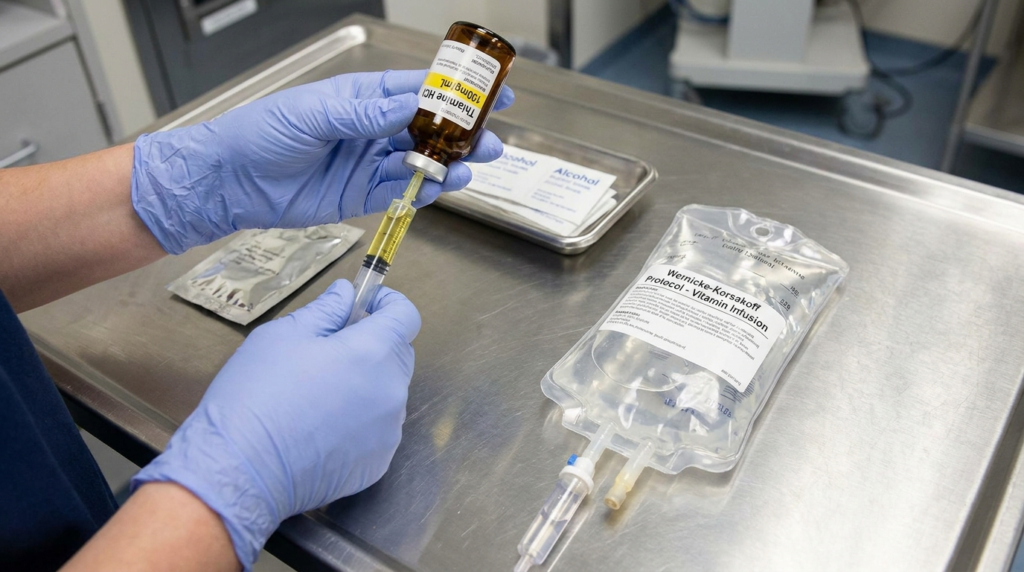
Treatment for wet brain depends entirely on which stage the person is in. The approach for acute Wernicke encephalopathy is urgent and medical. The approach for chronic Korsakoff syndrome is longer, slower, and more focused on rehabilitation and support.
Acute Treatment: Parenteral Thiamine First
The single most important intervention for suspected wet brain is immediate high-dose intravenous thiamine. Oral thiamine is not reliable in the acute phase because absorption is impaired in people with chronic alcohol use, vomiting, malnutrition, or gastrointestinal disease. A clinician-awareness review published in Primary Care Companion for CNS Disorders states that oral thiamine is not effective at preventing irreversible brain damage in suspected Wernicke-Korsakoff syndrome and that IV thiamine is required.
The commonly cited acute regimen, drawn from Royal College of Physicians guidance and summarized by emergency medicine sources, is 500 mg of IV thiamine given over 30 minutes three times daily for two to three days, followed by lower doses as symptoms improve. Australian alcohol treatment guidelines recommend at least 500 mg per day parenterally for three to five days for established or suspected wet brain.
Critically, thiamine should be given before or at the same time as any glucose-containing fluids. Carbohydrate metabolism consumes thiamine, and giving glucose to a thiamine-deficient patient without replacing thiamine first can worsen the injury.
Magnesium must also be corrected. Magnesium is required for thiamine-dependent enzymes to work, and hypomagnesemia can make thiamine treatment less effective. Australian guidelines explicitly state that electrolyte disturbances, including low magnesium, must be corrected for thiamine to do its job.
Treatment for Wet Brain in the Chronic Stage
Once Korsakoff syndrome develops, the goals shift. Treatment for wet brain at this stage is less about reversal and more about stabilization, preventing further decline, and rebuilding function where possible.
Long-term oral thiamine, typically around 100 mg daily, should continue until the person achieves sustained abstinence from alcohol, and indefinitely if they continue drinking. Nutrition support, correction of other vitamin deficiencies, and management of comorbid conditions all matter.
Alcohol abstinence is not optional supportive advice here. It is a core neurological intervention. MedlinePlus states that stopping alcohol use can prevent more loss of brain function and nerve damage, and that a balanced diet helps but does not substitute for stopping alcohol use.
Cognitive rehabilitation can produce real gains even in chronic cases. A case study published in Frontiers in Psychology followed a severe alcohol-related WKS patient through 26 months of intensive inpatient neurorehabilitation and then tracked outcomes at three and seven years. The patient gained functional skills, lived independently, returned to work, and remained abstinent. This is not a guarantee for every patient, but it challenges the idea that Korsakoff syndrome is always a dead end.
Rehabilitation strategies that show promise include errorless learning, spaced retrieval training, external memory aids like notebooks and digital reminders, structured daily routines, physical therapy for gait and balance, and occupational therapy for daily living skills. Caregiver education is also essential because the gap between how a person with Korsakoff syndrome appears and how they actually function can create serious misunderstandings at home.
Who Is at Risk and How to Prevent It
Wet brain from alcohol is the most common form, but the risk profile is broader than most people assume. Anyone in the following situations deserves attention:
- Chronic heavy alcohol use, especially with poor nutrition
- Alcohol withdrawal or delirium tremens
- Bariatric surgery, particularly with persistent vomiting
- Prolonged nausea and vomiting from any cause, including hyperemesis gravidarum
- Severe malnutrition, eating disorders, or prolonged fasting
- Cancer, chemotherapy, or critical illness
- Kidney dialysis or chronic gastrointestinal disease
A review of 118 wet brain cases after bariatric surgery found that vomiting was present in 87.3% of patients, and the authors concluded that severe vomiting after bariatric surgery is not normal and should be treated as a neurological risk marker requiring parenteral thiamine.
Prevention is straightforward and inexpensive. Thiamine is a low-cost vitamin with a strong safety profile. For people in alcohol withdrawal, Australian guidelines recommend thiamine for every patient, with the route and dose adjusted based on nutritional status and symptom severity. For people who continue to drink heavily, daily oral thiamine should be maintained as harm reduction until abstinence is achieved.
The strongest prevention message is this: do not wait for the full classic triad of symptoms before acting. By the time all three signs appear together, significant brain injury may already have occurred.
What Recovery Really Looks Like

Recovery from wet brain means different things at different stages. In the acute phase, recovery can be dramatic. Eye signs may clear within days. Confusion may lift. Gait may gradually improve over weeks. A 2025 case report described a patient with prolonged wet brain who had normal blood thiamine levels but persistent impaired consciousness. Extended high-dose thiamine therapy was associated with cognitive improvement over weeks, followed by discharge, alcohol rehabilitation, and return to work.
In the chronic phase, recovery is slower and less complete. But it is not impossible. The realistic picture, based on the available evidence, is that about one quarter of people treated for Korsakoff syndrome make a good recovery, about half improve but need ongoing support, and about one quarter remain largely unchanged. Those who abstain from alcohol and maintain good nutrition have the best chance of improvement.
For people who cannot live independently because of memory loss, poor judgment, or continued alcohol risk, supported housing or residential care may be necessary. This is not failure. It is appropriate care for a serious brain injury, and it should be offered alongside rehabilitation rather than instead of it.
The Bottom Line on Wet Brain
Wernicke-Korsakoff syndrome is a preventable, time-sensitive brain injury. It is not an inevitable consequence of alcoholism, and it is not limited to people who drink. It is a medical emergency that requires immediate treatment, a chronic condition that requires sustained support, and a preventable disease that requires earlier recognition across emergency departments, detox programs, surgical units, and primary care.
The most important thing to understand is that the window for meaningful recovery is real and it closes. Early parenteral thiamine, magnesium correction, safe nutrition, and alcohol treatment can save memory and save lives. Waiting for certainty, waiting for the full triad, or waiting for imaging to confirm the diagnosis can cost a person their independence permanently.
If you or someone you care about is struggling with alcohol use and you are worried about the risk of wet brain or other alcohol-related harm, reaching out for professional support is the most protective step you can take. Thoroughbred Wellness and Recovery offers alcohol detox and treatment programs designed to support safe withdrawal and long-term recovery.


 Give Us A Call


