
 info@thoroughbredbhc.com
Suboxone is one of the most effective medications available for opioid use disorder, and understanding how it works can make the difference between starting treatment and staying stuck in fear. When taken as prescribed, Suboxone binds to opioid receptors in the brain, reduces withdrawal symptoms and cravings, and lowers the risk of fatal overdose by more than 50% compared with no medication. This article walks you through the science, the timeline, and what the evidence actually says about long-term use.
How Does Suboxone Work for Addiction?
Suboxone combines two ingredients: buprenorphine and naloxone. Buprenorphine does the heavy lifting. It is a partial mu-opioid receptor agonist, which means it activates the same brain receptors that opioids like fentanyl or heroin target, but with a ceiling effect that limits euphoria and reduces the risk of respiratory depression. Naloxone is added mainly to discourage injection misuse. When you take Suboxone under your tongue as directed, the naloxone is poorly absorbed and stays inactive. If someone tries to inject it, the naloxone activates and can trigger immediate withdrawal.
Because buprenorphine has an unusually high affinity for opioid receptors, it can displace full agonist opioids from those receptors. Once it settles in, it does three things at once: it quiets withdrawal symptoms, blunts cravings, and blocks or reduces the rewarding effects of other opioids if someone uses them. That combination is why SAMHSA’s TIP 63 identifies buprenorphine as one of three FDA-approved medications for opioid use disorder and frames it as a core part of comprehensive treatment.
The Ceiling Effect and Why It Matters
A full agonist like fentanyl keeps activating receptors harder and harder as the dose increases. Buprenorphine does not work that way. Its partial agonism means receptor activation plateaus at a certain dose. That ceiling effect is protective. It makes it much harder to overdose on buprenorphine alone compared with full agonist opioids, and it means the medication can stabilize you without producing the kind of intoxication that drives compulsive use.
Physical Dependence Is Not the Same as Addiction
One concern people raise is whether taking Suboxone means trading one addiction for another. The short answer is no. Physical dependence means your body has adapted to a medication and may produce withdrawal if it stops abruptly. Addiction means compulsive use despite serious harm, loss of control, and continued use even when it is destroying your life. Many medications produce physical dependence, including antidepressants, beta blockers, and insulin. A person taking Suboxone as prescribed, going to work, rebuilding relationships, and not seeking intoxication is not addicted to Suboxone. As Harvard Health notes, stigmatizing language about medication treatment spreads misinformation and keeps people out of care that could save their lives.
How Long Does Suboxone Take to Work?
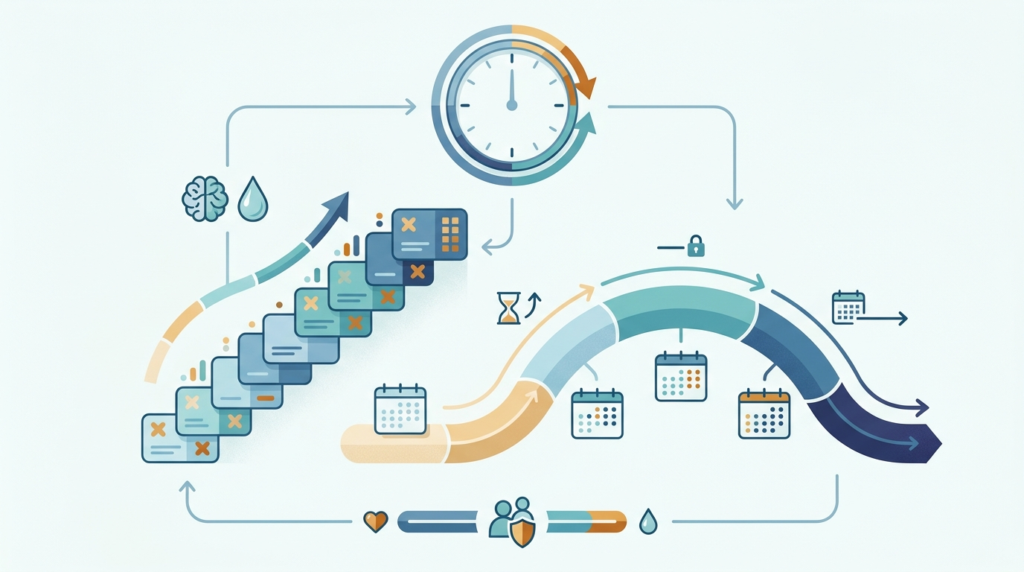
Most people feel the first effects of Suboxone within 30 to 60 minutes of taking it sublingually. Withdrawal symptoms typically begin to ease within that first hour. Full stabilization, meaning consistent relief from cravings and withdrawal throughout the day, usually takes a few days of consistent dosing as the medication reaches steady levels in your system.
The timing of your first dose matters a great deal. Traditional induction requires you to be in moderate opioid withdrawal before taking Suboxone. Clinicians often use a tool called the Clinical Opiate Withdrawal Scale, or COWS, and a score above 12 is typically needed before the first dose. The Cleveland Clinic Journal of Medicine describes this standard approach as requiring abstinence and objective withdrawal before dosing, because starting too early can cause precipitated withdrawal, a sudden and severe worsening of symptoms.
Why Fentanyl Changes the Timeline
If you have been using fentanyl, the timing question gets more complicated. Fentanyl is highly fat-soluble and can accumulate in body tissue, meaning it may stay biologically active longer than it appears. A large prospective emergency department trial found that precipitated withdrawal occurred in about 1% of fentanyl-using patients when structured protocols were followed, according to a NIH news release summarizing the research. That is reassuring, but it also means your clinician needs to assess your specific situation carefully rather than applying a one-size-fits-all timeline.
Some patients who cannot tolerate waiting for withdrawal now use a low-dose induction approach, sometimes called the Bernese method, which starts with very small buprenorphine doses while continuing the full opioid agonist and gradually increases over several days. This method avoids the abrupt receptor displacement that causes precipitated withdrawal.
How Fast Does Suboxone Work Compared With Other Medications?
Suboxone works faster than naltrexone, which requires full opioid detoxification before it can be started. It is also more accessible than methadone, which must be dispensed through specialized opioid treatment programs. For many people, Suboxone can be started in a primary care office, an emergency department, or even at home under clinical guidance, making it one of the most practical options for getting stabilized quickly.
How Long Does Suboxone Work Each Day?
A single dose of Suboxone typically provides 24 hours of coverage for most people at a therapeutic dose. Buprenorphine has a long half-life, which is one of its practical advantages. You do not need to dose multiple times a day the way some shorter-acting medications require. Most people take one daily dose, though some clinicians split doses for patients who notice wearing-off effects toward the end of the day.
The dose level matters for how well it works. A large Medicaid claims study found that a low initial dose of 4 mg or less was the strongest predictor of early treatment discontinuation, with people on low doses being 72% more likely to stop treatment than those on adequate doses. A Rhode Island fentanyl-era study found that individuals on lower doses were about 20% more likely to discontinue treatment than those on higher doses. In other words, if Suboxone does not seem to be working well enough, the dose may simply be too low.
How Long Should You Stay on Suboxone?
This is where the evidence is clearest and where stigma does the most damage. There is no scientifically established maximum duration for Suboxone treatment. The VA Academic Detailing Service states that medications for opioid use disorder are often continued indefinitely and that discontinuation should be based on collaborative discussion and the patient’s ability to maintain recovery without medication, not arbitrary time limits.
Real-world data tell a sobering story about what happens when people stop too soon. A large Medicaid claims study of more than 17,000 adults found:
- 10.4% discontinued within the first week
- 28.4% discontinued within the first month
- 64.6% discontinued before 180 days
These early discontinuations are not signs of recovery. They are signs of treatment barriers, inadequate dosing, stigma, and poor support. And stopping early carries real risk.
What Happens When People Taper Off Suboxone?
A 2022 JAMA Network Open cohort study followed 5,774 people in Ontario who tapered off buprenorphine after at least 60 days of treatment. Within 18 months after stopping, 349 experienced an opioid overdose, more than 3,360 restarted medication for opioid use disorder, and 66% had at least one serious instability marker. The Bozinoff et al. study found that three taper characteristics were linked to lower overdose risk: starting the taper after more than one year of treatment, tapering at a rate of 4 mg per month or less (ideally 2 mg per month or less), and having fewer days during the taper when the dose was actively being reduced.
Taper duration alone was not significantly linked to overdose risk after adjustment. What mattered was the pattern: slow reductions, long stabilization periods between dose changes, and enough time on treatment before starting to taper at all.
A separate U.S. multi-site cohort study published in Addiction found that people who discontinued after only 91 to 180 days had nearly three times the opioid overdose risk compared with those who discontinued after more than 365 days, based on Glanz et al.’s research. That is a meaningful difference, and it supports the practical guidance that at least one year of stable treatment is a reasonable minimum before considering a taper.
Restarting Is Not Failure
More than half of the people who tapered in the Ontario study restarted medication within 18 months. That is not failure. It is evidence that opioid use disorder is a chronic condition that often requires ongoing treatment, and that the door back to medication should always be open and easy to walk through.

Why Suboxone Helps: The Bigger Picture
Buprenorphine and methadone together reduce mortality by more than 50% compared with no medication treatment, according to a large contemporary synthesis. That figure alone explains why clinicians, researchers, and public health agencies treat Suboxone as a first-line intervention rather than a last resort.
The medication works on multiple levels at once. It stabilizes brain chemistry disrupted by opioid dependence. It removes the daily cycle of withdrawal and relief that drives compulsive use. It reduces the reinforcing effects of other opioids if someone uses them. And it gives people the neurological and psychological breathing room to rebuild their lives, engage with counseling, repair relationships, and address the underlying factors that contributed to opioid use in the first place.
Counseling and recovery support add meaningful benefit. Research summarized by the Recovery Research Institute found that even low-intensity therapy, about two sessions per month, was associated with a 45% reduction in buprenorphine discontinuation risk. But SAMHSA is clear that difficulty connecting patients with counseling should never be a reason to withhold medication, given the elevated risk of fatal overdose without it.
The 2023 Consolidated Appropriations Act also removed the federal waiver requirement for practitioners to prescribe buprenorphine for opioid use disorder, meaning more clinicians can now offer this treatment in more settings than ever before.
If you or someone you care about is navigating opioid use disorder and wants to understand your treatment options, speaking with a qualified team can help you find the right path forward. Thoroughbred Wellness and Recovery offers personalized, evidence-based care across a full continuum of programs. Reach out today to learn more about opioid addiction treatment and take the first step toward lasting stability.


 Give Us A Call


