
 info@thoroughbredbhc.com
Wondering what happens in rehab before you commit to treatment can feel stressful, especially when you don’t know what a typical day looks like. Most rehab days mix medical checks, therapy sessions, and planning time, and care teams often score withdrawal symptoms every few hours to decide how closely you need to be watched. This guide walks through the daily schedule, the first 72 hours, and how long rehab usually takes so you know what to expect in rehab.
What Happens in Rehab During a Typical Day
There isn’t one single answer to what is rehab like, because your day depends on your current needs, not a fixed script. Clinicians build each day around three overlapping jobs: keeping you safe, delivering active treatment, and preparing you for what comes next.
Programs generally follow guidance from the American Society of Addiction Medicine, whose Fourth Edition criteria sorts patients by six areas of need, including withdrawal risk, medical conditions, mental health, relapse risk, home environment, and personal barriers. Where you land in that framework, not the calendar, decides how much medical monitoring shows up in your day versus how much time goes to group work and skills practice.
A Rough Picture of the Day
A typical day might open with a morning check in, breakfast, a group session, an individual meeting with a counselor, a break, more group work in the afternoon, and quiet time or family contact in the evening. Exact timing shifts by program and by what you personally need that day. Early on, monitoring often takes up more of the clock. Once things settle, therapy and planning take over. That shift is normal, and it’s expected.
The First 72 Hours in Drug Rehab
The opening days answer the question of what happens in drug rehab most dramatically, since this is when withdrawal risk peaks for many people. Staff check vital signs, score withdrawal symptoms, and adjust medication doses as symptoms change.
For alcohol withdrawal, published guidance calls for hourly symptom reassessment during the first several hours, mainly to confirm that the medication dose and the setting are both correct. That pace can drop to a few checks a day once symptoms settle, or climb back up if tremor, confusion, or a blood pressure spike returns.
Treatment Doesn’t Wait for Stabilization
Even during this heavy monitoring window, treatment does not stop. Short counseling contacts, education about medications, and family contact with your consent often begin on day one. The goal during these early hours is engagement, not just getting you medically steady. Programs that treat the first few days as pure medical holding, with no counseling at all, tend to lose the momentum that helps people stay in care once symptoms ease.
Rehab Daily Schedule By Level of Care
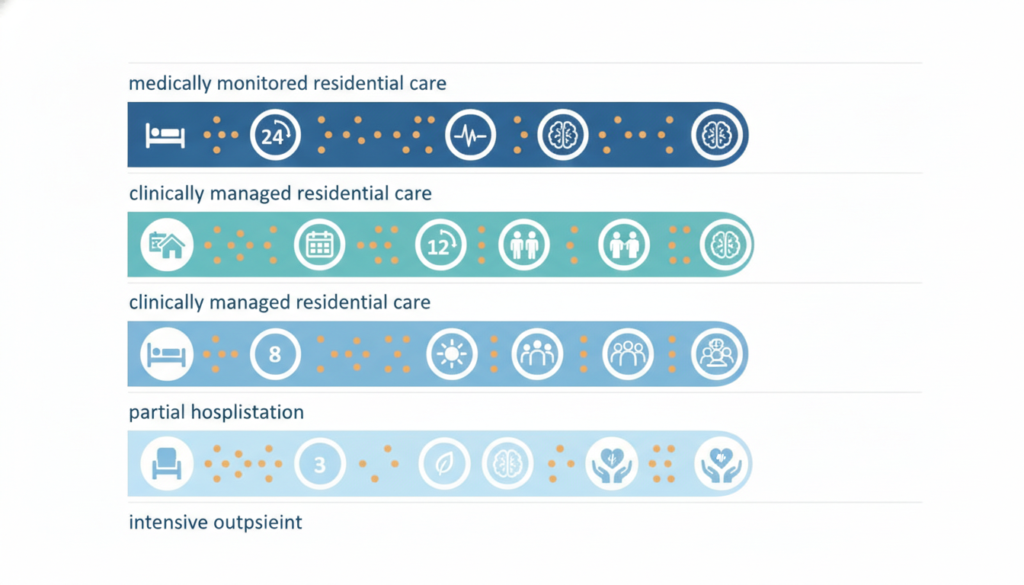
A rehab daily schedule looks different depending on whether you are in a medically monitored residential program, a high intensity residential program, a partial hospitalization program, or an intensive outpatient program. The table below gives a general sense of how these settings differ.
| Setting | Where You Sleep | Typical Weekly Structure | Main Focus |
| Medically monitored residential | On site, around the clock | Varies with medical need | Withdrawal care, medication changes, safety checks |
| High intensity residential | On site, around the clock | Structured programming most of the day | Group therapy, skills building, recovery planning |
| Partial hospitalization | At home or sober housing overnight | About 20 hours weekly | Daily therapy, medication management, family work |
| Intensive outpatient | At home or sober housing overnight | About 9 to 19 hours weekly | Group counseling, relapse prevention, check ins |
These figures come from specific program rules rather than one universal standard. Virginia’s Medicaid program requires at least 20 hours weekly for partial hospitalization services, while Alaska’s provider training describes 9 to 19 hours weekly as typical for adult intensive outpatient care. Your own program’s requirements may look somewhat different depending on your state and your insurance plan.
What Do You Do in Rehab After Day Three
Once acute withdrawal calms down, the question shifts. Early on, what do you do in rehab is mostly about getting through symptoms safely. A few days in, what do you do in rehab becomes about actually building a recovery.
Sessions tend to get longer and more substantial. You start naming your specific triggers, practicing coping tools, and possibly meeting with family members if that fits your treatment plan. Group therapy often expands to cover relapse prevention, trauma, and the thought patterns that tend to drive substance use.
Case managers usually begin lining up housing, transportation, and medication access for after you leave, and this planning does not wait until the final week. Programs that delay discharge planning until the last few days tend to produce shakier transitions once someone actually goes home.
How Long Does Rehab Take to Complete
People often assume rehab lasts exactly 30 days, but that number is a habit, not a medical rule. The expectation traces back to the Minnesota Model, a program built in the late 1940s at places including Willmar State Hospital, which treated addiction as a disease requiring organized, humane care instead of punishment.
That program’s twenty eight day format later fit neatly into hospital billing cycles, and insurers found it easier to approve one set block of days than open ended, individualized care. A widely cited 30 day myth report compared outcomes across groups and found that people treated for more than 90 days reported noticeably less relapse than those treated for 90 days or less.
Other research on treatment length found that people who stayed in care for three months or longer often had better outcomes than those with shorter stays. A treatment duration study makes a similar point but adds an important caution: people who stay longer may also differ in motivation, support, and stability from people who leave early, so longer stays and better outcomes do not automatically prove that one caused the other.
The honest answer to how long does rehab take is that it depends on your withdrawal risk, your medical and mental health needs, your home environment, and how you respond to treatment along the way.
Is a 30 Day Rehab Program Enough
A 30 day rehab program can be enough for some people and too short for others. Current addiction treatment standards call for repeated reassessment across the entire stay, not a fixed calendar date. States are rolling out this approach at different speeds. Illinois treatment guidance states plainly that the goal is reducing both too much treatment and too little, rather than enforcing a set number of days for every patient.
If you are still working through withdrawal, medication changes, or an unsafe home situation on day 30, staying longer may be the safer move. If you are stable, supported, and genuinely ready for less structure, stepping down earlier can work just as well. Neither choice is automatically right just because a certain number of days has passed.
What Happens in Rehab When You Step Down
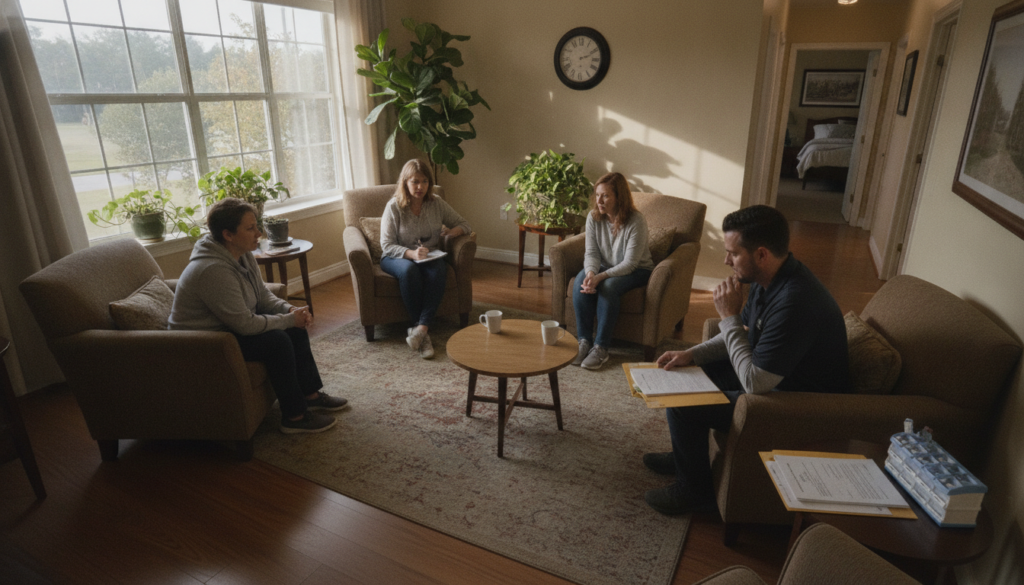
What happens in rehab near the end of a residential stay is mostly a shift toward transition planning. Your team checks whether your withdrawal risk has actually resolved, your medication plan is stable, and your home or sober living setup is realistically safe for you to return to.
A solid step down plan includes a scheduled appointment within days rather than weeks, enough medication to bridge any gap, and a clear plan if cravings or symptoms flare up again. Moving to partial hospitalization or intensive outpatient care only makes sense if that lower level can truly cover your remaining needs. It should not happen just because your authorized days ran out or because a program needs the bed.
Getting Support Through Every Stage
Recovery is not about hitting a day count. It’s about getting the right intensity of care for as long as you actually need it, then moving into steady, connected support afterward. A program that treats day 30 as a finish line for everyone, or a strict deadline to leave, is working off a habit rather than your actual clinical picture.
If you are trying to figure out what your own treatment day and timeline might look like, a short conversation with a treatment team can clarify next steps far better than a generic schedule. Reach out today to our team at Thoroughbred Wellness and Recovery to explore our programs and find the level of care that actually matches where you are right now.


 Give Us A Call


