
 info@thoroughbredbhc.com
Wondering what to bring to rehab so you do not show up with items staff will take away at the door? Most residential programs ask for about a week of comfortable clothing, sealed toiletries, a photo ID, insurance information, and a written medication list, while items like mouthwash with alcohol, razors, and vaping devices usually stay home. This guide walks through exactly what to pack, what to leave behind, and why programs draw the line where they do.
What to Bring to Rehab: The Quick Answer
If you remember one rule, pack light and pack practical. Bring identification, insurance details, a week or so of plain clothing, sealed toiletries, and a written list of your medications, then let the intake team fill in the rest once you arrive.
Every program’s list looks a little different depending on whether you are entering detox, residential, or inpatient care, and the difference is not random. Programs set their rules based on their population, their layout, and the level of supervision they can offer, so a packing list built for a locked psychiatric unit will not match one built for an unlocked residence with private rooms. That is worth remembering before you assume any single list online applies to your exact situation.
How to Build Your Rehab Packing List
A solid rehab packing list starts small. You are heading into a place with laundry access and a locked storage area for anything staff need to hold onto, not a hotel with unlimited closet space. Overpacking usually just means more items for staff to sort through and more things for you to keep track of once you settle in.
Clothing and Comfort
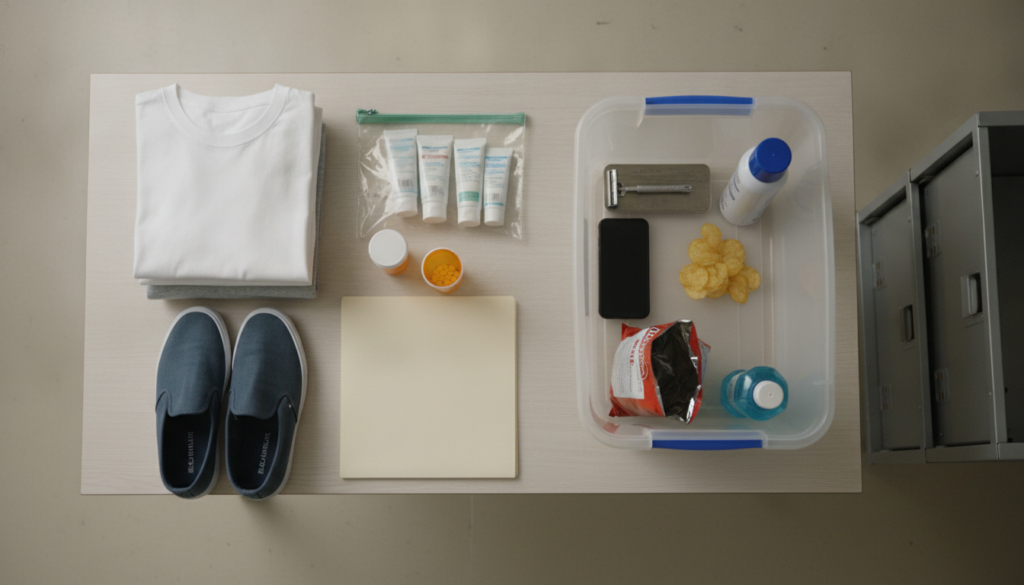
Bring around five to seven days of clothing you would wear to run errands. Think plain shirts, sweatpants, underwear, socks, closed toe shoes, and a light jacket for cooler rooms or outdoor time. Skip anything printed with drug or alcohol references, violent imagery, or removable strings, since many programs remove drawstrings and belts as a routine precaution rather than a judgment on your taste.
Inpatient hospital units tend to be stricter than residential programs, and the difference is not arbitrary. Programs are licensed under separate categories, each carrying its own operating standards. Georgia’s licensing rules for adult residential mental health programs set minimum standards for that specific service category, which is regulated separately from a hospital. A residential packing list and a short term inpatient list are simply not built the same way, so a list you find online may not be the one that applies to you.
Toiletries and Personal Products
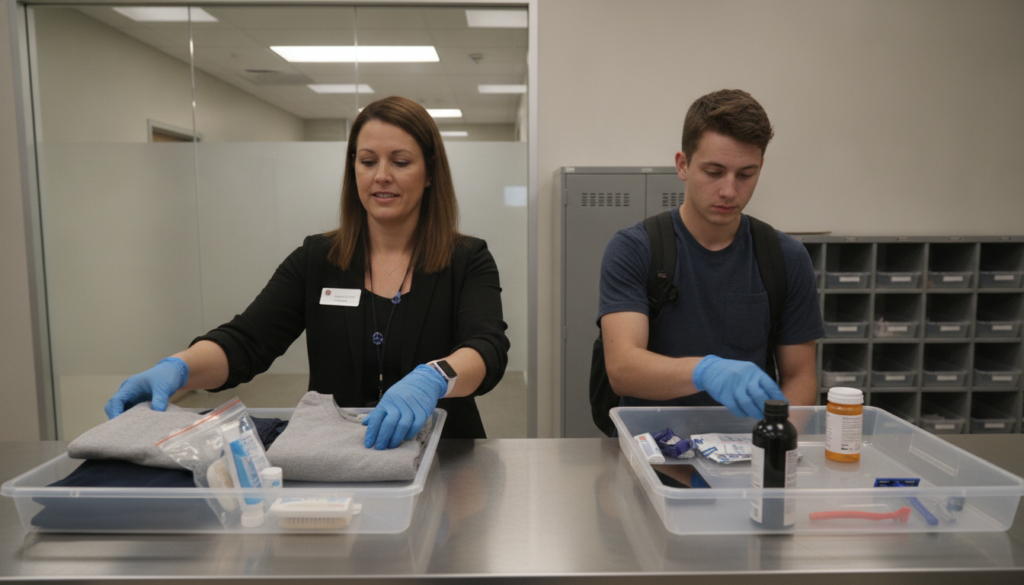
Stick to sealed, unopened products whenever you can. Staff often need to confirm that a bottle actually contains what the label says, and buying new travel size items ahead of time can save an argument at intake. There is a practical reason the seal matters. Federal rules require most over the counter drug products to use tamper evident packaging, meaning a broken or missing seal is meant to serve as visible evidence that a product has been opened. A factory sealed bottle gives staff a fast way to verify what is inside, which is why new items clear intake more easily than half used ones from your own bathroom shelf.
Choose alcohol free versions where you can find them. Deodorant, lotion, and shampoo rarely raise questions, but mouthwash, cologne, and certain cosmetics sometimes do, so checking labels before you leave home avoids a wasted trip back to the store.
What to Bring to Inpatient Rehab for Paperwork
Paperwork sounds boring next to clothing, but it matters more for how smoothly your first day goes. Missing documents can be one of the most common reasons an admission gets delayed, and delays at check in are stressful for everyone involved. A valid photo ID and a current insurance card are usually the two that hold things up, since staff need both to confirm identity and coverage before treatment can officially begin. Expect to sign a release of information form as well, and decide ahead of time who you actually want the program to be able to speak with, because records from a federally assisted substance use program carry their own federal consent rules that a general medical release does not satisfy on its own.
Pack these in one folder so nothing gets left behind in a glove box or a kitchen drawer:
- A current photo ID such as a license or passport
- Your insurance card, front and back, plus any authorization letter you have received
- A written list of every medication, dose, and prescriber
- Emergency contact names and phone numbers
- Any court order, guardianship paper, or advance directive that applies to your situation
Keep copies at home before you leave. Originals often get filed away during intake, and having a backup means you are not stuck scrambling if something gets misplaced along the way.
Medications You Should Pack for Rehab
Medication questions come up constantly, and the honest answer depends on the drug, the dose, and the program you are entering. As a general rule, bring prescriptions in their original pharmacy labeled bottles rather than a weekly pill organizer, and write down every dose, the time you last took it, and the phone number for your prescriber.
Do not bring anything without disclosing it first. Staff need to know about vitamins, supplements, and medicines you buy without a prescription, not only controlled substances that carry an obvious risk. That written list feeds directly into medication reconciliation, the admission step where clinicians compare what you actually take against what gets ordered for you. It is a recognized patient safety practice precisely because an incoming team often cannot see your full pre admission history, so a gap in what you hand them can turn into a missed dose or a duplicated one.
If you use a medical device such as a CPAP machine, an inhaler, or a glucose monitor, mention it during your intake call so the clinical team can plan for it before you arrive rather than sorting it out at the front desk.
What Not to Bring to Rehab and Why
Most restricted items fall into a short list of categories: things that can be swallowed for a buzz, things that can cut, things that record or distract, and things that are simply illegal anywhere. None of this is really about treating you like a suspect. It is about removing avoidable risk from a shared living space where dozens of people with different histories are trying to stabilize at the same time.
Products that contain alcohol are one of the clearest examples. Mouthwash, cough syrup, hand sanitizer, perfume, and even vanilla extract all land in this category because they can be swallowed or can set off cravings for someone in early recovery. The concern is documented rather than theoretical. The CDC has reported cases of ethanol toxicity from swallowing hand sanitizer among people with alcohol use disorder, alongside a cluster of methanol poisonings traced to contaminated products. Packing alcohol free versions covers the same hygiene needs without carrying that risk into the building.
Sharp items get similar scrutiny, especially in the first days of a stay. This connects to a broader safety approach rather than one arbitrary rule someone made up. Standards on high risk periods call for programs to identify environmental hazards and protect anyone assessed at elevated risk, which sometimes means removing objects from a room that could be used for self harm until that risk has clearly passed and the person is stable.
What Items Are Not Allowed in Rehab
Here is a simple breakdown of what usually stays and what usually gets restricted, though your specific program always has the final word on its own list.
| Item | Usually allowed | Usually restricted |
| Toiletries | Sealed, alcohol free products | Opened bottles, products containing alcohol |
| Clothing | Plain shirts, pants, closed toe shoes | Drawstrings, belts, drug or alcohol imagery |
| Medications | Original labeled prescriptions, written med list | Unlabeled pills, supplements not disclosed in advance |
| Electronics | Nothing, in most residential settings | Phones, tablets, cameras, laptops |
| Grooming tools | Supervised access to razors and scissors | Sharp tools kept loose in a bag or room |
| Food | Nothing brought from outside, in most programs | Unsealed snacks, homemade food, drinks |
| Money and valuables | A small approved payment method | Large cash, expensive jewelry |
Rules on electronics tend to be strict because a phone raises privacy questions for everyone in the building, not only for you. Mail is treated differently. Ohio’s residential facility rights rule gives residents the right to send and receive uncensored, unopened correspondence, subject to the facility’s own contraband rules. That is broadly why letters, printed photos, and paperback books tend to be approved once you have settled in, while phones, cameras, and outside food usually stay off the list.
Restrictions are also not meant to be permanent punishment for the length of your stay. One state’s written property receipt policy requires that any item taken for safety reasons be logged and returned once the person leaves care, which is a fair standard to expect from any facility handling your belongings while you are working on treatment.
Why These Questions Matter in Recovery
Getting this right before you arrive does more than avoid an awkward search at the front desk. Showing up with the right documents means your care can start on time instead of stalling over a missing insurance card or an unverified prescription. Packing light and leaving triggers at home means less friction with staff on day one and more energy left over for the actual work of treatment.
It also helps to know that restriction is not the same thing as punishment, even when it feels that way in the moment. Research on loss of dignity in inpatient psychiatric care has found that blanket rules can feel controlling when ordinary items get labeled unsafe with no real explanation, and losing personal belongings can carry more weight than staff sometimes realize. A program that explains its reasoning, stores your belongings carefully, and returns them once the restriction is no longer needed is doing right by you.
If you are not sure whether something belongs in your bag, ask before you pack it. A quick phone call to admissions beats an uncomfortable conversation at intake, and it gives you one less thing to worry about on a day that already carries enough weight of its own.
If you or someone you love is getting ready for treatment and could use straight answers about what to expect at admission, reach out to Thoroughbred Wellness and Recovery to book a consult before you pack a single bag.


 Give Us A Call


