
 info@thoroughbredbhc.com
If nightmares, hypervigilance, and emotional numbness still shape your days after standard treatment, you might wonder if working with horses could help in a way talk therapy hasn’t. Equine therapy for PTSD pairs licensed clinicians with structured horse sessions to build grounding and trust, and a small pilot study of seven first responders found reduced trauma symptoms after eight weeks. This guide explains how it works, what the evidence shows, and what to check before choosing a program.
Some people simply call it horse therapy for PTSD, though the field itself draws sharper lines between what counts as treatment and what counts as a nice afternoon at a barn.
How Equine Therapy for PTSD Works
Equine therapy for PTSD is not the same as spending an afternoon around friendly animals. In a clinical setting, a licensed mental health professional leads the session and uses the horse as a tool to support treatment goals, much like a therapist might use art or movement in a regular office. The Professional Association of Therapeutic Horsemanship International draws a clear line between this kind of work and other horse programs, separating true psychotherapy from riding lessons or equine service categories built around skill building or personal growth rather than treating a diagnosed condition.
That distinction matters because it determines who is responsible for your care. If a program calls its sessions therapy but cannot name a licensed clinician, it is likely offering a recreational or educational service, not mental health treatment. The horse can still be a meaningful part of the day. It just should not be mistaken for clinical care.
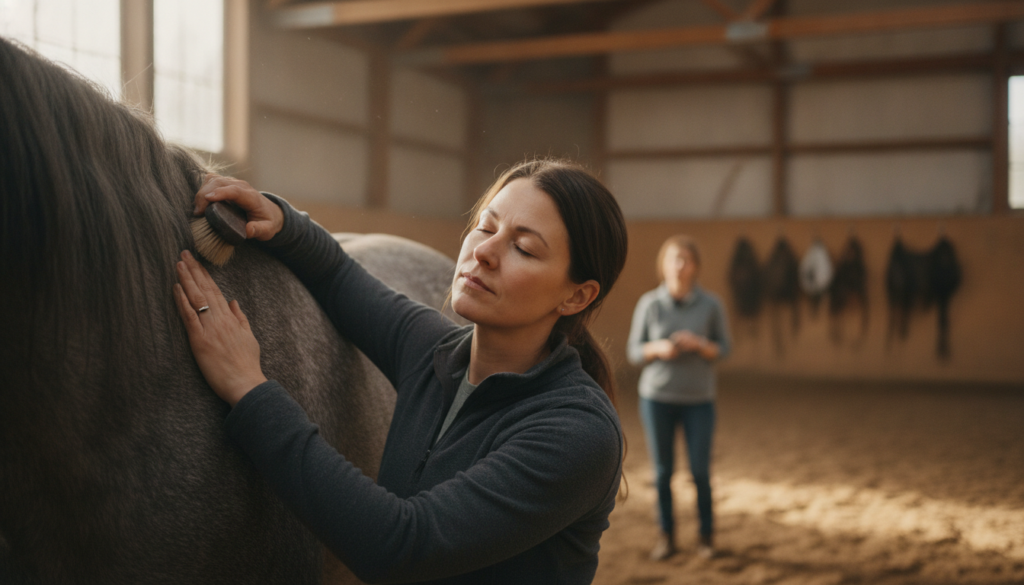
In practice, equine assisted therapy PTSD sessions might involve grooming, leading, or simply standing near a horse while a clinician guides breathing, body awareness, or trust exercises. The activity gives the therapist something concrete to work with, and it gives the client a task that keeps hands and attention busy while harder feelings surface. This kind of work is generally offered alongside, not instead of, established trauma focused treatments such as Prolonged Exposure, Cognitive Processing Therapy, or EMDR.
Horses and Trauma Healing: What Makes It Different
People often ask why horses specifically, rather than dogs, art, or a quiet room. Part of the answer is practical. Horses are large, alert animals that respond to posture, tone, and tension almost immediately. That immediate feedback can give a person with PTSD a fast, nonverbal read on their own body. Someone who has spent years disconnected from physical sensations of fear or calm may notice, while leading a horse, that their shoulders are tight or their breathing is shallow.
Sessions built around horses and trauma healing tend to lean on a few repeatable elements. A person practices staying present instead of replaying the past. A person practices setting a boundary with an animal that will test it, which can translate into practicing boundaries with people. A person practices tolerating uncertainty, since horses are not scripted and do not always behave the way anyone expects.
None of this replaces talking through what happened. It gives some people an entry point into that work when a couch and direct conversation feel too exposed.
Equine Therapy for PTSD: What the Evidence Shows
So does equine therapy help PTSD symptoms directly, or does it mainly support engagement with other treatment? The honest answer is that the research so far leans toward the second option, with real but limited support for the first.
A systematic review of equine assisted interventions for veterans with PTSD found the existing studies were held back by small groups, a lack of randomized comparisons, uncontrolled designs, and thin detail about exactly what happened in each session. The reviewers concluded there is not yet enough research to establish how effective, feasible, or safe this approach is, and that detailed treatment manuals for the modality are still missing.
The pilot study of seven first responders mentioned earlier is a good example of promising but preliminary work. After an eight week program of ninety minute sessions, participants showed drops in depressive and trauma related symptoms. The researchers themselves described the approach as an addition to trauma focused psychological treatment, not a stand in for it. Seven people is not enough to draw broad conclusions, but the direction of the finding is encouraging.
Put plainly: equine therapy trauma recovery work looks like a reasonable adjunct for some people, especially those who struggle to engage with office based sessions. It is not yet backed by the kind of large, controlled evidence that supports PE, CPT, or EMDR, and no credible program should claim otherwise.
Equine Therapy for Veterans and Co-Occurring PTSD
Equine therapy for veterans gets a lot of attention because trauma and substance use so often show up together in that population. Data summarized by the VA’s research on co-occurring conditions shows that 44.6 percent of people with lifetime PTSD also met criteria for an alcohol or other substance use disorder. Among veterans specifically, lifetime PTSD roughly doubled the likelihood of alcohol use disorder and more than tripled the likelihood of a drug use disorder.
This matters for anyone considering equine therapy for trauma alongside substance use recovery, because a program that only addresses one issue is missing half the picture. Older clinical habits sometimes required months of sobriety before trauma work could begin. Current guidance takes a different view. Having a substance use disorder should not by itself keep someone from accessing PTSD care, and treatment for both conditions works best when it happens together rather than in a strict sequence.
For a veteran or family member weighing an equine program, this means asking whether the center actually screens for alcohol or drug use, whether it can respond safely if someone shows up intoxicated or in withdrawal, and whether it coordinates with a prescriber or addiction specialist when needed. A ranch that only knows horses cannot manage a medical withdrawal. A program that understands both trauma and substance use can build a plan that treats the whole person instead of one symptom at a time.
Choosing an Equine Assisted Therapy Program
Because the marketing language around this field is loose, picking a program takes more homework than picking a typical therapist. A few checks go a long way toward separating serious clinical programs from well meaning but unqualified ones.
Start by asking who is actually running the session. A current CTRI credential from the Professional Association of Therapeutic Horsemanship International signals training in adapted riding instruction, but it is not a mental health license. If a program uses the word therapy, there should be a named, licensed clinician responsible for assessment, treatment planning, and crisis response, and that license should be verifiable through the state licensing board.
A few markers of a credible program include:
- A licensed mental health clinician leads or directly oversees every clinical session
- The team can explain exactly how the horse work connects to your treatment goals
- Alcohol or substance use is screened before any horse contact begins
- Credentials for both the clinician and the equine specialist are current and checkable
- The program coordinates with your trauma therapist, prescriber, or primary care team
If a program cannot answer basic questions about who is licensed, how sessions are documented, or what happens if a participant arrives intoxicated or in crisis, that is a signal to look elsewhere, no matter how appealing the setting feels.
Payment is worth checking early too. Insurance and VA coverage for anything billed as a standalone equine or hippotherapy service is inconsistent at best, while coverage for licensed psychotherapy delivered by an in network clinician tends to be more straightforward. Ask exactly what will be billed, under what code, before you commit to a schedule.

Why Equine Therapy for Trauma Recovery Matters
None of this means horses are a gimmick. For someone who has stalled out in traditional talk therapy, or who feels too exposed sitting across from a therapist and describing what happened, a barn and an animal that responds honestly to body language can open a door that had felt shut. That is a real, useful outcome even without large trials behind it yet.
The clearer picture is that equine therapy for trauma recovery works best as one part of a bigger plan. Pair it with evidence based trauma treatment, address any co-occurring substance use openly rather than as an afterthought, and make sure a licensed clinician is steering the overall care. Horses can help you get there. They should not be asked to do the whole job alone.
If you are weighing whether equine work belongs in your PTSD recovery, our team at Thoroughbred Wellness and Recovery can talk through how it fits alongside evidence-based care in our outpatient treatment program.


 Give Us A Call


