
 info@thoroughbredbhc.com
Wondering how does outpatient rehab work when you still need to show up for your job, your kids, or your daily routine? Standard outpatient programs usually meet once or twice a week for a few hours total, while intensive outpatient programs meet three to five days a week for about nine to nineteen hours, all while you keep living at home. This guide breaks down the structure, the therapy you can expect, and how long treatment typically lasts.
How Does Outpatient Rehab Work? A Quick Answer
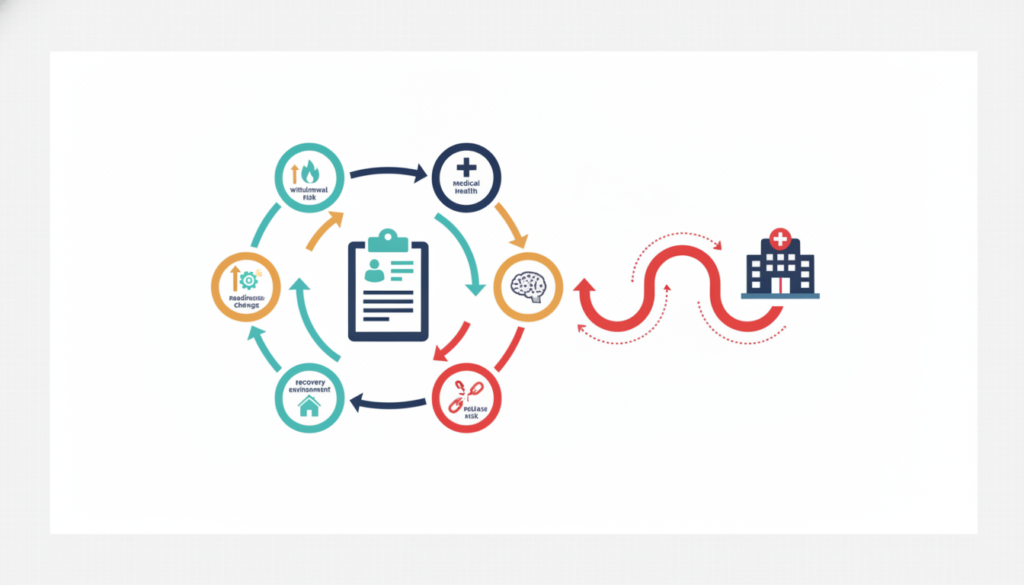
Outpatient rehab works by giving you scheduled therapy and medical support while you continue living at home, going to work, and handling daily responsibilities. The exact schedule depends on which level of care actually fits your needs, not on a one size fits all program. The American Society of Addiction Medicine sorts people into levels of care based on six factors, including withdrawal risk, medical health, mental health, relapse risk, home environment, and personal readiness, rather than sorting people by which substance they use. That framework, known as the ASAM Criteria, is what most programs across the country use to decide whether standard outpatient care or a more structured intensive outpatient program makes sense for you right now.
What Is Outpatient Treatment, Really?
What is outpatient treatment, in plain terms? It’s care you receive without staying overnight anywhere. You show up for sessions, then go home, go to work, or handle whatever your day requires. That’s the main thing that separates outpatient care from residential or inpatient treatment, where you live at the facility around the clock. Understanding how outpatient rehab works starts with knowing there are two main tiers within the outpatient world, standard outpatient care and intensive outpatient programs, and the gap between them mostly comes down to how many hours of treatment you get each week and how closely your progress gets tracked. Neither tier requires you to be fully substance free before starting. Many people begin outpatient treatment while still working through cravings or occasional slips, and the program adjusts around that reality rather than demanding perfection first.
Outpatient Rehab Structure: A Typical Week
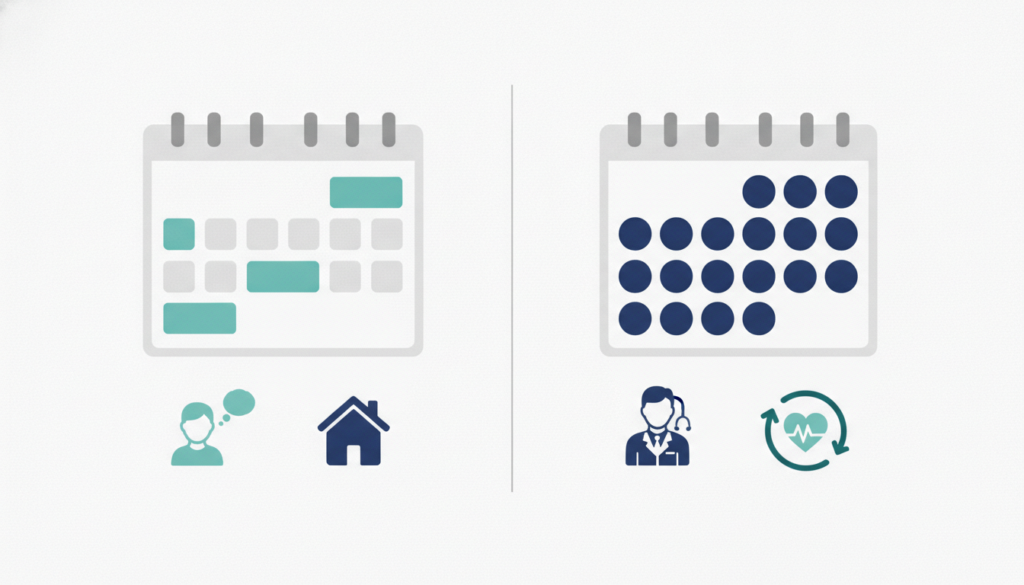
Outpatient rehab structure varies by program, but a standard outpatient program usually adds up to fewer than nine structured hours a week. According to Alaska Medicaid standards, adult standard outpatient care tops out at about eight hours weekly, while intensive outpatient care moves into the nine to nineteen hour range. A realistic standard outpatient week might include one individual therapy session of about fifty minutes, one group session running sixty to ninety minutes, and a monthly check in with a prescriber if medication is part of your plan. Older but still widely used guidance from the SAMHSA treatment protocol describes standard outpatient visits as often one or two sessions weekly, each lasting one to two hours, which lines up with what most programs still offer today. Your own week might look busier or lighter depending on how much support you need to stay steady between appointments.
Outpatient vs Intensive Outpatient: Key Differences
When people search outpatient vs intensive outpatient, or type in iop vs outpatient, they’re usually trying to figure out which one actually matches their situation. The short version is that intensive outpatient programs, often shortened to IOP, offer more frequent contact, more group work, and closer monitoring than a standard outpatient program. IOP tends to suit people who don’t need round the clock supervision but who need more structure than weekly therapy can offer, maybe because cravings are strong, past outpatient attempts haven’t held, or home life makes staying steady harder. Medicare’s IOP coverage policy requires at least nine hours of therapeutic services each week under a documented plan of care, which reflects this same intensity difference in a formal way. State rules land in the same place, and Virginia Medicaid’s intensive outpatient regulations require at least three service hours per adult service day, averaging nine to nineteen hours weekly. Here’s how the two levels typically compare.
| Feature | Standard Outpatient | Intensive Outpatient (IOP) |
| Weekly hours | Usually under 9 | Usually 9 to 19 |
| Session frequency | 1 to 2 times weekly | 3 to 5 days weekly |
| Main format | Individual therapy plus occasional group | Group therapy as the main format, plus individual sessions |
| Best fit | Stable home life, lower relapse risk | Higher relapse risk, more support needed |
| Living situation | At home | At home |
Neither option is inherently better. The right one depends on how much structure your current situation actually calls for, and that can change over time as your recovery progresses.
What Happens in Outpatient Rehab Sessions
So what happens in outpatient rehab on an average day? Sessions usually combine a few core pieces rather than sticking to one format. Individual therapy gives you space to work through personal triggers, past trauma, or ambivalence about change without an audience. Group therapy lets you practice communication, hear how other people handle similar struggles, and build accountability through regular attendance. Many programs also weave in family sessions, case management for practical things like housing or transportation, and peer support from people further along in their own recovery. That mix is standard enough that payers spell it out. Arizona Medicaid’s intensive outpatient coding standard lists individual and group counseling, medication management, family therapy, educational groups, occupational or recreational therapy, and peer support as covered services, with frequency tied to your individual treatment plan. None of this is meant to feel like sitting through a lecture. Good outpatient care adjusts the mix based on what you actually need that particular week, not a fixed script that everyone follows regardless of circumstance.
Therapy Types Used in Outpatient Care
Cognitive behavioral therapy, often shortened to CBT, shows up often because it helps you notice the thoughts and situations that lead to substance use and then practice different responses. Dialectical behavior therapy skills can help with emotional regulation, especially if anxiety or mood swings tend to trigger cravings. Motivational approaches help when ambivalence about quitting is still part of the picture, which is common and not a sign that treatment is failing. Family therapy addresses the relationships around you, since the people you live with can make recovery either much easier or much harder. None of these approaches belong exclusively to one level of care. What changes between standard outpatient and IOP is mostly how often you get access to them, not which therapies exist at each level.
Medication Support During Outpatient Care
Medication for addiction treatment fits into outpatient care at every level, and needing medication doesn’t automatically mean you need IOP. For alcohol use disorder, options can include naltrexone, acamprosate, or disulfiram depending on your history and medical status. For opioid use disorder, buprenorphine or methadone through a licensed program are common paths forward. What actually matters is whether medication can be managed safely with routine visits or whether it needs closer monitoring right now. There’s a bigger safety question that comes before any outpatient placement happens at all. Alcohol withdrawal can turn dangerous fast, and AAFP research notes that delirium tremens carries a mortality rate of five to ten percent, which is exactly why anyone showing signs of severe or complicated withdrawal needs emergency evaluation before starting outpatient treatment of any kind. A 2020 review in Open Access Emergency Medicine on emergency management of alcohol withdrawal adds that a history of severe withdrawal, pregnancy, significant medical comorbidity, or active psychiatric conditions can also point toward inpatient care rather than an outpatient start.
How Long Does Treatment Usually Last
There’s no single answer here, and that’s actually good news because it means your timeline should match your progress rather than a preset calendar. Standard outpatient episodes often run around sixty days, though plenty of people continue occasional check ins well beyond that point for ongoing support. Intensive outpatient programs commonly run eight to twelve weeks, sometimes stretching toward ninety days, before stepping down to standard outpatient care or less frequent maintenance visits. The healthier way to think about length is in phases rather than a countdown. Early on, you’ll likely need more frequent contact while things stabilize. As coping skills solidify and your surroundings start supporting recovery instead of working against it, sessions typically spread out. Discharge should depend on how stable you actually are, not just on how many weeks have passed on a calendar.
Why the Right Level of Care Matters
Getting the level of care right isn’t about following a rule for its own sake. Too little structure can leave real relapse risk unaddressed, while more intensity than you need can disrupt work, family time, and your sense of independence for no real clinical reason. A 2017 Health Affairs study of Medicaid coverage for substance use treatment reports that matching treatment intensity to clinical severity is associated with better treatment processes and outcomes. The goal is the least restrictive setting that still keeps you safe and gives you an honest shot at lasting change, with a clear path to step up if things get harder or step down once they get easier. Outpatient rehab, at either level, works best when it’s built around your actual life rather than a generic template handed to everyone who walks through the door.
If you’re trying to figure out which level of outpatient care actually fits your life, talking it through with someone who can assess your situation makes the decision a lot less overwhelming. Reach out and explore outpatient programs to see what a realistic plan could look like at Thoroughbred Wellness and Recovery for you.


 Give Us A Call


