
 info@thoroughbredbhc.com
Snorting cocaine can damage the nasal septum and sinuses by cutting off blood flow to tissue that needs oxygen to stay alive. Stopping cocaine can let inflamed nasal lining improve over weeks to months, but a septal hole, collapsed bridge, or palate defect usually needs a device or surgical repair rather than waiting. This guide explains what cocaine nose means, which symptoms are warning signs, what may heal, and when to seek medical or recovery support.
Cocaine Nose Starts With Blood Flow Loss
Cocaine nose is a plain phrase for nasal and sinus damage linked to snorting cocaine. It can mean mild irritation, crusting, nosebleeds, a septal perforation, sinus disease, a collapsed bridge, or wider tissue loss in the midface.
The core problem is blood flow. Cocaine strongly narrows blood vessels in the nose. When this happens again and again, the nasal lining, septal cartilage, bone, and nearby sinus structures may not get enough oxygen.
Peer reviewed CIMDL literature describes this process as a mix of ischemia, inflammation, infection, immune effects, and repeated injury from snorting. Ischemia means poor blood supply. When tissue is starved of blood long enough, it can ulcerate, die, and break down.
The septum is especially vulnerable. The septum is the wall between your nostrils. Its cartilage depends on the thin lining around it for nutrition. If that lining is repeatedly damaged, the cartilage can weaken or die. That is how a small raw area can become a hole through the septum.
This is why switching nostrils or using a different straw does not make snorting safe. Less scraping does not remove the blood flow problem.
Why Snorting Cocaine Damages the Septum
A healthy nose warms, filters, and moistens air. The lining has tiny moving hairs and mucus that help clear dust, germs, and irritants. Snorting cocaine disrupts that system in several ways.
First, cocaine dries and irritates the lining. Dry tissue cracks more easily. Cracks lead to crusting and bleeding. Crusts can feel blocked, so people may pick or blow harder, which causes more trauma.
Second, cocaine narrows blood vessels. The same effect that numbs tissue can also starve it. Over time, repeated blood flow loss can move from surface irritation to deeper damage.
Third, infection can set in. Crusted, ulcerated, poorly perfused tissue does not defend itself well. Infection can add swelling, foul discharge, pain, and more tissue injury.
Fourth, destructive disease can extend beyond the septum. Severe cocaine related injury can involve the turbinates, nasal floor, sinuses, hard palate, orbit, and, rarely, the skull base. A systematic review found 99.2 percent of reported cocaine induced midline destructive lesion cases had septal perforation, which shows how central the septum is in severe disease.
That figure does not mean nearly everyone who uses cocaine gets a perforation. It describes people already identified with severe destructive lesions. Still, it shows why a hole in the septum is one of the classic findings in advanced cocaine nose.
Symptoms You Might Notice
Early symptoms can look like ordinary rhinitis or sinus trouble. That makes this hard. Congestion, sniffing, throat clearing, mild nosebleeds, and a runny nose can come from allergies, dry air, viral illness, sinus inflammation, medication effects, or nasal picking.
Cocaine injury becomes more concerning when symptoms are persistent, progressive, bloody, crusted, foul smelling, painful, or linked with changes in airflow or shape.
A small septal hole may cause a whistle when you breathe in. Larger holes may cause less whistling but more dryness, crusting, bleeding, and a blocked feeling. ISSUP explains that septal perforation can cause whistling, crusting, bleeding, and nasal obstruction even when the outside of the nose still looks normal.
People sometimes search for a cocaine nose sample because they want to compare photos. Be careful with that. A cocaine nose sample or photo can show what damage may look like, but it cannot diagnose your nose. Different causes can look alike, including autoimmune disease, infection, prior surgery, trauma, tumors, and overuse of some nasal sprays.
Seek medical care soon if you notice any of these warning signs:
- A new whistle when breathing through the nose
- Repeated nosebleeds with heavy crusting
- Foul, bloody, or thick discharge
- A visible hole, raw area, or black tissue inside the nose
- New flattening or collapse of the nasal bridge
- Loss of smell with worsening congestion or crusting
- Food or liquid coming through the nose while eating or drinking
- Eye pain, swelling, double vision, vision change, severe facial pain, fever, or confusion
Those last eye, fever, confusion, or severe pain symptoms can be urgent. They may point to infection or spread beyond the nose.
What Can Heal and What Usually Cannot
The short answer is simple: inflamed lining may improve, but missing structure usually does not grow back.
If cocaine use stops completely and enough living tissue remains, dryness, congestion, crusting, superficial ulcers, minor bleeding, runny nose, and some smell problems may improve. This often takes weeks to months, and care from an ear, nose, and throat clinician can help.
The 2025 Young IfOS consensus on cocaine induced midline destructive lesions stresses that time since last use is not enough on its own. Doctors also look at whether the lining is still inflamed, crusted, infected, necrotic, or getting worse.
That matters because symptoms and anatomy are not the same thing. A person can feel better but still have a permanent septal hole. Another person can stop cocaine but keep having crusting because airflow through the hole dries the edges.
Cartilage and bone are different from irritated lining. Once septal cartilage is destroyed, it is not expected to rebuild itself. An established septal perforation rarely closes by itself. A saddle nose deformity, where the bridge collapses because support is lost, usually does not reverse without reconstruction. A palate hole generally needs a prosthetic device or surgery.
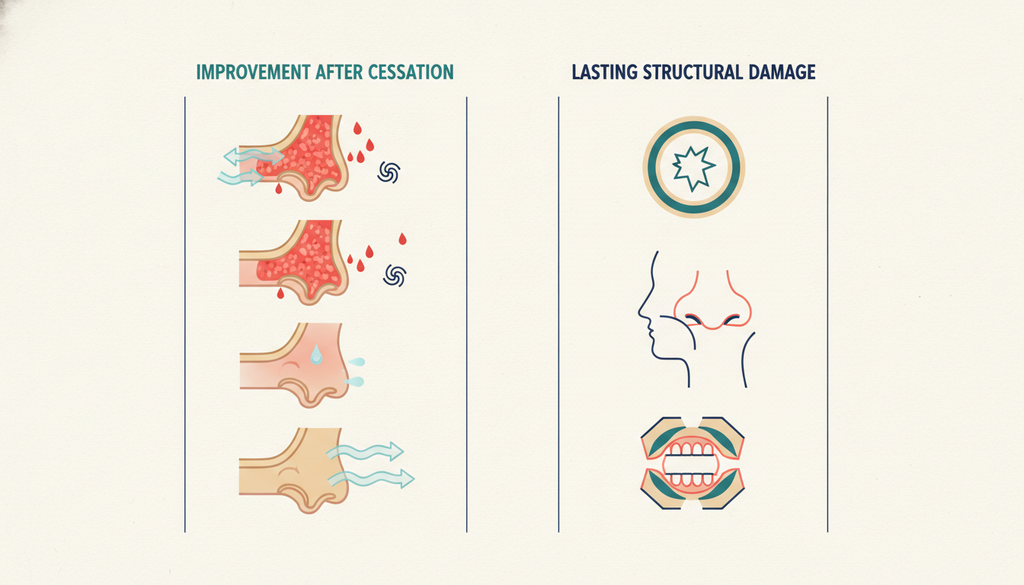
Smell is unpredictable. If smell is reduced because swelling, mucus, or crusting blocks airflow, it may improve. If smell loss comes from deeper injury, scarring, long lasting sinus disease, or severe tissue loss, it may persist.
Cocaine Nose Is Not Always Easy to Diagnose
A cocaine history helps guide care, but clinicians still need to rule out other causes. Cocaine related midline destructive disease can resemble granulomatosis with polyangiitis, other autoimmune conditions, fungal infection, bacterial infection, syphilis, tuberculosis, malignancy, trauma, and postsurgical problems.
This is why a careful exam matters. An ear, nose, and throat clinician may use anterior rhinoscopy, nasal endoscopy, imaging, cultures, blood tests, or biopsy depending on what they see.
Blood tests can be tricky. Some cocaine related or adulterant related disease can cause immune markers that look like autoimmune vasculitis. So a positive test does not always give a clean answer. Doctors have to combine the history, exam, imaging, labs, and tissue findings.
There is another reason to be honest with clinicians. If cocaine use is hidden, a person may be treated for the wrong illness. If cocaine use is assumed without checking, another serious disease may be missed. A respectful medical conversation protects you either way.
Treatment, Septal Buttons, and Surgery
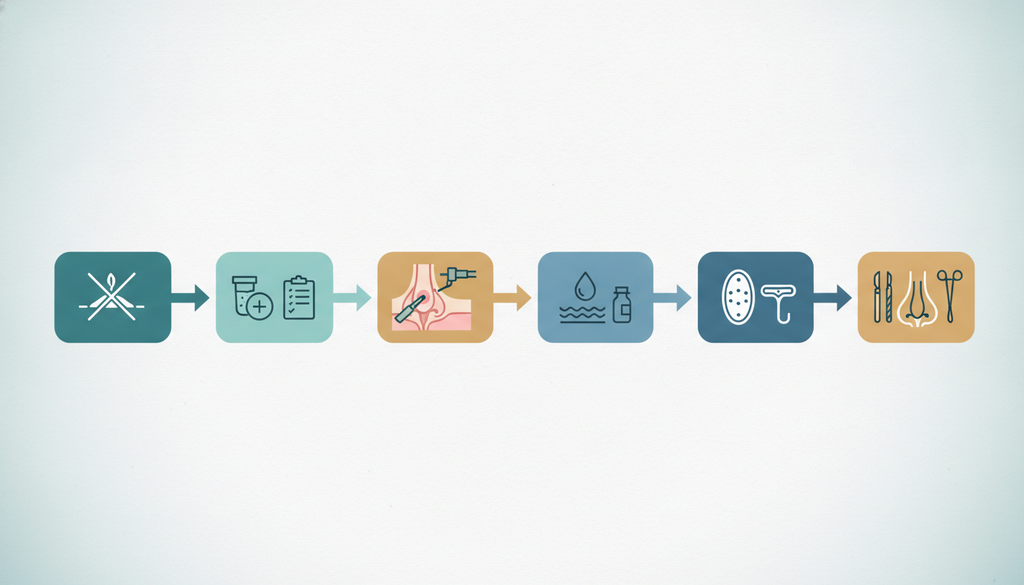
The first treatment is complete cocaine cessation. No rinse, ointment, antibiotic, septal button, or operation can overcome repeated cocaine induced blood flow loss. If use continues, ulcers may not heal, holes can enlarge, and future repair can fail.
Conservative nasal care may include saline irrigation, humidification, careful removal of crusts by a clinician, treatment of infection when present, and avoiding nose picking or forceful blowing. These steps do not rebuild cartilage, but they can reduce bleeding, crusting, odor, and blockage.
A septal button is a prosthetic device placed through a septal perforation. It can reduce whistling, turbulence, dryness, bleeding, and crusting for some people. It does not restore tissue. Some people do not tolerate it because of discomfort, crusting, odor, infection, or irritation.
A palate hole is different. It can cause liquids or food to pass into the nose, nasal speech, and swallowing problems. The palatal repair literature describes an obturator for palatal perforation as a common bridge or longer term option while abstinence and defect stability are established.
Surgery can help selected people, but timing is strict for a reason. Repair needs healthy, moist, well vascularized lining. Cocaine damaged tissue may be scarred, thin, infected, inflamed, or short on usable lining. Active cocaine use is a major reason to delay elective repair.
Some published palatal reconstruction practice describes 6 to 12 months cocaine free before repair. Some nasal reconstructive surgeons require at least 12 months and prefer longer. The safest standard is not the calendar alone. The defect should be stable, the lining should look healed, infection should be treated, and abstinence should be documented.
Nicotine matters too. Smoking and vaping can reduce healing reserve. In septoplasty research, worse septal healing in smokers supports the concern that nicotine exposure can add risk when septal tissue is already vulnerable.
When Sinuses and Palate Are Involved
Sinus involvement can bring facial pressure, foul drainage, blocked airflow, reduced smell, and recurrent infections. But sinus symptoms alone do not prove cocaine injury. Chronic rhinosinusitis, allergies, polyps, dental problems, migraine, and ordinary infections can overlap.
What raises concern is the pattern. Severe crusting, foul odor, bloody discharge, exposed tissue, repeated bleeding, worsening facial pain, loss of smell, or a whistling septum deserves prompt care.
Palate symptoms are more specific for a structural problem. If liquids enter the nose when drinking, if speech suddenly sounds very nasal, or if there is a visible hole in the roof of the mouth, that is not ordinary congestion. It can happen when destructive disease creates a passage between the mouth and nose.
Eye symptoms are even more urgent. Eye swelling, pain with eye movement, double vision, reduced vision, fever, or severe headache can mean infection or destructive disease has reached areas where delay can threaten sight or safety.
Why Stopping Cocaine Changes the Outcome
Stopping cocaine is not a guarantee that everything returns to normal. It is still the step that gives the nose the best chance to stabilize.
If injury is early, the lining may calm down. Crusting may lessen. Bleeding may slow. Congestion may improve. Superficial ulcers may heal. Smell may return if blockage and inflammation were the main causes.
If injury is structural, stopping still matters. It can help keep a small hole from becoming a large one. It can reduce infection risk. It can make a septal button easier to tolerate. It can create the conditions needed before a surgeon will even consider repair.
The hardest truth is that waiting can change the options. Early irritation is often treated with cessation and supportive care. A septal perforation may need a button or complex closure. A collapsed bridge may need reconstruction. A palate hole may need an obturator or surgery. Severe midface destruction may need more than one specialist and more than one stage of care.
If you are worried about your nose, try not to let shame decide the timeline. An ENT exam can show whether the lining is inflamed, whether the septum is intact, whether sinuses are involved, and whether the defect is stable. Addiction care can help make stopping possible before more tissue is lost.
If stopping cocaine feels hard, our team at Thoroughbred Wellness and Recovery can help you make a confidential detox program today.


 Give Us A Call


