
 info@thoroughbredbhc.com
Wondering if equine therapy for addiction actually works, or if it’s just a nice afternoon with horses? Equine assisted therapy pairs a licensed therapist with a horse specialist so clients can practice emotional regulation, and one Norwegian study found completion rates of 44% versus 32% for people who added it to standard care. This guide covers what happens in sessions, what the research shows, and how to spot real clinical care versus a barn visit with a therapy label.
What Is Equine Therapy for Addiction?
The term equine therapy for addiction covers a lot of ground, and that is part of the problem. It can mean licensed psychotherapy that happens to involve a horse. It can also mean a riding lesson, a coaching workshop, or a relaxed afternoon at a stable. These activities might all feel good, but they are not the same thing, and mixing them up can lead to unrealistic expectations.
A recent scoping review found that equine assisted services for people with substance use disorder vary so widely in setting, provider training, and activity type that lumping them together makes research hard to trust. That review found only a handful of studies met basic quality standards out of nearly 200 records screened.
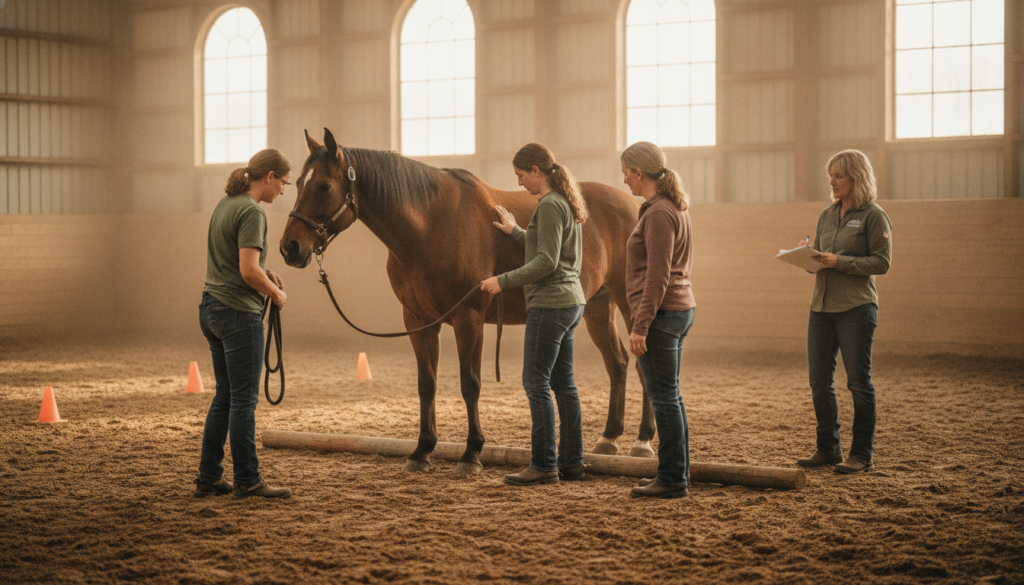
Real equine assisted therapy addiction treatment follows a specific structure. A licensed mental health professional leads the clinical work. A qualified equine specialist handles horse safety and welfare. Together they use structured horse interaction, mostly done from the ground rather than in the saddle, to help clients notice patterns in how they respond to stress, frustration, and connection. A 2022 review of equine-assisted services in addiction treatment found that the clinicians running these programs were consistently qualified psychotherapists with additional horsemanship training, working alongside equine specialists, and that some models are entirely ground-based with no riding involved.
Other equine assisted formats exist too, such as therapeutic riding, equine assisted learning, and horsemanship programs. Each has its own purpose. Only the psychotherapy version, led by a licensed clinician, should be described as treatment for addiction.
Horse Therapy for Addiction vs. a Barn Visit
Not every program that mentions horses is offering therapy. A useful test is simple: does a licensed clinician set goals, watch what happens, and connect the experience back to recovery? Or is a client just spending time near a horse because it feels calming?
Both can have value. Spending time outside, moving your body, and caring for an animal can lift mood and offer a break from a hard day. But that is different from clinical treatment. Horse therapy for addiction becomes treatment when a therapist uses the encounter to build a specific skill and writes down how the client responded, much the way a therapist documents any other session.
According to Psychology Today, equine assisted therapy works best as a complement to standard mental health and addiction care, not a stand in for it. That distinction matters most for people choosing where to spend limited time and money on treatment.

What Happens in a Horse Therapy Session
Sessions differ across programs, but most share a similar shape. Here is what a typical hour with a horse might include in an addiction treatment setting.
- A short check in about mood, cravings, and recent stress
- A safety briefing covering movement, distance, and touch around the horse
- A ground based task such as leading, grooming, or guiding the horse through an obstacle
- Real time observation from the clinician of how the client reacts to frustration or uncertainty
- Guided reflection connecting what happened with the horse to patterns in daily life
- A specific action step to try before the next session
The Team Behind Equine Assisted Sessions
The clinician is responsible for the psychotherapy, meaning they decide the goals, ask the reflective questions, and manage any emotional reactions that come up. The equine specialist reads the horse, keeps everyone physically safe, and makes sure the animal is not stressed or overworked. Neither role replaces the other. A skilled horse handler without a mental health license cannot legally provide psychotherapy, and a therapist without horse experience should not manage a large animal alone.
A Typical Session, Step by Step
Picture a client in residential treatment who snapped at a family member the night before and now feels wound up. During the session, the client tries to lead the horse through a simple task. When the horse does not move right away, the client pulls harder and raises their voice.
The therapist does not treat this as proof of anything about the client’s character. Instead, they ask what the client noticed in their body right before they pulled harder, and whether that same pattern shows up during arguments at home or when a craving hits. The horse created a real, observable moment. The clinical work happens in what the therapist does with it afterward, not in the moment itself.
Common Activities in Equine Therapy for Substance Abuse
Programs vary, but a few activities show up again and again in equine therapy for substance abuse.
Grooming and stable chores can build routine and a sense of pride outside of substance use. Observation, simply watching a horse or herd without touching, gives anxious or trauma affected clients a lower pressure way to start. Leading and groundwork create small, manageable challenges that mirror frustration tolerance and communication. Obstacle courses ask clients to solve a problem, adjust when the first plan fails, and sometimes ask a peer for help.
Group sessions add another layer. When two or three clients work together on a task, a therapist can watch how they negotiate roles, handle disagreement, and respond when things do not go as planned. This can open a direct conversation about peer relationships, asking for support, and setting a boundary without anger or guilt, all of which show up in daily recovery outside the barn.
None of these tasks are magic. Grooming a horse does not cure a substance use disorder any more than sweeping a floor would. What matters is whether a clinician links the moment to something the client is working on, such as noticing early signs of anger, practicing a boundary, or tolerating an unplanned outcome without shutting down.
Does Equine Therapy Help Addiction?
This is the question most people actually want answered, and the honest response is mixed. Some findings are encouraging. Others fall short of proving the treatment works.
The strongest experimental evidence is a randomized trial conducted in Norway with 37 people in residential substance use treatment. Participants who received horse assisted therapy alongside standard care did not show a meaningful improvement in dropout, transfer, or time spent in treatment compared with standard care alone. Completion was numerically higher in the horse assisted group, 44% versus 32%, but the study was small and attendance to sessions was inconsistent, so that gap cannot be called proof.
A separate observational study followed 108 patients and found that those who took part in horse assisted therapy were more likely to stay in treatment for at least 90 days and to complete the program, with an adjusted odds ratio of 3.9 for completion, according to the same scoping review. That sounds strong, but the patients were not randomly assigned. People who chose or were referred to horse assisted sessions may have already been more motivated or more stable, which makes it hard to credit the horses alone.
More recently, one clinical trial involving 100 patients in Cairo found improvements in emotion regulation, self efficacy, and self esteem among those who received equine assisted therapy compared with regular care. These are meaningful process outcomes, but they stop short of showing lower relapse rates or long term sobriety.
A smaller, more recent exploratory study of formerly incarcerated men with substance use histories, described in one exploratory study, found no statistically significant group level change after 12 weeks. The researchers were clear that larger samples and longer follow up are still needed.
Put together, the research supports a careful conclusion. Equine therapy for addiction may help some people stay engaged with treatment and build specific coping skills. It has not been shown, in controlled studies, to reduce relapse or replace standard addiction care.
How Equine Therapy for Addiction Fits Rehab
Equine therapy in rehab works best as one piece of a larger plan, not the whole plan. Addiction treatment that actually changes outcomes usually includes things equine sessions cannot provide on their own, such as medication for opioid or alcohol use disorder, cognitive behavioral therapy, trauma focused care, and structured relapse prevention planning.
A well run program treats horse sessions the way it treats any other group activity, with a documented goal, a way to track progress, and a clear link back to the client’s overall treatment plan. If a client struggles to name emotions, a session might focus on noticing bodily cues during a groundwork task. If a client has trouble with boundaries, a session might focus on clear, calm communication with the horse and then a conversation about what that looked like with a partner or family member at home.
This same idea can support skills used in cognitive behavioral and dialectical approaches. A client who notices irritation rising while leading a horse can practice the same pause and plan skill they would use with a craving or a hard conversation. The setting changes, but the skill transfers, which is the whole point of using horses at all.
This is also where the difference between therapy and coaching matters most. An equine specialist without a mental health license can support the activity, but should not be the one deciding how a session connects to addiction treatment goals. That decision belongs to a licensed clinician working within their scope of practice.
What to Look for in an Equine Therapy Recovery Program
A program does not need horses to be effective, and horses alone do not make a program effective. Before choosing an equine therapy recovery program, ask a few direct questions.
Who is the licensed clinician responsible for my care, and are they present during sessions? What is their training in addiction treatment specifically? How will progress be documented and connected to my broader treatment plan? What happens if I feel unsafe, panicked, or unwilling to participate on a given day?
Also ask about the horses themselves. A program that pays attention to workload, rest, and stress signals in its animals tends to also pay closer attention to client safety and consent. The equine welfare guidelines published by national equine groups outline the kind of animal care standards a responsible program should already be following. Credentials from equine-specific training organizations can be a useful signal of training, but they are not a license. The person leading clinical sessions should hold a current state mental health license, which you can verify directly through the Georgia Composite Board of Professional Counselors, Social Workers, and Marriage & Family Therapists.
Why It Matters: Horses in Addiction Treatment
Horses in addiction treatment are not a cure, and no honest program will tell you they are. What the research does support is more modest and, in some ways, more useful. For people who struggle to talk about feelings in a therapist’s office, or who have grown tired of sitting in a circle discussing the same triggers, a structured session with a horse can offer a different way in. It gives a clinician something concrete to work with, a real moment of frustration or connection, rather than an abstract description of one.
That matters most for people at risk of leaving treatment altogether. Disengagement, not lack of desire to recover, is often what breaks a treatment plan before it has a chance to work. If equine assisted therapy addiction sessions help even some clients stay in the room, attend consistently, and build a handful of concrete coping skills, that is a real contribution even without proof that it lowers relapse on its own.
The honest takeaway is this. Ask about the horses if you like, but ask harder about the clinician, the plan, and how progress gets measured. That is what turns a pleasant experience with an animal into actual treatment, and it is what separates equine therapy recovery support from a nice day outside.
If you or someone you love is weighing options for addiction and mental health care, explore our programs at Thoroughbred Wellness and Recovery to see how holistic and evidence-based support can fit together.


 Give Us A Call


