
 info@thoroughbredbhc.com
If you are wondering whether medication can help you drink less, naltrexone for alcohol use disorder is one of the best studied options. Naltrexone 50 mg daily has been linked with fewer returns to heavy drinking, with one 2023 review estimating benefit for about 1 in 11 people treated. This article explains what it does, what it cannot do, and when to talk with a prescriber.
Naltrexone for Alcohol Use Disorder Basics
Naltrexone is a medication used to treat alcohol use disorder, often called AUD. It does not make you sick if you drink. It also does not sedate you, detox you, or remove all cravings.
In plain terms, naltrexone for alcohol helps lower the reward some people feel from alcohol, which can make it easier to stop after one drink, avoid binge drinking, or return to a goal after a slip.
The usual oral dose studied for AUD is 50 mg once daily. That daily 50 mg plan is the standard oral approach and is the best supported schedule in the research provided. A large JAMA review found that oral naltrexone reduced return to heavy drinking more clearly than it reduced any drinking at all.
That last point matters. Naltrexone alcohol treatment is often about lowering risk, not flipping a switch from heavy drinking to instant abstinence. Some people use it while working toward no alcohol. Others use it to reduce heavy drinking days, cut the number of drinks per drinking day, or stop a lapse from turning into a long binge.
How Naltrexone Changes Drinking Patterns
Naltrexone blocks opioid receptors involved in alcohol reward. Alcohol can trigger the brain’s own opioid system, which is one reason drinking may feel reinforcing. By blocking that pathway, naltrexone can make alcohol feel less rewarding for some people.
That does not mean every drink will feel like water. It also does not mean the medication removes habit, stress, trauma cues, social pressure, or withdrawal risk. Alcohol use disorder is not only about reward. Still, lowering reward can give you more room to pause and choose.
Research suggests the clearest benefit is fewer heavy drinking episodes. In the 2023 review, oral naltrexone had a stronger effect on return to heavy drinking than on return to any drinking. A Boston University summary of the same evidence reported a number needed to treat of about 11 to prevent one return to heavy drinking, compared with about 18 to prevent one return to any drinking through oral naltrexone treatment.
So if you start naltrexone and still drink, that alone does not prove it failed. A better question is whether your drinking is less intense, less frequent, or less likely to become heavy.
A meaningful response might look like going from several heavy drinking days each week to one. It might mean drinking four drinks instead of eight on a drinking day. It might mean cravings feel less urgent, even if they are still present.
Daily Dosing Versus Targeted Dosing
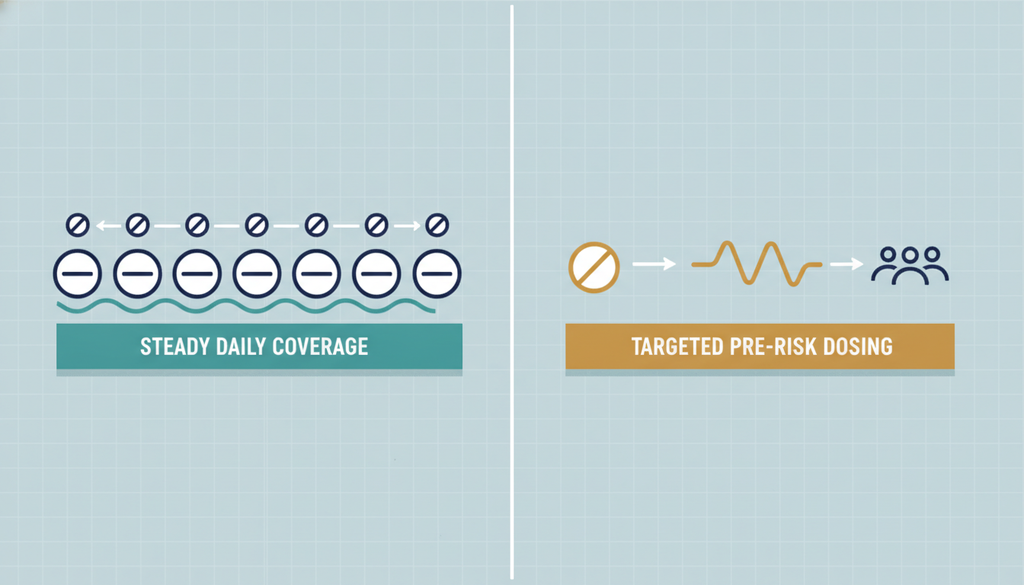
Most people hear about daily naltrexone first. Daily dosing means taking 50 mg every day, whether or not you expect to drink. This can make sense when cravings are frequent, drinking is not predictable, or heavy drinking happens after stress, poor sleep, conflict, loneliness, or impulse.
Targeted dosing means taking 50 mg before a likely drinking event or when craving starts. You may also hear it called as needed dosing or pre drinking dosing. This approach has some controlled trial support, but the evidence base is narrower than the evidence for daily use.
In one modern randomized trial, 120 sexual and gender minority men with binge drinking and mild to moderate AUD took targeted naltrexone or placebo. At 12 weeks, targeted naltrexone reduced binge drinking days by 26 percent, weeks with any binge drinking by 17 percent, and drinks per month by 31 percent versus placebo in the targeted trial population.
That is encouraging. But the same study did not compare targeted dosing with daily dosing. So it does not prove targeted use works as well as daily use for most adults with AUD.
The practical difference is coverage. Daily naltrexone gives steady coverage. Targeted naltrexone depends on noticing risk before drinking starts, having the tablet available, and taking it in time. If your drinking is planned and limited to predictable events, targeted dosing may be worth discussing. If your drinking tends to start suddenly, daily treatment is often the more realistic plan.
What Progress Should Look Like
Naltrexone works best when progress is measured, not guessed. Many people judge themselves only by whether they drank at all. That can miss real gains.
Track heavy drinking days, drinking days, drinks per drinking day, total drinks, cravings, and missed doses. If you use targeted dosing, also track whether you took it before the risk moment or after drinking had already started.
Here is a simple way to think about follow up:
| Time Point | What To Look For | What To Discuss |
| Week 4 | Early movement, such as fewer heavy drinking days, fewer drinks per drinking day, or lower craving | Do not call it failure too soon. Review side effects, missed doses, and whether the plan fits your drinking pattern |
| Week 8 | A clearer pattern, such as about 30 percent fewer heavy drinking days or a steady drop in drinking intensity | If progress is small, talk about daily dosing, targeted dosing, adherence support, or another care plan |
| Week 12 | A full trial review, with focus on heavy drinking, craving, safety, and whether you value the change | If there is partial benefit, consider improving the plan before stopping medication |
These are practical check points, not strict rules from a trial. The research provided does not give a validated switch point at week 4, 8, or 12.
Still, the timing is useful. Many studies used about 12 weeks of active treatment, and by then you and your prescriber should have enough information to decide whether the current plan is helping.
When Drinking Continues During Treatment
Continued drinking can feel discouraging. But naltrexone is not meant to punish lapses or prove willpower. It is meant to reduce the chance that drinking becomes heavy or keeps escalating.
Guidance from the New York State Department of Health says active alcohol use is not a contraindication to starting or continuing naltrexone, and it recommends continuing treatment when drinking continues or resumes while revisiting goals through NYSDOH guidance for AUD care.
That means a slip does not automatically mean you should stop. It means you should look at what happened.
Did you miss doses before the drinking episode? Did you drink in a setting you did not plan for? Was the craving stronger than usual? Did side effects make you avoid the medication? Did stress, grief, anxiety, or trauma symptoms drive the drinking?
If naltrexone reduces heavy drinking but does not stop all drinking, that may still be a real benefit. If it lowers craving but you keep drinking in the same environment, you may need more behavioral support, a safer plan for high risk settings, or a different level of care.
If there is no change at all after a well followed trial, the conclusion is not that you failed. It may mean that this dose, schedule, or medication is not the right fit.
Naltrexone for Alcohol Use Disorder Safety
Naltrexone is not right for everyone. A prescriber needs to check opioid use, liver concerns, withdrawal risk, current medications, and treatment goals.
The opioid issue is especially important. Naltrexone blocks opioid receptors. If a person is physically dependent on opioids, naltrexone can trigger sudden opioid withdrawal. It is not used with opioid pain medication, methadone, buprenorphine, current opioid dependence, or acute opioid withdrawal. Prescribing information describes the need for an opioid free interval, often at least 7 to 10 days after short acting opioids, through naltrexone labeling on safety and dosing.
Liver safety also matters. Naltrexone should be used with care when liver tests are abnormal, and it is not used in acute hepatitis or liver failure. That does not mean every mild liver enzyme change rules it out. Alcohol itself can harm the liver, and reducing heavy drinking can be part of the solution. The key is medical review and follow up.
Alcohol withdrawal is a separate safety issue. Naltrexone does not treat withdrawal. It does not prevent withdrawal seizures or delirium tremens. If you drink heavily every day, have morning shakes, have needed alcohol to feel normal, or have had withdrawal seizures or delirium in the past, you need a withdrawal risk assessment before cutting down quickly.
The ASAM alcohol withdrawal guideline separates risk prediction from current symptom scoring and notes that tools such as PAWSS and CIWA Ar answer different questions in withdrawal management care.
Seek urgent in person help if you have a seizure, confusion, hallucinations, severe shaking, fever, chest pain, severe vomiting, dehydration, severe agitation, or a very fast heart rate after reducing alcohol. Naltrexone may become useful later, but withdrawal safety comes first.
Oral Tablets And Monthly Injections
Naltrexone comes as oral tablets and as an extended release monthly injection. Oral tablets are often started first because they are easy to stop if side effects happen. They also help show whether you tolerate the medication.
Monthly extended release naltrexone may help when taking a pill every day is the problem. If you do better when you take the tablet but keep missing doses, an injection may create steadier coverage.
The New York guideline recommends extended release naltrexone when oral adherence is a concern and suggests a short oral trial first to establish tolerability through AUD treatment guidance.
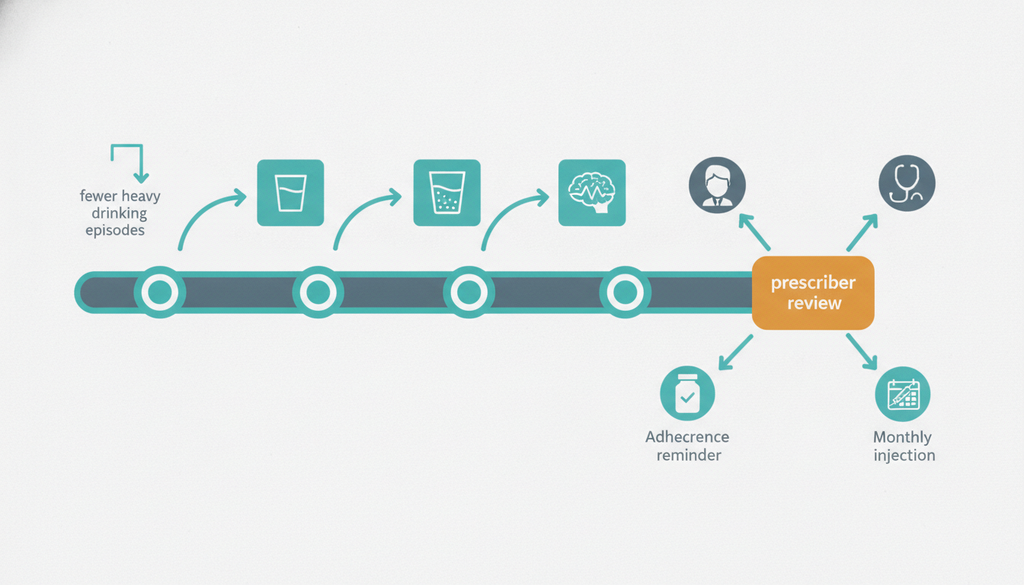
Research comparing oral and injectable forms does not mean injections are always better. A later trial summary in hospitalized adults found large reductions in heavy drinking days in both groups, without a statistically clear difference between oral and injectable treatment. The practical choice often comes down to access, cost, preference, adherence, side effects, and medical fit.
Side Effects And Dose Questions
Common side effects can include nausea, headache, dizziness, fatigue, and reduced appetite. Some people do better when starting at a lower dose and then increasing, but that is a prescriber decision.
The standard oral AUD dose is 50 mg daily. Some clinicians may consider 100 mg in select cases, usually when 50 mg helps somewhat, is well tolerated, and safety checks look acceptable. But this should not be treated as automatic. The strongest evidence is for 50 mg daily, and labeling warns that single doses above 50 mg may raise liver injury risk.
It is also worth saying this plainly: do not change your dose on your own. More medication is not always better, and missed doses are often a bigger issue than dose strength.
If side effects make you skip pills, tell your prescriber. If cravings remain high but drinking is down, that may still support continuing. If drinking is unchanged and adherence is strong, it may be time to rethink the plan.
Who May Benefit Most
Naltrexone may be a good fit if your main problem is heavy drinking, binge drinking, drinking more than planned, or craving that leads to escalation. It may also help if your goal is harm reduction rather than immediate abstinence.
Daily dosing may fit better when drinking is frequent or unpredictable. Targeted dosing may fit better when drinking happens in clear, planned situations and you can take the medication before the risk starts.
Medication works best when paired with support. That may include counseling, group treatment, family support, skills for cravings, sleep care, trauma treatment, or a higher level of care if drinking is medically risky.
AUD often overlaps with anxiety, depression, trauma, sleep problems, and stress. Naltrexone can help with alcohol reward, but it does not solve every driver of drinking. A good treatment plan looks at the whole pattern.
Why This Matters For Real Recovery
The most useful way to think about naltrexone is as a tool, not a cure and not a test of character. It can lower the pull of alcohol enough for other parts of recovery to start working.
For some people, that means fewer binges. For others, it means less shame after a lapse because the lapse does not take over the week. For others, it creates enough stability to engage in therapy, repair sleep, rebuild trust, or step into a more structured program.
Naltrexone for alcohol use disorder is best judged by real outcomes: fewer heavy drinking days, fewer drinks per drinking day, lower craving, better safety, and a plan you can actually follow.
If alcohol use feels hard to control or you are worried about withdrawal, get support before trying to handle it alone. To talk through medication, detox safety, and treatment options, reach out to Thoroughbred Wellness and Recovery for detox and outpatient care.


 Give Us A Call


