
 info@thoroughbredbhc.com
If Suboxone makes you wonder which medicine treats withdrawal and which one prevents misuse, you are asking the right question. Buprenorphine and naloxone work together in Suboxone, but buprenorphine treats opioid withdrawal and cravings, while naloxone mainly discourages injection misuse when the medicine is not taken as directed. This guide explains what each medicine does, why timing matters, and what to ask before starting or changing buprenorphine/naloxone treatment.
Buprenorphine and Naloxone in Suboxone
Suboxone is a combination medicine used to treat opioid use disorder. Its two medicines are buprenorphine and naloxone.
In plain terms, buprenorphine is the treatment medicine in Suboxone, and naloxone is the safety feature added to reduce misuse.
That answer surprises many people. Naloxone is well known because it is used to reverse opioid overdose, so people often assume it is the part that causes withdrawal in Suboxone. When Suboxone is taken correctly under the tongue or in the cheek, that is usually not what happens.
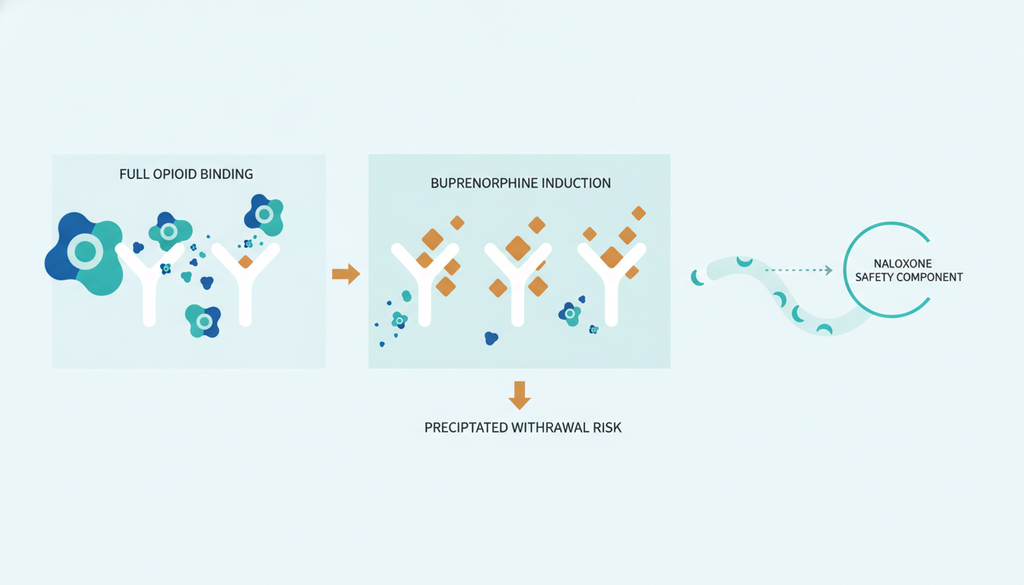
The key point is this: buprenorphine can cause precipitated withdrawal if it is started too soon after fentanyl, heroin, methadone, oxycodone, or another full opioid. Naloxone usually has little effect when Suboxone is used sublingually, because product information says sublingual naloxone has poor bioavailability at the doses used in the combination product.
That does not mean naloxone does nothing. If buprenorphine / naloxone is injected, naloxone can become active in the body and may help trigger withdrawal in a person who is physically dependent on opioids. That is part of why it is included in the product.
How Buprenorphine and Naloxone Work
Buprenorphine is a partial opioid agonist. It attaches tightly to mu opioid receptors, the same receptor system affected by many opioids. It can reduce withdrawal, ease cravings, and help protect against overdose risk.
The word partial matters. Full opioid agonists can produce high levels of receptor activation. Buprenorphine activates the receptor less strongly, but it binds with very high affinity. That means it can push other opioids off the receptor.
This is useful after the body is ready for buprenorphine. It is risky if a person still has enough fentanyl, heroin, methadone, or another full opioid active at the receptor. The Cleveland Clinic Journal of Medicine describes this risk as tied to buprenorphine’s high receptor affinity, which can quickly change opioid signaling.
Naloxone works differently. It is an opioid antagonist. In Suboxone, its main role is not to treat cravings. It is there to make injection misuse less appealing, because naloxone can block opioid effects and trigger withdrawal when it reaches the bloodstream in a person who is opioid dependent.
So the two medicines have different jobs. Buprenorphine provides the main treatment effect. Naloxone adds a misuse deterrent when the product is not used as prescribed.
Why buprenorphine can trigger withdrawal
Precipitated withdrawal is different from regular withdrawal.
Regular withdrawal starts as opioid levels fall over time. Precipitated withdrawal can come on fast after a medicine changes receptor activity suddenly. With Suboxone, this can happen if buprenorphine replaces a full opioid but gives less receptor activation than the opioid it displaced.
A person may feel sudden worsening of symptoms such as sweating, chills, stomach cramps, diarrhea, vomiting, anxiety, body aches, restlessness, or intense discomfort. It can be frightening. It can also make someone afraid to try treatment again.
That is why starting buprenorphine naloxone at the right time matters so much.
Why Timing Matters So Much
Older teaching often used time since last opioid use as a rough guide. For heroin or other short acting opioids, many protocols used about 12 to 24 hours of abstinence before starting standard buprenorphine. For methadone and other long acting opioids, the wait could be much longer.
Fentanyl changed this.
Fentanyl is highly lipophilic, meaning it can move into fat and muscle tissue. With frequent exposure, it may leave the body in a slower and less predictable way. A person may wait a long time and still not be ready for a standard dose of buprenorphine/naloxone.
That is why a clock alone is not enough. Guidance from New York State emphasizes treatment decisions based on opioid withdrawal signs and clinical assessment, not only hours since last use.
A study of people with opioid use disorder found that taking buprenorphine within 24 hours of fentanyl use was linked with higher odds of severe withdrawal, and the risk was also higher during the 24 to 48 hour window. The same study reported severe withdrawal in 22.19 percent of people who took buprenorphine less than 24 hours after fentanyl use, compared with 11.56 percent of people who took methadone in that same time frame, according to the fentanyl study findings.
That does not mean everyone must wait the same number of hours. It means recent fentanyl use is a real risk marker. Some people may be ready sooner if they are in clear withdrawal. Others may need more time or a different start method.
Signs clinicians look for
Before a standard start, clinicians often use the Clinical Opiate Withdrawal Scale, or COWS, plus direct observation. The goal is not to make someone suffer. The goal is to avoid starting too soon.
Objective signs matter because anxiety, pain, nausea, and fear can overlap with opioid withdrawal. Common physical signs include:
- Dilated pupils
- Sweating or gooseflesh
- Yawning, runny nose, or tearing
- Vomiting or diarrhea
- Tremor or visible restlessness
- Chills, body aches, or clear physical discomfort
Many standard protocols use moderate withdrawal before the first dose. Some guidance uses a COWS score above 12. Some emergency or monitored protocols use a lower threshold, such as 8 or higher, when staff can reassess the person closely.
The exact number should not be treated like a magic switch. A COWS score is useful, but the whole picture matters.
Standard Starts and Low Dose Starts
There are two broad ways to start buprenorphine/naloxone: a standard start and a low dose start.
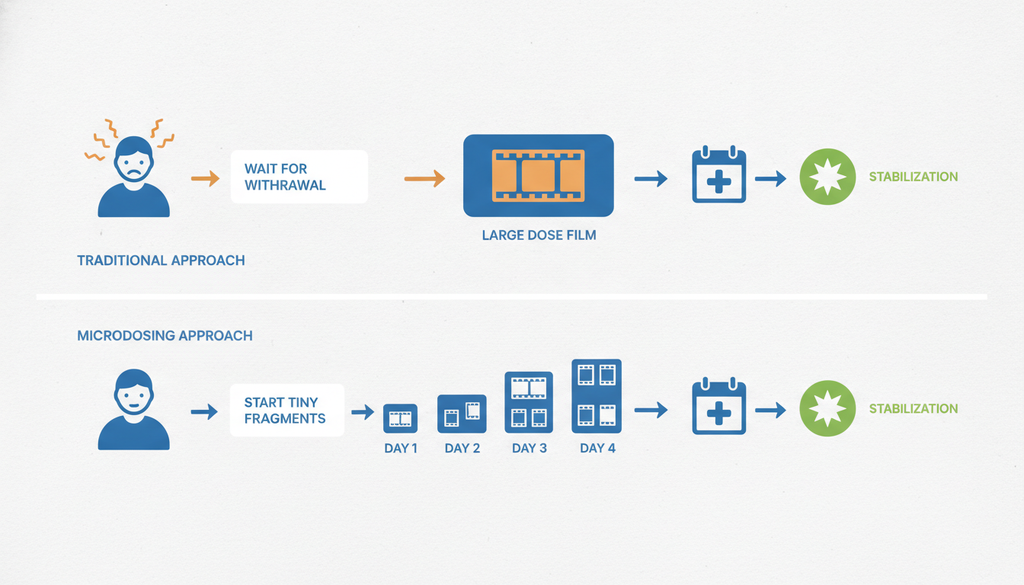
In a standard start, the person stops the full opioid and waits until withdrawal is clearly present. Then buprenorphine is started, often with a small first dose such as 2 to 4 mg. The person is reassessed, and more medicine may be given if withdrawal continues.
This can work well. It is also faster and simpler than a low dose start when the person is truly ready.
The problem is that many people using fentanyl cannot predict when that moment will come. Some have tried to wait, became very sick, took Suboxone, and felt worse. Others cannot safely tolerate a long period without opioids because of work, housing, pain, caregiving, or fear of severe withdrawal.
Low dose initiation, sometimes called microdosing or the Bernese method, takes a different path. It starts with very small doses of buprenorphine while the person continues a full opioid for a short period. The dose rises over several days until the person reaches a treatment dose and stops or tapers the full opioid.
The goal is gradual replacement at the receptor instead of a sudden shift. A recent outpatient study of low dose initiation in people using fentanyl found that completion was difficult in real life, with 34 percent of attempts completed and 22 percent retained on buprenorphine at 28 days.
That matters. Low dose initiation is a helpful option, but it is not a guarantee. It can be harder to follow because dosing is more complex. People may need to split films or tablets, take doses at set times, and stay in contact with the care team. Continued fentanyl use during the overlap period also carries overdose risk.
The best choice depends on the person, the opioid involved, withdrawal signs, prior experience, and the care setting.
What Fentanyl Changed
Fentanyl did not make buprenorphine stop working. It made starts more unpredictable.
Some people using fentanyl can still start Suboxone with a standard method once they have clear withdrawal. Others may be at higher risk for precipitated withdrawal even after waiting longer than expected. Reports in the research include cases after 72 to 80 hours since last stated fentanyl use, which shows why no fixed waiting period can promise safety.
At the same time, fear can become its own barrier. If people are told to wait too long without help, they may return to fentanyl use before they ever start treatment. If they start too soon, they may get precipitated withdrawal and lose trust in treatment.
This is where good clinical care makes a difference. The plan should fit the person in front of the clinician, not a rigid rule.
Emergency settings may use other pathways. High dose starts, sometimes called macro starts, can give larger total doses in a monitored setting once withdrawal is present. A large emergency department case series reported precipitated withdrawal in 0.8 percent of encounters and no documented respiratory depression or excess sedation in that setting, according to the high dose study.
That does not mean high dose starts are right for every outpatient setting. Monitoring, staff experience, and follow up matter.
Suboxone, Generics, and Product Changes
Suboxone is a brand name, but many people receive generic buprenorphine/naloxone. Some receive films. Some receive tablets. Some receive products with different bioavailability, such as Zubsolv.
These details are not just packaging. Product labels warn that switching between tablets and films, or between different film strength combinations, may change drug exposure. FDA labeling notes that people should be monitored when changing sublingual film products because dose changes may be needed.
That is important if your pharmacy changes your product, your insurance plan stops covering a brand, or your prescriber switches you from a film to a tablet. Same active ingredients does not always mean the experience will feel identical.
A case report described one patient who had been stable on brand Suboxone film and then reported withdrawal and cravings after insurer required switches to generic films. The report does not prove generics are worse for everyone. It does show that some stable patients may need reassessment, dose adjustment, or a return to the product that worked for them after a forced switch.
If your medicine changes and you feel worse, do not assume you failed treatment. Ask what changed. The product, dose, manufacturer, route, timing, and how the film or tablet dissolves can all matter.
Questions to Ask Before Starting or Switching
You deserve clear instructions, especially if fentanyl is part of your recent opioid use or if you have had precipitated withdrawal before.
Ask your prescriber which start method they recommend and why. Ask what withdrawal signs you should wait for before a standard start. Ask what to do if you feel worse after the first dose. If a low dose start is recommended, ask for written instructions and a backup plan if you miss a dose or cannot follow the schedule.
If your pharmacy or insurance changes your medication, ask whether the new product is a film, tablet, brand, generic, or different manufacturer. Ask whether the dose is meant to be the same or converted. Ask when someone will check in with you after the switch.
If you are pregnant, breastfeeding, have liver disease, or take sedating medicines such as alcohol or benzodiazepines, tell the prescriber before starting. Those details can affect product choice, dose planning, and monitoring.
Most of all, be honest about recent fentanyl, methadone, heroin, oxycodone, or other opioid use. This is not about getting in trouble. It is about choosing the safest way to start.
Why This Matters for Recovery
Buprenorphine and naloxone can be confusing because both are opioid related medicines, but they do different jobs in Suboxone. Buprenorphine is the main medicine that treats opioid withdrawal and cravings. Naloxone is mainly there to discourage injection misuse and usually has little effect when taken under the tongue as directed.
The hard part is timing. Starting too soon can cause precipitated withdrawal. Waiting too long without support can make treatment harder to begin. Fentanyl makes this balance more complicated because withdrawal can be delayed or unpredictable.
A good plan does not rely only on a clock. It looks at your withdrawal signs, your opioid history, your past starts, your setting, and your ability to follow the instructions. Standard starts can work well when you are clearly in withdrawal. Low dose starts can help when waiting is not realistic. Monitored settings may use other pathways.
If you are ready to talk through options for opioid treatment, withdrawal support, or the next safe step, reach out for detox treatment support at Thoroughbred Wellness and Recovery.


 Give Us A Call


