
 info@thoroughbredbhc.com
Crack cocaine is a smokeable form of cocaine that can look like small, irregular rocks, but you cannot identify it safely by sight. Crack cocaine is cocaine base in solid form, and the DEA says this route can take effect in about 7 to 10 seconds after vapor is breathed in. This guide explains what it is, what it may look like, how it differs from powder cocaine, and what risks to take seriously.
Crack Cocaine Basics
If your main question is what is crack cocaine, the plain answer is this: it is a solid, smokeable form of cocaine. Cocaine itself is a stimulant. Crack and powder cocaine are related forms of the same drug, but they are often used in different ways.
The Congressional Research Service describes crack as a solid form that is generally smoked, while powder cocaine is generally snorted or dissolved and injected. That difference in route matters because smoking can produce a very fast effect.
Crack is not a different drug family from cocaine. It is cocaine in a form that can be smoked. That is why the question is crack cocaine often leads to a simple answer: yes, it is cocaine, but it is not the same product form as the white powder many people picture.
The fast onset can make use feel intense and brief. Some people may smoke again soon after the effect fades. That pattern can raise the risk of compulsive use, repeated exposure, and medical emergencies.
What Does Crack Cocaine Look Like?
People often ask what does crack cocaine look like because they found a small rock, a crumbly chunk, or residue near a pipe. Crack is commonly described as irregular white or off white rocks or chunks. The National Drug Intelligence Center describes crack as being sold in rock form after cocaine is processed into a solid.
Still, sight alone is a poor way to identify it. A pale rock or powder can be many things. It might be cocaine base, powder cocaine, methamphetamine, crushed medication, sodium bicarbonate, an adulterant, or a non drug household material.
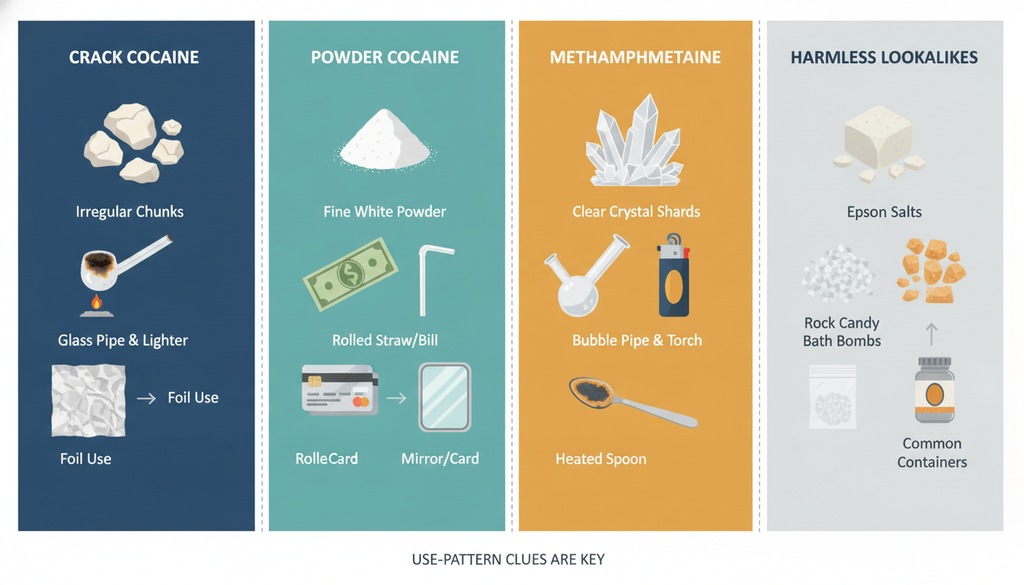
Color does not solve the problem. Shape does not solve it either. A substance that “looks like crack” may not be crack, and a substance that does not look unusual may still be dangerous.
Smell, taste, burning, or home testing are not safe ways to find out. Do not put an unknown substance near your mouth or nose. Do not heat it. Do not crush it to inspect it. If children, pets, or anyone in the home might have access, the safer move is to treat it as unknown and potentially hazardous.
Is Cocaine Crack?
Is cocaine crack? Not always. Crack is cocaine, but not all cocaine is crack.
Powder cocaine is usually cocaine hydrochloride. Crack is cocaine base in a solid form that is commonly smoked. That means the difference is not just appearance. It also involves chemical form and route of use.
This is why the question is cocaine crack needs a careful answer. If someone says “cocaine,” they may mean powder cocaine. If someone says “crack,” they usually mean a smokeable rock or chunk form. Both expose the body to cocaine, and both can be addictive.
Powder cocaine can also be dangerous. It can be snorted, dissolved, or injected. It can contribute to heart problems, anxiety, paranoia, seizures, and substance use disorder. A slower route does not make it safe.
Smoking crack can carry extra risk because the effect arrives so quickly. The person may feel a rush, then a quick drop, then a strong urge to use again. That cycle can make it hard to stop once a session starts.
Why Sight Is Not Enough
A visual guess cannot tell you what is in a substance. It cannot tell you dose, purity, potency, or whether fentanyl or another contaminant is present.
Forensic systems use chemical testing for a reason. The DEA describes NFLIS as a system based on chemical identification from drug exhibits submitted to participating forensic laboratories. In 2025, NFLIS reported 666,357 cases and 1,126,178 substance identification reports, with fentanyl making up 11.74 percent of reports.
Those numbers do not mean every suspected crack sample contains fentanyl. They do show why confidence based on sight is risky. The drug supply changes, and a name given on the street does not prove what a substance contains.
Recent surveillance also found cocaine and methamphetamine samples cut with fentanyl, xylazine, and medetomidine in some places. The NDEWS report described regional samples that included cocaine alone in some cases and cocaine with active adulterants in others. That mix is the point: some samples contain what people expect, and some do not.
Paraphernalia can offer context, but it cannot prove the drug. A small pipe may suggest smoking. A straw or card may suggest powder use. Foil, lighters, small bags, and scales may raise concern. But none of these items can tell you the exact substance, who used it, how much was used, or whether the material contains fentanyl.
Crack Cocaine Risks and Overdose Signs
Crack cocaine is a stimulant, so many people expect fast speech, high energy, restlessness, anxiety, sweating, or agitation. Cocaine can also affect the heart and brain. Severe reactions can include chest pain, confusion, seizures, fainting, and dangerous changes in behavior.
The added danger today is that a suspected stimulant may not be only a stimulant. Cocaine and methamphetamine can be contaminated with opioids such as fentanyl. If that happens, the person may show opioid overdose signs rather than only stimulant signs.
Watch for slow or absent breathing, blue or gray lips, choking or gurgling sounds, limp body, pinpoint pupils, or inability to wake up. These are emergency signs. Do not wait to see whether the substance was crack, powder cocaine, fentanyl, or something else.
The CDC says naloxone can help reverse opioid overdose and will not harm someone who has not taken opioids. Its naloxone guidance says to call 911, give naloxone if available, keep the person breathing, place them on their side if appropriate, and stay until help arrives.
If someone is awake but very agitated, paranoid, having chest pain, or acting in a way that could hurt them or others, that can also be an emergency. Cocaine related medical crises are not limited to overdose with slowed breathing.
Who Invented Crack Cocaine?
If you are asking who invented crack cocaine, the evidence used for this article does not name one single inventor. The safer answer is that crack developed as a processed form of cocaine base, not as a product that can be credited to one clearly identified person in these sources.
It is worth being cautious here. Many online claims about who invented crack cocaine are political, racialized, or poorly sourced. If a source does not provide solid evidence, it is better not to repeat the claim.
What matters for health and safety is clearer. Crack is a smokeable cocaine product. It can cause rapid effects. It can support repeated use. It can be mixed with or contaminated by other substances. If an unknown rock or residue is found, the right response is safety first, not certainty by sight.
What To Do If You Find It
Finding a small rock, powder, baggie, pipe, or residue can make you want answers right away. That reaction is normal. But the first goal is not to prove what it is. The first goal is to keep people safe.
NIOSH advises treating unknown powders as potentially hazardous and warns that field testing can increase exposure risk if powder is disturbed. That is especially relevant if fentanyl or related substances are possible.
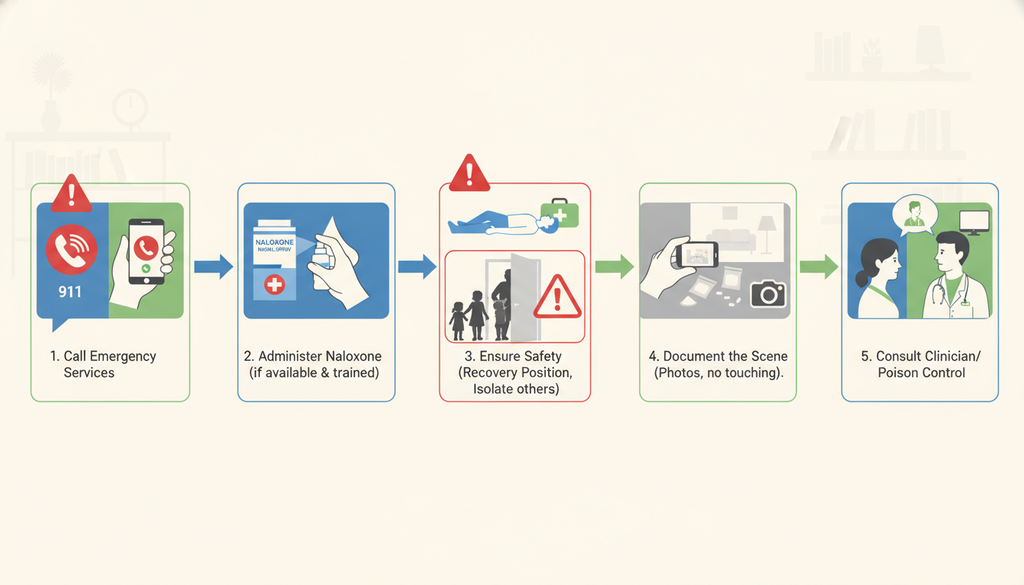
Use this simple response plan:
- If anyone is unconscious, hard to wake, having seizures, having chest pain, or not breathing normally, call 911 now.
- Give naloxone if opioid overdose is possible and naloxone is available.
- Keep children, pets, and uninvolved adults away from the area.
- Do not taste, smell closely, crush, burn, sweep, vacuum, or move the substance around.
- Take factual notes if you can do so safely, such as location, time, visible items, symptoms, and what was said.
- For possible exposure without life threatening symptoms, contact Poison Control or a medical professional for guidance.
Try to use neutral language. Instead of saying, “This is definitely crack,” say, “I found an unknown off white rock like substance near a pipe.” That keeps the focus on facts and safety.
If the person is a loved one, avoid a confrontation while they are intoxicated, frightened, paranoid, or withdrawing. You can set firm safety boundaries without shaming them. For example, you can say that substances cannot be used in the home, that you will call 911 if breathing changes, and that you want them to get a clinical assessment.
Getting Help Without Shame
Crack cocaine use can become serious quickly, but people do recover. Help is not only for daily use or for the most severe cases. It is also appropriate when someone is using more than planned, cannot stop once they start, has intense cravings, keeps using despite panic or chest pain, or keeps returning to use after promising not to.
A professional assessment can look at the full pattern: route of use, frequency, cravings, mental health symptoms, medical risk, overdose history, other substances, and safety at home. That matters because the item found in a room is only one piece of the story.
Families often want certainty, but certainty may not be possible without lab testing and a clinical evaluation. What you can do is act on risk. Treat unknown substances as unknown. Respond fast to overdose signs. Keep children safe. Speak in facts. Encourage care.
If crack cocaine or another substance is affecting your life or someone you love, you do not have to handle it alone. Reach out for drug addiction treatment at Thoroughbred Wellness and Recovery when you are ready.


 Give Us A Call


