
 info@thoroughbredbhc.com
Worried that cannabis use has crossed into weed addiction? Cannabis use disorder is diagnosed when cannabis use causes real distress or impairment and at least two of eleven criteria happen in the same 12 month period. This guide explains the signs in plain language, how severity is judged, and when it makes sense to seek help before things get worse.
Cannabis Use Disorder Criteria in Plain English
Cannabis use disorder, often shortened to CUD, is not based on how often someone uses weed by itself. A person can use cannabis often and not meet criteria. Another person may use less often but still have a serious problem if use is hard to control, keeps causing harm, or starts taking over life.
Under DSM criteria, CUD means a problematic pattern of cannabis use that leads to clinically significant impairment or distress, with at least two criteria in the same 12 month period. Severity is based on how many criteria are present, not on moral judgment or legal status.
This is why the phrase weed addiction can be both useful and incomplete. It may describe how the problem feels, especially when someone cannot cut down, craves cannabis, or keeps using despite consequences. But clinicians look for specific signs, timing, impairment, and distress.
DSM 5 changed the older split between cannabis abuse and cannabis dependence into one disorder with severity levels, and DSM changes also added craving and cannabis withdrawal while removing legal problems as a criterion. That matters because a person does not need an arrest or dramatic life collapse to have a diagnosable disorder.
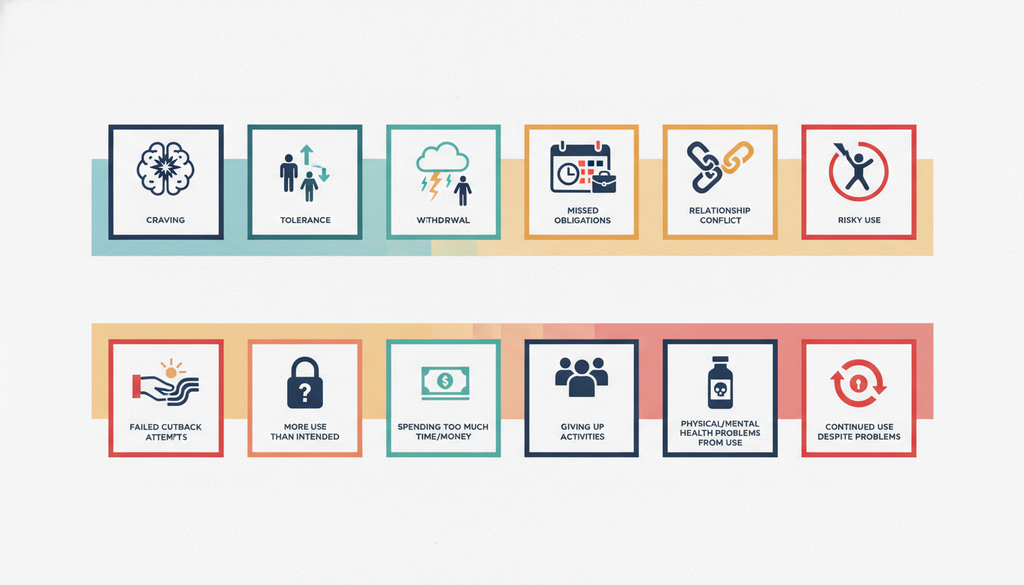
The Eleven Signs That Matter
The eleven criteria fall into a few common themes: impaired control, problems at home or work, risky use, continued use despite harm, tolerance, and withdrawal. The table below puts them in everyday language.
| Sign | What it can look like |
| Using more or longer than planned | Planning to use a little, then staying high for hours or using through the evening |
| Wanting to cut down but not being able to | Trying to quit, take breaks, or set limits, then repeatedly returning to the old pattern |
| Spending a lot of time on cannabis | Planning around buying, using, being high, or recovering from use |
| Craving | Strong urges to use, especially with stress, boredom, sleep trouble, or reminders |
| Missing major obligations | Missed work, poor school performance, skipped duties, or unreliable parenting linked to cannabis |
| Relationship problems | Ongoing conflict, secrecy, broken promises, or loss of trust tied to cannabis use |
| Giving up activities | Less time for hobbies, friends, exercise, school goals, or family routines because cannabis takes priority |
| Hazardous use | Driving, using machinery, or caring for children while impaired |
| Continued use despite health or mental health problems | Keeping use going despite panic, paranoia, vomiting, cough, mood problems, or clinician concern |
| Tolerance | Needing more cannabis, stronger products, or more frequent use to get the same effect |
| Withdrawal | Irritability, anxiety, sleep trouble, low appetite, restlessness, depressed mood, or physical discomfort after stopping or cutting down |
A formal diagnosis does not require every sign. Two signs can be enough if they occur in the same 12 month period and the pattern causes meaningful distress or impairment.
That said, one serious sign can still matter. Driving after using, repeated panic after cannabis, unsafe caregiving, or a failed attempt to quit may not prove CUD by itself, but it should raise concern.
Cannabis Use Disorder Severity Levels
Cannabis use disorder is graded by the number of criteria present in the same 12 month period. Two to three criteria is mild. Four to five is moderate. Six or more is severe.
Mild does not mean harmless. It means the person has already crossed the diagnostic line, but the problem may be earlier or less widespread. This can be a good time to act because habits may be easier to change before cannabis causes more damage.
Moderate CUD usually means the pattern has spread across more areas of life. For example, someone might be using more than planned, failing to cut down, craving cannabis, developing tolerance, and having conflict at home.
Severe CUD often includes many domains at once. A person may spend much of the day planning around cannabis, use despite health or mood problems, miss responsibilities, withdraw from activities, and feel unable to stop without withdrawal symptoms.
The point is not to scare you. It is to make the line clearer. If two or more signs are present, the right next step is not shame. It is assessment, support, and a plan.
Tolerance Is a Clue, Not the Whole Answer
Tolerance means needing much more cannabis to get the same effect, or getting much less effect from the same amount. Someone may say, “Flower barely works now,” or “I need concentrates to feel anything.”
Tolerance can be a sign of cannabis use disorder, but it is not the same as addiction by itself. A person needs at least one more criterion and the overall pattern must cause distress or impairment.
This matters for medical cannabis users too. Having a medical reason for cannabis does not rule out CUD. If the person is escalating dose, cannot cut down, keeps using despite harm, or feels unable to function without cannabis, it makes sense to talk with a clinician.
Failed Attempts to Cut Down Are Important
Repeated failed attempts to reduce or stop cannabis are one of the clearest signs that use may no longer be fully voluntary.
This can look like setting rules, then breaking them again and again. “Only on weekends” becomes every night. “No use before dinner” becomes afternoon use. “I am taking a month off” lasts two days.
This is not about weak character. It often means cannabis has become tied to sleep, anxiety, boredom, appetite, social life, pain, or withdrawal relief. If someone has tried to stop and keeps returning to the same pattern, they may need more than willpower.
Lower risk cannabis guidance says people with symptoms of CUD, especially repeated failed efforts to control or reduce use, should seek professional assessment and care through lower risk recommendations.
Time Spent Can Reveal the Real Burden
Some people say, “It only takes a few minutes to smoke,” but the real time cost may be much larger.
Time spent includes getting cannabis, planning when to use, being intoxicated, recovering from use, scrolling menus, arranging delivery, hiding use, or shaping the day around when it is possible to get high. It also includes lost time the next morning when someone feels foggy, tired, anxious, or unable to focus.
This sign matters because cannabis can shrink life quietly. Work may still happen, but hobbies fade. A person may still show up at home, but be less emotionally present. School may continue, but effort drops. The question is not only “How much do you use?” It is also “What has cannabis replaced?”
Role and Relationship Problems Are Red Flags
Cannabis use disorder often shows up first in ordinary life.
At home, that may mean missed chores, unreliable childcare, repeated conflict, money problems, or being emotionally unavailable. At work, it may mean lateness, missed shifts, lower quality work, or using before tasks that need clear thinking. At school, it may mean skipped classes, falling grades, or loss of interest in goals.
Relationship problems count when cannabis causes or worsens the conflict and the person keeps using anyway. Simple disapproval is not enough. A parent or partner may dislike cannabis for personal reasons, but the clinical concern is stronger when there are repeated broken agreements, secrecy, missed duties, or conflict linked to intoxication or recovery.
A useful question is this: “What keeps happening because of cannabis, and does the person keep using despite knowing it is causing problems?”
Withdrawal Can Keep the Cycle Going
Cannabis withdrawal can happen after stopping or sharply reducing heavy, prolonged use. A withdrawal review describes symptoms such as irritability, anxiety, sleep difficulty, appetite change, restlessness, depressed mood, and physical discomfort after reduction or cessation.
Withdrawal is not just being in a bad mood. It can be a reason people return to use even when they want to stop. Someone may restart cannabis because they cannot sleep, feel angry, feel anxious, cannot eat, or feel physically uncomfortable.
Craving and withdrawal can overlap, but they are not the same thing. Craving is the urge to use. Withdrawal is the symptom pattern that can follow stopping or cutting down. Both should be assessed.
If a person uses cannabis mainly to avoid feeling withdrawal, that can count as one of the CUD criteria.
Screening Is Not the Same as Diagnosis
Screening can help, but it is not a final answer.
The CUDIT R is an eight item screening tool that asks about cannabis use and related problems over recent months. A screening study found that lower cutoffs may catch more possible DSM 5 CUD cases than older thresholds in some samples, which is one reason screens should lead to assessment rather than replace it.
SBIRT stands for Screening, Brief Intervention, and Referral to Treatment. SAMHSA describes the SBIRT framework as a way to screen for substance use, assess positive screens more closely, offer brief help, and refer when more care is needed.
A screen can say, “This deserves a closer look.” A diagnosis needs a clinician to ask about the eleven criteria, the 12 month window, distress, impairment, safety, mental health, medical issues, and other substance use.
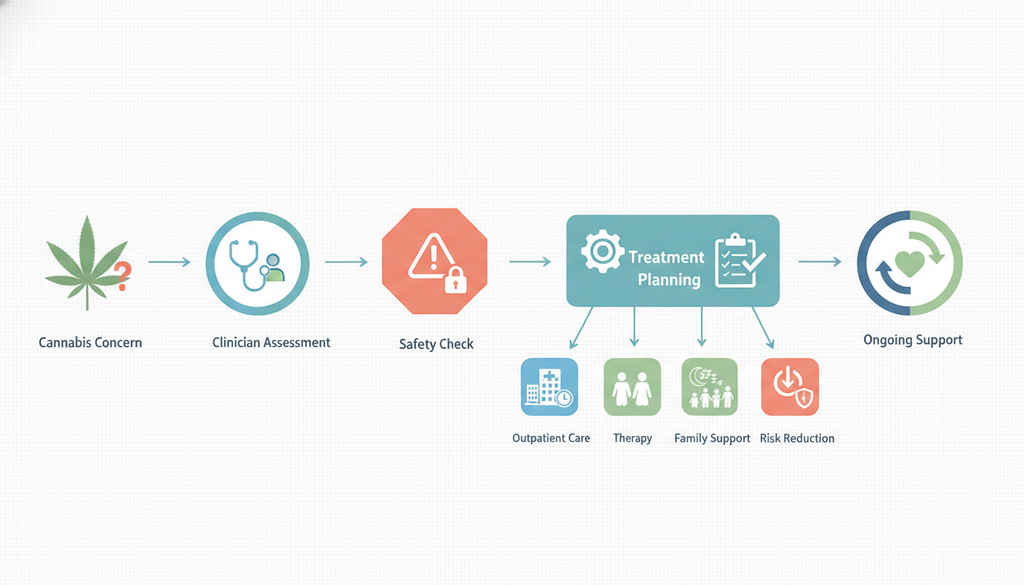
When to Seek Help
You do not need to wait for a severe diagnosis to ask for help.
Assessment is wise if cannabis use is hard to control, if there are repeated failed cut down attempts, if there is withdrawal, or if use is affecting work, school, parenting, relationships, driving, mood, sleep, or health.
It is also worth seeking help sooner for adolescents, pregnancy, lactation, psychosis symptoms, severe anxiety, suicidal thoughts, repeated vomiting, or any safety risk. ACOG recommends universal screening for cannabis use during prepregnancy, pregnancy, and postpartum care, and pregnancy guidance advises cessation during pregnancy and lactation with supportive, non punitive care.
If someone is driving after using cannabis, caring for children while impaired, or having paranoia, severe panic, or thoughts of self harm, treat that as a safety issue first. Diagnosis can wait. Safety cannot.
What Treatment Can Look Like
Treatment for weed addiction is not one size fits all. Some people need brief support and monitoring. Others need structured outpatient care, mental health treatment, family support, or more intensive help.
The most common approaches include motivational interviewing, cognitive behavioral therapy, motivational enhancement therapy, contingency management, mindfulness based relapse prevention, and peer support. The Canadian guideline recommends considering several psychosocial approaches for CUD, including CBT, motivational interviewing, motivational enhancement therapy, contingency management, and mindfulness based relapse prevention.
Good care should also ask why cannabis is being used. Is it for sleep, anxiety, trauma symptoms, pain, appetite, boredom, social comfort, or withdrawal relief? Those reasons matter because stopping cannabis without treating the underlying need can make change much harder.
There is no need to start with shame or labels. A practical first step might be a conversation with a clinician, a screening tool, a plan to reduce use safely, or support for sleep and anxiety during a break.
Why This Matters
Cannabis use disorder can be easy to minimize because cannabis is common, legal in many places, and often seen as safer than other substances. But the real question is not whether cannabis is legal or whether other drugs are worse. The question is whether cannabis is still a choice, or whether it has become hard to control and costly to daily life.
If you are asking that question, take it seriously. Look for the pattern. Two or more signs in a year may meet criteria for CUD, but even one serious warning sign can justify support.
You do not have to decide everything today. Start with honesty, safety, and a next step that is realistic.
If cannabis is starting to feel hard to control, reach out for outpatient treatment today at Thoroughbred Wellness and Recovery.


 Give Us A Call


