
 info@thoroughbredbhc.com
You can look successful and still have alcohol use that is getting harder to control. A high functioning alcoholic may keep work, bills, and relationships mostly intact while still meeting DSM 5 alcohol use disorder criteria, which can start at two symptoms in a 12 month period. This guide explains the quiet signs, what screening scores can and cannot tell you, and when to ask for help.
High Functioning Alcoholic Signs Can Be Quiet
The phrase high functioning alcoholic is not a formal diagnosis. Clinicians usually use alcohol use disorder, or AUD, because it focuses on symptoms instead of stereotypes.
Still, the phrase describes something many people recognize. Someone may show up to work, pay rent, take care of family duties, and avoid arrests or public crises. From the outside, life may look fine.
Inside, alcohol may be taking more space.
That gap is why people miss the signs. They expect alcohol problems to look dramatic. Job loss. Divorce. Legal trouble. Empty bank accounts. But DSM 5 does not require those events for alcohol use disorder. It looks at patterns like loss of control, craving, tolerance, withdrawal, risky use, and repeated failed efforts to cut down.
A functional alcoholic may not be visibly falling apart. They may be spending more private energy hiding, recovering, bargaining with themselves, or proving they are still in control.
A direct answer: if drinking keeps breaking your own rules, takes more effort to manage, or causes withdrawal symptoms, it deserves a clinical conversation even if life still looks stable.
Why Functioning Does Not Rule Out AUD
Functioning is not the same as being well. It can mean someone has enough income, support, job flexibility, tolerance, or privacy to keep consequences hidden for a while.
That matters because AUD can begin before outside consequences are obvious. DSM 5 mild AUD is based on two or three symptoms in the same year. Moderate AUD is four or five symptoms, and severe AUD is six or more.
Research also shows why symptom count alone does not tell the whole story. In one NESARC analysis, people with exactly two symptoms had a mean of 3.79 drinks per drinking day, and 28.33 percent reported weekly occasions with at least five drinks, which shows the two symptom group can include very different levels of risk.
That does not mean mild AUD is harmless. It means the details matter.
Two symptoms can look like drinking more than planned plus craving. They can also look like tolerance plus withdrawal. Those are very different safety situations, even if the symptom count is the same.
This is why the term functional alcoholic can be misleading. It focuses on what has not happened yet. No job loss. No arrest. No debt. But alcohol use disorder is not measured only by public damage. It is also measured by control, compulsion, health risk, and what happens when a person tries to stop.
Signs People Often Miss
The clearest early signs are often private. They show up in intentions, routines, and body signals before they show up in job reviews or bank statements.
| Sign people miss | What it may look like | Why it matters |
| Drinking more than planned | You plan on two drinks and end up having six | It points to loss of control, not just quantity |
| Failed rules | You set limits, then keep breaking them | Repeated failed cut down efforts are a DSM 5 symptom |
| Craving | You keep thinking about drinking or feel pulled toward it | Craving can happen before public consequences |
| Tolerance | The same amount does less than it used to | Needing more alcohol can signal body adaptation |
| Withdrawal | Shakes, sweating, nausea, anxiety, or insomnia after cutting back | Withdrawal can make stopping suddenly unsafe |
| Recovery time | Mornings, weekends, or evenings revolve around feeling normal again | Life may shrink around drinking and recovery |
| Quiet avoidance | You skip hobbies, exercise, friends, or family time | Alcohol can crowd out valued parts of life |
| Risky use | Driving after drinking or mixing alcohol with sedatives | Harm can occur before an arrest or injury |
The private bargain
A common sign is the private bargain: only on weekends, only beer, never before dinner, no drinking alone, no liquor in the house, no more than two.
There is nothing wrong with setting a limit. The concern is what happens next. If the rule keeps failing, the failure itself is information.
A person may say, “I can stop whenever I want,” but the pattern may show something else. They may stop for a few days, then drink more heavily. They may reduce for a week, then return to the old pattern after stress, boredom, sleep trouble, or social pressure.
This is often where shame grows. People start hiding not only the drinking, but the fact that they tried to control it and could not.
Craving can look ordinary
Craving is not always dramatic. It may not feel like a movie scene where someone is desperate for a drink.
It can sound like this: “I just need something to take the edge off.” Or, “I cannot relax without it.” Or, “Dinner feels wrong without wine.” Or, “I deserve this after today.”
Those thoughts do not prove AUD on their own. But when craving joins another symptom, such as drinking more than intended or failed efforts to cut down, it can meet the DSM 5 threshold.
Tolerance is not a badge of control
Some people take pride in being able to “hold their liquor.” I get why. It can feel like control.
But tolerance can hide risk. If it takes more alcohol to feel relaxed, social, sleepy, or numb, the body may be adapting. That can allow higher intake while the person still appears composed.
Someone may seem fine after several drinks. That does not mean their judgment, reaction time, sleep, mood, liver, blood pressure, or relationships are fine. It may only mean the warning signs are less visible.
Withdrawal changes the situation
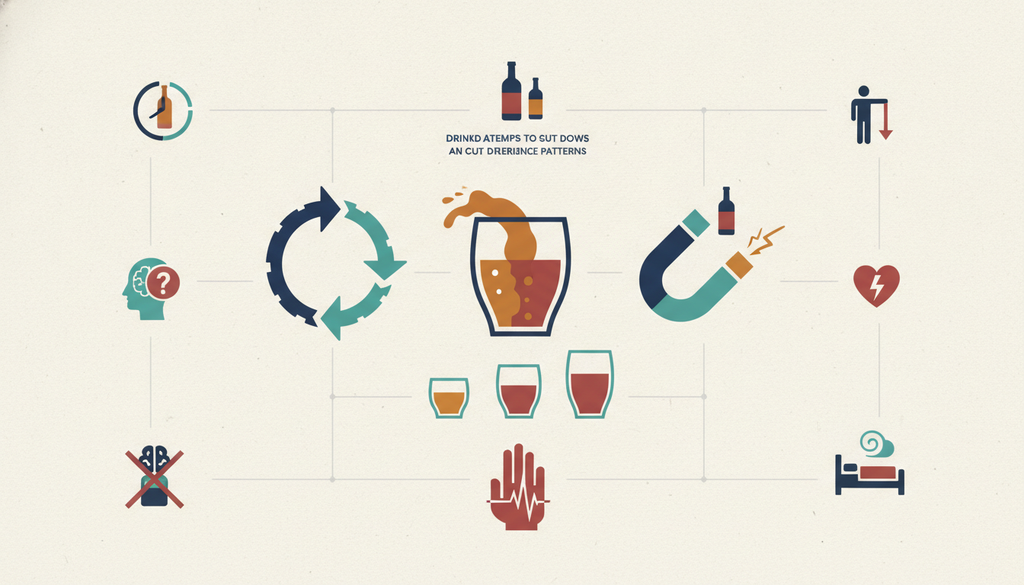
Withdrawal is one of the biggest signs people miss because they may call it stress, anxiety, poor sleep, or a bad hangover.
It can include shaking, sweating, nausea, agitation, anxiety, insomnia, or feeling unable to function until alcohol is back in the body. Morning drinking to feel normal is especially concerning.
If withdrawal is possible, do not treat it as a willpower issue. Alcohol withdrawal can be medically serious. ASAM notes that withdrawal management should include assessment of symptoms, risk factors, and safety needs, and that withdrawal management is not the same as ongoing AUD treatment.
How Screening Scores Fit
Screening tools can help, but they are not a diagnosis.
AUDIT C is a short alcohol screen. It asks about drinking frequency, typical amount, and heavy drinking occasions. The U.S. Preventive Services Task Force describes AUDIT C as one of the brief adult tools with good accuracy for identifying unhealthy alcohol use in primary care, but an AUDIT C result still needs follow up.
A common U.S. cutoff is 4 or more for men and 3 or more for women. Those common cutoffs are screening thresholds, not proof that someone has AUD.
The full AUDIT gives more information because it includes questions about dependence related symptoms and alcohol related harms. The World Health Organization states that a full AUDIT score of 8 or more suggests hazardous or harmful alcohol use and possible dependence, and that higher ranges call for closer clinical follow up.
In plain terms, a positive AUDIT C means, “Look closer.” It does not mean, “You are diagnosed.”
A full AUDIT score of 16 or higher is a strong reason to choose clinical evaluation over trying to manage drinking alone. A score of 20 or higher is an even stronger reason to get prompt diagnostic assessment, including withdrawal risk.
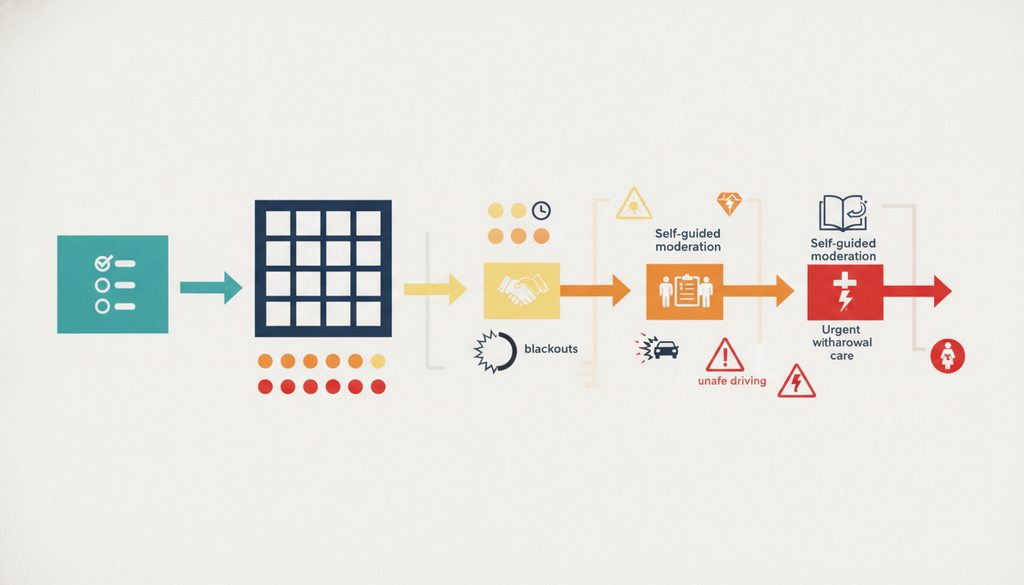
Scores also do not override red flags. Morning drinking, withdrawal symptoms, repeated blackouts, unsafe driving, pregnancy related alcohol exposure, suicidal thoughts, injury, or repeated inability to follow limits should lead to help regardless of the number.
When Moderation Is Not Enough
Moderation can be a reasonable goal for some people with risky drinking who do not have AUD, withdrawal risk, or serious alcohol related harm. But self guided moderation becomes less safe when drinking has already become hard to control.
The question is not, “Are you strong enough?”
The better question is, “What has happened when you tried to change?”
If you repeatedly set limits and break them, that is not a character flaw. It is a clinical sign. If you need alcohol to feel normal, sleep, steady your hands, calm your nerves, or get through the morning, that is a safety concern. If you keep drinking despite health, mood, relationship, or work problems, the pattern needs more than another private promise.
A functional alcoholic may be able to hide the pattern longer than others. That can delay help. It can also make the first conversation harder because the person can point to visible success as proof that nothing serious is happening.
But visible success does not answer the real questions. Can you stop when you plan to stop? Can you take alcohol or leave it? Are you honest about how much you drink? Do you feel worse when you do not drink? Is your life getting smaller around alcohol?
Talking With A Functional Alcoholic
If you are worried about someone else, try to stay specific. Labels often start fights. Observations are harder to dismiss.
Instead of saying, “You are an alcoholic,” you might say, “I have noticed you often plan to have two drinks and then keep going,” or, “I am worried that you feel shaky in the morning and drink to feel normal.”
Pick a time when the person is sober. Keep the first conversation short. Avoid debating whether they are “bad enough” for help. That debate can go nowhere because high functioning people often compare themselves to someone worse.
It may help to focus on goals they already care about: sleep, mood, energy, parenting, work, fitness, anxiety, blood pressure, memory, or the relationship.
If the conversation becomes unsafe, step back. Concern does not mean you have to accept threats, impaired driving, violence, or chaos at home. Strong boundaries can be loving when they protect safety.
For family members, it can also help to track concrete patterns before a clinical visit: number of drinking days, rough amount, time of first drink, morning symptoms, failed cut down efforts, blackouts, injuries, and any use of alcohol to relieve withdrawal. That kind of detail helps a clinician assess risk without turning the conversation into name calling.
High Functioning Alcoholic Help Starts With Clarity
The goal is not to scare someone into a label. The goal is to see the pattern clearly enough to choose the next safe step.
If drinking is risky but there are no AUD symptoms, a brief intervention and a planned reduction goal may help. If there are two or more DSM 5 symptoms, a diagnostic assessment makes sense. If there is withdrawal, morning drinking, or a history of severe symptoms when cutting back, medical guidance is important before stopping suddenly.
Clarity also means being honest about what “functioning” costs.
Some people keep performing by using enormous effort. They drink at night, recover in the morning, push through work, and collapse again later. They may look dependable while feeling trapped. Over time, that cycle can affect sleep, mood, health, trust, and self respect.
There is no need to wait for the worst day of your life to ask for help. In fact, asking earlier can preserve more of what matters.
Why Early Action Matters
Alcohol problems often become harder to treat when they are hidden for years. Not because people are hopeless, but because routines get stronger. The brain and body adapt. Relationships adjust around the pattern. Denial becomes easier when the outside world still gives proof of success.
Early action can interrupt that. It can turn a quiet worry into a plan.
That plan might start with a primary care visit, an AUDIT assessment, a DSM 5 symptom review, therapy, medication evaluation, outpatient treatment, family support, or medically supervised detox if withdrawal risk is present.
The main point is simple: you do not have to decide alone whether you are “really” a high functioning alcoholic or whether your loved one is “bad enough” for care. If alcohol is taking more control than it used to, that is enough reason to talk with someone trained to assess it.
If drinking feels harder to control than it looks from the outside, reach out to Thoroughbred Wellness and Recovery for detox and outpatient care today.


 Give Us A Call


