
 info@thoroughbredbhc.com
Meth face can improve in recovery, but sores that are infected, deep, or repeatedly picked need medical care, not just time. For example, a drainable abscess usually needs incision and drainage under the IDSA skin infection guideline, while a small clean scratch may heal once picking stops. This article explains what causes meth sores on face, when to get help, and what healing can look like.
What Meth Face Usually Means
Direct answer: meth face is not one single skin disease, but a common label for facial sores, scabs, acne like lesions, scars, and skin changes linked to meth use, picking, infection risk, and poor healing conditions.
The phrase can sound harsh. It can also be misleading. A person may have facial sores during meth use for several reasons, and some of those reasons have nothing to do with meth itself. Acne, eczema, bacterial infection, dental problems, compulsive skin picking, and other medical issues can all leave marks on the face.
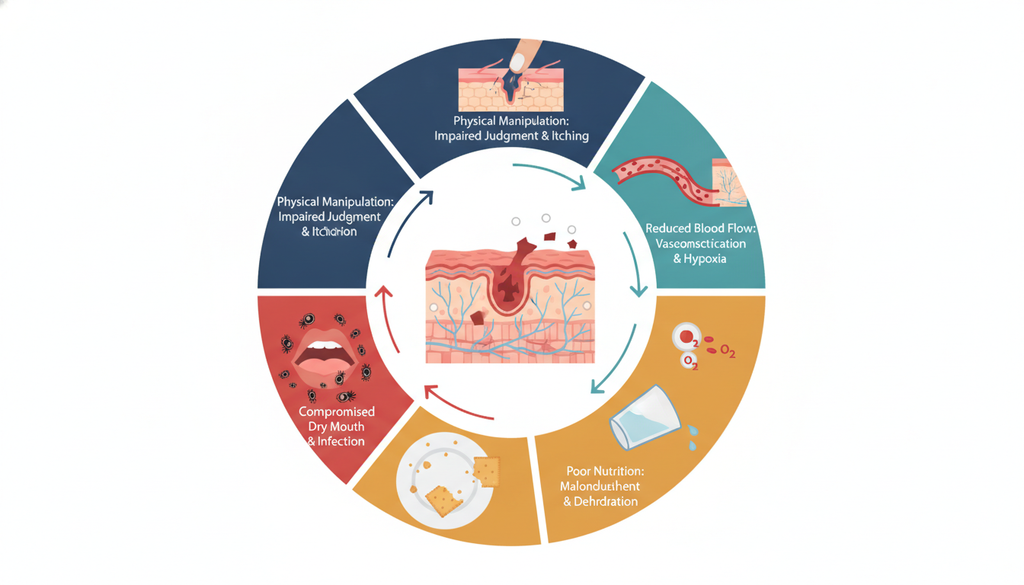
Still, meth can set up a clear pattern. Some people feel crawling, biting, or itching sensations on or under the skin. This is called formication. Dentalcare describes formication as a physical indicator that may occur with stimulant use, and that false crawling feeling can lead to repeated scratching or picking at the skin surface until small marks become open wounds.
That cycle matters more than the label. A sore that is touched, squeezed, scraped, or reopened every day cannot close well. The body tries to build new skin, but the new edge gets torn away again. Over time, a small blemish can become a scab, crater, dark spot, pale spot, or scar.
Why Meth Sores on Face Can Stay Open
Meth sores on face often stay open because several problems happen at once. The skin is injured. The person may be sleeping less. Food and water intake may drop. Hygiene may slip. Stress and anxiety may rise. If infection starts, healing becomes harder.
The most direct cause is repeated trauma. Picking removes scabs and damages the fragile new skin that is trying to grow across the wound. It can also move bacteria from hands, fingernails, towels, bedding, phones, razors, or other surfaces into broken skin.
Meth may also affect healing in more direct ways. In a mouse study, methamphetamine delayed wound healing, and the delay was greatest when wounds were infected with MRSA, a type of drug resistant staph. That mouse wound research supports concern, but it does not prove exactly how long a human facial sore will take to heal.
Blood flow may play a role too. Meth is a stimulant, and stimulant effects can tighten blood vessels. In theory, less local blood flow can mean less oxygen, fewer nutrients, and less immune support reaching the skin. But the research provided does not prove a precise facial blood flow change in people. It is better to say that meth can create a poor healing setting, especially when picking, poor sleep, dehydration, and infection are also present.
Dry mouth and dental disease can matter as well. A small study found that methamphetamine use was linked with altered oral bacteria, including lower salivary bacterial richness among users. The oral microbiota finding does not prove that mouth bacteria cause most facial sores, but it does support paying attention to dental pain, gum infection, jaw swelling, and wounds near the lips or mouth.
The face also has special risks. It is close to the eyes, nose, sinuses, mouth, teeth, and deeper facial spaces. That means a sore on the cheek, nose, lip, or near the eye should be taken seriously if it becomes swollen, painful, hot, or starts draining pus.
When Meth Face Needs Medical Care
Some small surface wounds can heal with basic care once meth use stops and picking decreases. But not every facial sore should be watched at home. Infection can move beyond the skin. Abscesses can trap pus. Eye related infections can threaten vision. Rarely, fast moving deep infections can become life threatening.
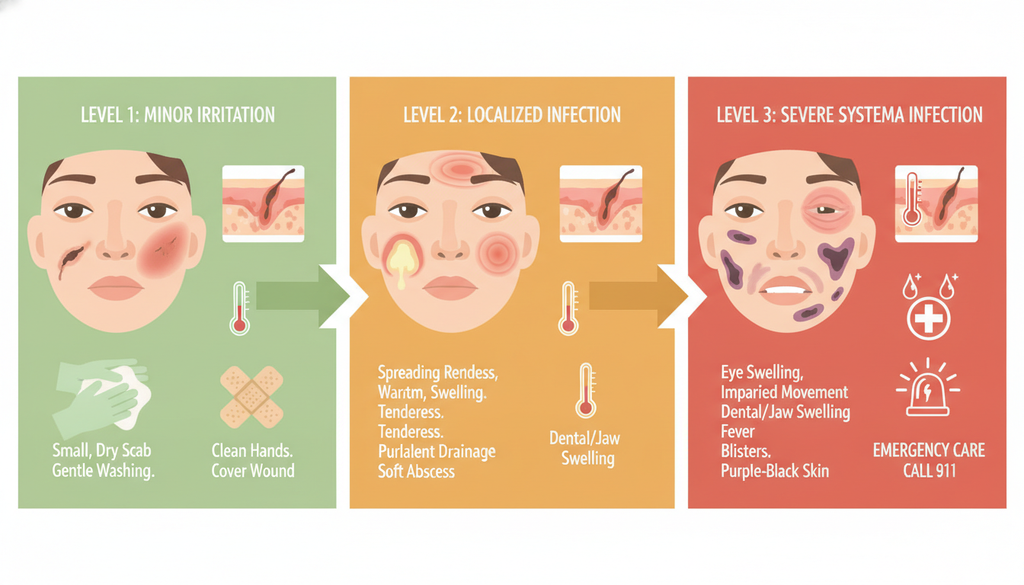
A facial wound needs medical care when it is getting worse instead of better. Warning signs include spreading redness, warmth, swelling, worsening pain, pus, bad odor, fever, chills, or a soft pocket under the skin. Merck describes cellulitis as a bacterial skin infection that can cause redness, warmth, swelling, and tenderness, and facial cellulitis should not be dismissed as only a picked sore.
| What you notice | What it may mean | What to do |
| Small scab that is dry, clean, and clearly shrinking | Surface injury | Protect it, stop picking, and seek routine care if it stalls |
| Redness spreading beyond the sore with warmth and tenderness | Cellulitis | Get same day medical care |
| Pus, a boil like bump, or a soft pocket under the skin | Abscess | Get examined for drainage and possible culture |
| Pain, swelling, or sores near the eye with vision change or pain moving the eye | Eye area infection | Seek urgent care or emergency care |
| Tooth pain, jaw swelling, trouble opening the mouth, or trouble swallowing | Dental or deep facial infection | Seek urgent medical or dental care |
| Severe pain, purple or black skin, blisters, confusion, fever, or rapid worsening | Deep severe infection | Go to the emergency department |
Abscesses are a common point of confusion. If there is trapped pus, antibiotics alone may not solve the problem. The IDSA guideline says incision and drainage is the treatment for cutaneous abscesses, large boils, carbuncles, and inflamed epidermoid cysts. The face is also a sensitive area. The Society for Academic Emergency Medicine notes that abscesses on the face or near important structures may need specialty input because of anatomy and cosmetic risk, so home squeezing is not safe for a facial abscess.
Eye symptoms raise the urgency. Merck explains that orbital cellulitis involves tissue behind the orbital septum and can threaten vision or spread to deeper structures. Pain with eye movement, double vision, bulging of the eye, reduced vision, or trouble moving the eye should be treated as a possible orbital infection, not a simple skin sore.
Severe pain is another red flag. Merck describes necrotizing soft tissue infection as a fast moving infection that can begin with pain out of proportion to what the skin looks like. If pain is extreme, swelling spreads quickly, skin turns purple, gray, or black, blisters appear, or the person seems very ill, possible necrotizing infection needs emergency care.
Scarring and Skin Healing in Recovery
Healing starts when the injury cycle slows down. That sounds simple, but it can be hard. Meth use can bring urges to pick, long periods without sleep, anxiety, paranoia, and body focused checking in mirrors. Recovery is not only about stopping a drug. It is also about helping the brain and body settle enough for skin care to work.
A superficial sore can improve when the area stays clean, protected, and left alone. New skin grows from the edges. Inflammation fades. The scab loosens on its own. The color may look pink, red, brown, or lighter than nearby skin for a while. Scars can keep changing for months after a wound closes.
Deep wounds are different. If a sore was repeatedly opened, infected, or ulcerated, it may heal with a depressed scar, thick scar, dark mark, or pale mark. The face may look uneven for some time. That can be upsetting, especially when the marks are tied to a painful period of life.
Try not to judge healing day by day. Skin recovery is often uneven. Some areas close quickly. Others reopen because they sit near the mouth, nose, beard area, or places touched often. Shaving, cosmetics, harsh scrubs, adhesive bandages, and aggressive cleaning can irritate healing skin.
The safest general approach is gentle. Wash with mild soap and water. Avoid picking. Avoid squeezing bumps. Keep hands and nails clean. Cover spots if a clinician recommends it. Do not use sharp tools, needles, or heat on facial sores. Do not share antibiotics or use leftover medication. If the wound looks infected, get care rather than trying to dry it out or drain it at home.
Nutrition and rest also support repair. The skin needs protein, calories, fluids, and enough sleep to rebuild. This does not mean vitamins can fix an abscess or that food replaces medical care. It means the body heals better when basic needs are met.
How Meth Face Heals in Recovery
Meth face usually improves in stages. First, the person may stop creating new wounds as meth use decreases and sleep returns. Next, existing scabs begin to close. Then redness and irritation settle. Later, color changes and scars soften slowly.
The hardest part is often stopping the picking loop. If formication or stimulant related paranoia is present, the person may truly feel like something is under the skin. Telling someone to “just stop” rarely helps. It may increase shame and secrecy. A better approach is to treat the substance use, restore sleep, address anxiety or psychosis if present, and use wound care that reduces the chance of re injury.
If injection drug use is part of the picture, the threshold for care should be lower. A 2025 review of skin and soft tissue infections in people who inject drugs notes that staph and streptococci are common causes, and infections may also be mixed with other bacteria. The review supports concern for MRSA and more serious infection risk in injection drug settings, but that risk should not be assumed for every person who uses meth by a non injection route.
A clinician may ask about drug route, sleep, picking, fever, dental symptoms, prior MRSA, diabetes, HIV, immune problems, and whether the sore is spreading. That is not about blame. It is about choosing the right care. A surface scratch, cellulitis, an abscess, dental infection, and an eye area infection all need different responses.
Recovery care should also include mental health support when picking feels compulsive or tied to fear, anxiety, or skin sensations. Some people continue picking after they stop meth because the habit has become automatic. Others pick mainly during stimulant use and improve greatly with abstinence. Either way, support works better than shame.
If sores are healing but scars remain, a primary care clinician or dermatologist can guide scar care once the skin is closed and infection is gone. The key is timing. Scar treatments should not be used on open, infected, or draining wounds unless a clinician tells you to.
Why This Matters for Real Recovery
Facial sores can carry a heavy emotional load. They are visible. People stare. Loved ones may panic. The person healing may feel embarrassed, judged, or hopeless. That shame can push people away from care, which is exactly the opposite of what helps.
The real message is more hopeful. Skin can heal. Infection can be treated. Scars can fade. Picking can improve. Meth use can be addressed with medical and behavioral support. But the safest path is to separate two questions.
The first question is, “Is this wound dangerous right now?” If there is spreading redness, warmth, swelling, pus, fever, severe pain, eye symptoms, or dental swelling, get medical care.
The second question is, “What is driving the cycle?” That may include meth use, formication, poor sleep, anxiety, compulsive picking, acne, dental disease, or infection. Once the causes are clearer, the plan gets more realistic.
No one should have to heal their skin and face recovery alone. If meth use, skin picking, or recovery feels hard to face alone, Thoroughbred Wellness & Recovery can help you start with compassionate detox support.


 Give Us A Call


