
 info@thoroughbredbhc.com
DBT for Addiction: Skills to Manage Cravings and Triggers
Cravings can hit fast and hard, and knowing what to do in that moment often feels harder than wanting to quit in the first place. DBT for addiction offers a step by step way to survive an urge, using a body focused skill called TIPP and a mindset called dialectical abstinence to recover fast after a slip. This guide covers what to do the next time a craving or trigger shows up.
What Is DBT for Addiction and How It Helps
Dialectical behavior therapy, or DBT, was built for people who feel emotions intensely and act on them fast. Clinicians later adapted this treatment model for substance use and relapse, an approach often called dbt for substance abuse. DBT and addiction fit together well because substance use often works as a quick fix for pain, panic, shame, or boredom. This therapy does not pretend urges are fake, and it does not ask you to win through willpower alone. It treats a craving as a high risk moment with a clear start and a set of choices you can practice long before the urge ever shows up.
DBT skills for addiction usually fall into four groups: mindfulness, distress tolerance, emotion regulation, and skills for relationships. On top of these, dbt for substance abuse programs add tools built for recovery specifically, including a plan for the moment a craving spikes and a separate plan for what happens if you use anyway. Both plans matter. One protects the next ten minutes. The other protects the next ten days.
The STOP Skill for Sudden Cravings
When an urge hits, your mind narrows fast. You stop weighing consequences and start looking for relief. The STOP skill exists to slow that narrowing down before it turns into action. It is one of DBT’s crisis survival skills, which a 2021 PLOS ONE study describes as short-term tools whose purpose is to make a painful moment tolerable enough to refrain from impulsive action.
STOP stands for stop, take a step back, observe, and proceed mindfully. In practice, that might look like putting your phone down instead of texting a dealer, physically walking into another room, naming out loud what you feel and what you want to do, then choosing your next move based on your goals rather than the urge itself.
This sounds small, but it works because relapse rarely happens in one giant leap. It happens through a chain of small steps: sending a message, getting cash, driving somewhere, walking through a door. STOP breaks that chain at the very first link, while your options are still wide open.
TIPP Skills to Calm Your Body Fast
Sometimes an urge comes with real physical intensity: a racing heart, a tight chest, or a body that feels like it is in danger. Trying to think your way out of that state rarely works well. This is where the TIPP skill comes in, and it is one of the clearest examples of dbt distress tolerance addiction work in action.
TIPP stands for temperature, intense exercise, paced breathing, and paired muscle relaxation. A splash of cold water on your face, a fast walk around the block, a slower exhale than inhale, and tensing then releasing your muscles can all lower your body’s alarm response within a few minutes. None of this erases the craving. It simply brings your arousal down enough that the next skill, like urge surfing or calling a friend, actually becomes usable.
TIPP is not a substitute for emergency care. If someone shows signs of overdose, such as slow or absent breathing, bluish lips, or being unresponsive, that is a medical emergency and calls for immediate help, not a coping skill.
Urge Surfing and Other DBT Skills for Addiction
Urge surfing treats a craving as a wave you can ride out instead of a command you have to obey. You notice the sensation, name it, locate it in your body, and watch how it shifts instead of fighting it or giving in to it. A 2014 Substance Use & Misuse review of mindfulness-based relapse prevention describes the practice as staying in contact with the craving without falling back on the habitual behavior. It does not require you to feel calm. It only asks you to keep observing without acting.
You may have heard that an unacted on craving peaks and starts fading within fifteen to thirty minutes. That can be a helpful mental image, but it should not be treated as a strict rule. Craving strength varies a lot depending on sleep, stress, withdrawal, and how close you are to the thing that triggers you. A more honest goal is not waiting for the craving to vanish on schedule. It is getting through the next few minutes without acting on it, then checking in again.
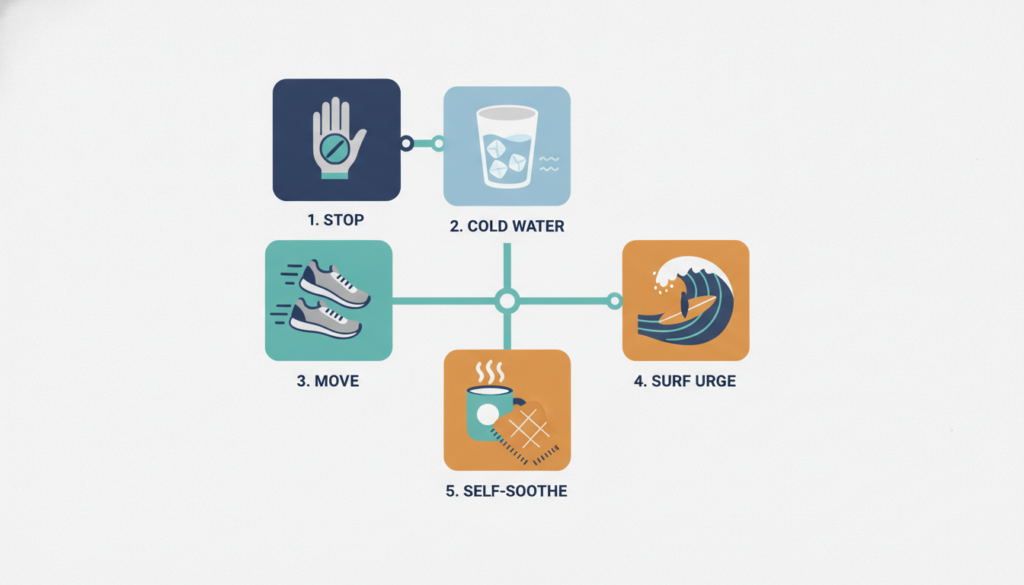
Distraction and Self Soothing During a Craving
When mindful observation alone is not cutting it, distraction becomes a legitimate tool rather than avoidance. DBT organizes this kind of coping into concrete, doable actions rather than vague advice to just relax. A few options that tend to work well in the middle of a craving include:
- Taking a brisk walk or cleaning something with your hands
- Calling or texting one person who knows your recovery goals
- Holding ice or drinking something cold and strongly flavored
- Watching or listening to something that changes your mood
- Reminding yourself of a specific craving you already got through
None of these solve the deeper reasons behind the urge. They buy time, and time is often exactly what you need. Once the intensity drops, self soothing through a warm shower, a meal, or simply being around supportive people can help your body settle the rest of the way.
Dialectical Abstinence After a Lapse
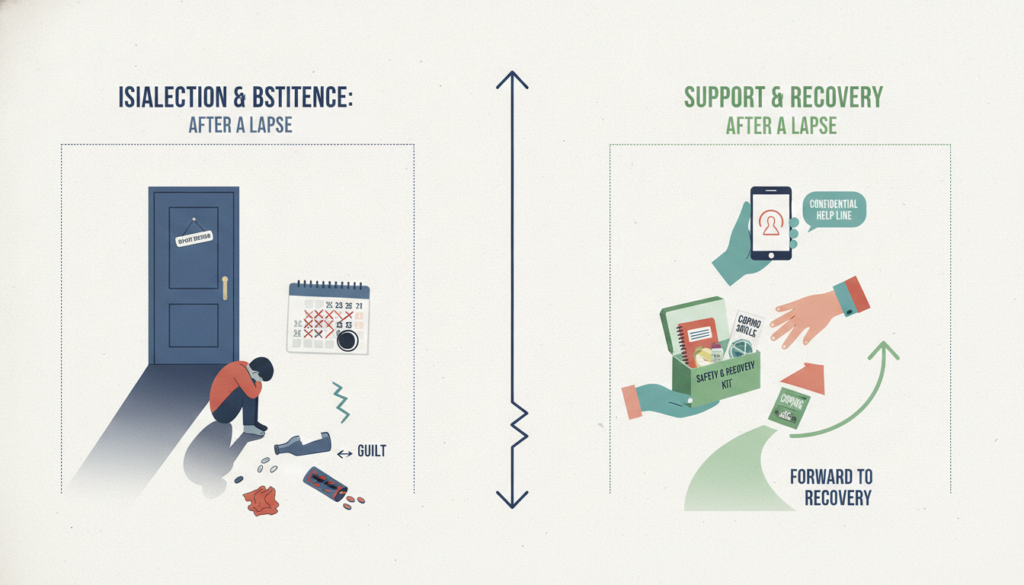
A lapse can trigger a dangerous thought pattern: I already used, so what’s the point now. Dialectical abstinence exists specifically to interrupt that thought before it turns one use into a longer relapse.
The idea holds two things at once. Abstinence stays the clear, immediate goal, and a lapse is never treated as an acceptable plan. At the same time, if use does happen, the response is practical rather than punishing. This model describes it as failing well: stop further use as soon as you can, get medical help if there is any overdose risk, tell someone rather than hiding it, look honestly at what led up to it, and return to your abstinence goal right away, not next week or next month.
Shame and secrecy tend to stretch a single slip into days or weeks of continued use. Relapse prevention research consistently points to asking for help early as one of the most protective steps after a slip. Dialectical abstinence gives you permission to do exactly that without treating the slip as proof you failed.
Why DBT for Addiction Matters for Recovery
What the Trials Found
The strongest direct evidence for DBT for addiction comes from two small randomized trials led by Marsha Linehan and colleagues, both involving women with borderline personality disorder and substance dependence. In the earlier trial, people who received DBT stayed in treatment at a rate of 64 percent, compared with 27 percent for usual community care, and their gains in daily functioning held up better over time. In the second trial, comparing DBT with another intensive approach, DBT was the only condition that kept opioid use down through the final months of treatment.
Those numbers matter for a simple reason. Skills only help if someone sticks around long enough to use them. A treatment that keeps people engaged, even imperfectly, gives DBT and addiction work more chances to actually change behavior over time.
DBT skills also pair naturally with medical treatment rather than replacing it. For opioid use disorder in particular, medication options such as buprenorphine or methadone reduce cravings and withdrawal in ways that a coping skill alone cannot. Someone cycling through severe withdrawal needs medical care first, and DBT skills second.
Does DBT Work for Addiction? What Research Shows
So does DBT work for addiction? The honest answer is that the evidence is encouraging but limited. The clearest support for dialectical behavior therapy substance use treatment comes from small, older trials focused mainly on women with co occurring borderline personality disorder, not the general population of people with substance use problems. That does not make the findings meaningless. It means the results should not be stretched further than they actually go.
It also matters how the therapy gets delivered. Programs that call themselves DBT vary widely, from a single skills group to a full model with individual therapy, group skills training, between session coaching, and a therapist support team. Research on treatment fidelity suggests that more faithful delivery of the model tends to track with better outcomes, including less substance use and less dropout. A weekly skills class using DBT worksheets is not automatically the same treatment that produced the trial results described above.
For someone whose substance use is tangled up with intense emotions, self harm, suicidal thoughts, or a pattern of leaving treatment early, a full DBT program is worth asking about directly rather than assuming any program labeled DBT will do the same job.
Recovery rarely comes down to a single technique. It comes down to having a plan for the moment a craving spikes, a plan for what happens if you slip anyway, and people around you who help you follow through on both. That combination, more than any single skill, is what makes DBT for addiction worth learning.
If cravings and triggers keep pulling you back toward use, you don’t have to work through it alone. Thoroughbred Wellness and Recovery offers DBT therapy services that help you build a plan that actually fits your life.